When we were on our road trip from Madrid to Seville we were looking for the perfect midway stop off and Mérida beckoned. On the map it looked like an ideal place to stretch our legs and the more I looked into it the more I wanted to explore. This is our guide to the best things to do in Merida Spain including where to stay, what to do and where to eat (with kids or without).
Mérida is the capital of the Extremadura region of Spain which roasts in the throbbing summer sun. This region can feel large and, although beautiful, often fairly empty. There are some real gems though and Merida is the one that shines brightest largely thanks to its amazing Roman remains but also it’s just a lovely city in general.
We fell in love with Merida. It had a lovely vibe about it. Check out our guide below to Merida, Spain – you can use our index to jump to the bits that interest you or read through the whole thing for a big burst of Mérida Spain inspiration.
👩💻 About the author – Nichola is a family travel expert and has written for The Guardian, The Telegraph, Lonely Planet Magazine and Wanderlust, amongst many others. She’s spent over a decade travelling the world with her children, finding the best places for you to explore too.
*AD / This post contains affiliate links & as an Amazon Associate we earn from qualifying purchases. We may also have been compensated in this post either financially or with products / stays. To read more see our Disclosure Policy.
Table of Contents
About Mérida Spain
Mérida is one of Spain’s most surprising cities. A small Extremaduran capital with an outsised past. Founded in 25 BC as Augusta Emerita, it became Rome’s administrative hub for the western Iberian Peninsula. Today its Archaeological Ensemble is a UNESCO World Heritage Site, stitched right into daily life: school runs cross ancient bridges, tapas bars face 2,000-year-old temples, and sunsets blaze over aqueduct arches. It’s compact, walkable, and brilliant for a weekend – easy with kids yet rich enough for serious culture lovers.
Below you’ll find the best things to do in Mérida, clever ways to plan your route, where to eat, and where to stay, plus handy tips if you’re visiting with children.
Top things to do in Mérida (and how to see them in order)
1) Roman Theatre & Amphitheatre – Merida Spain
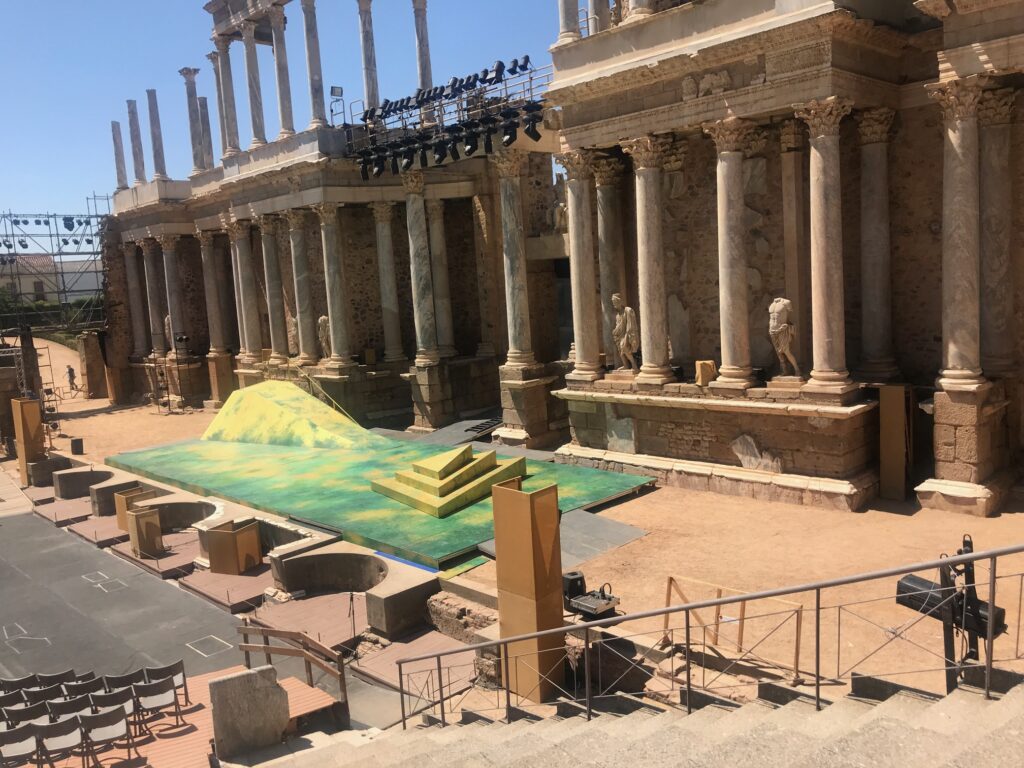
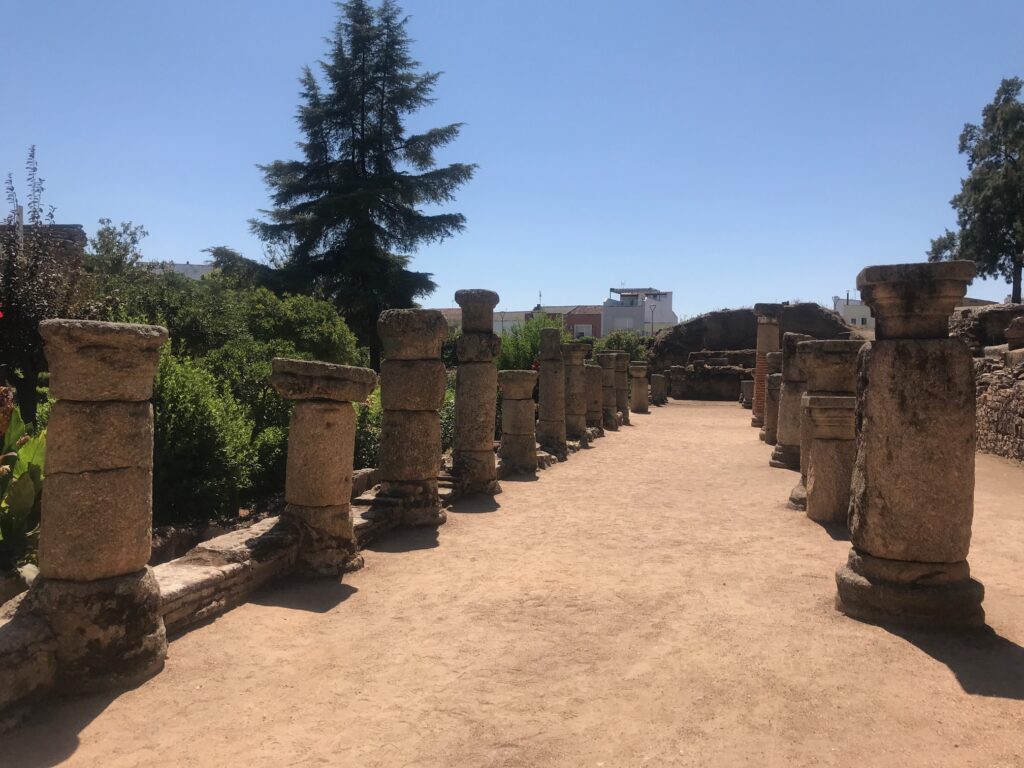
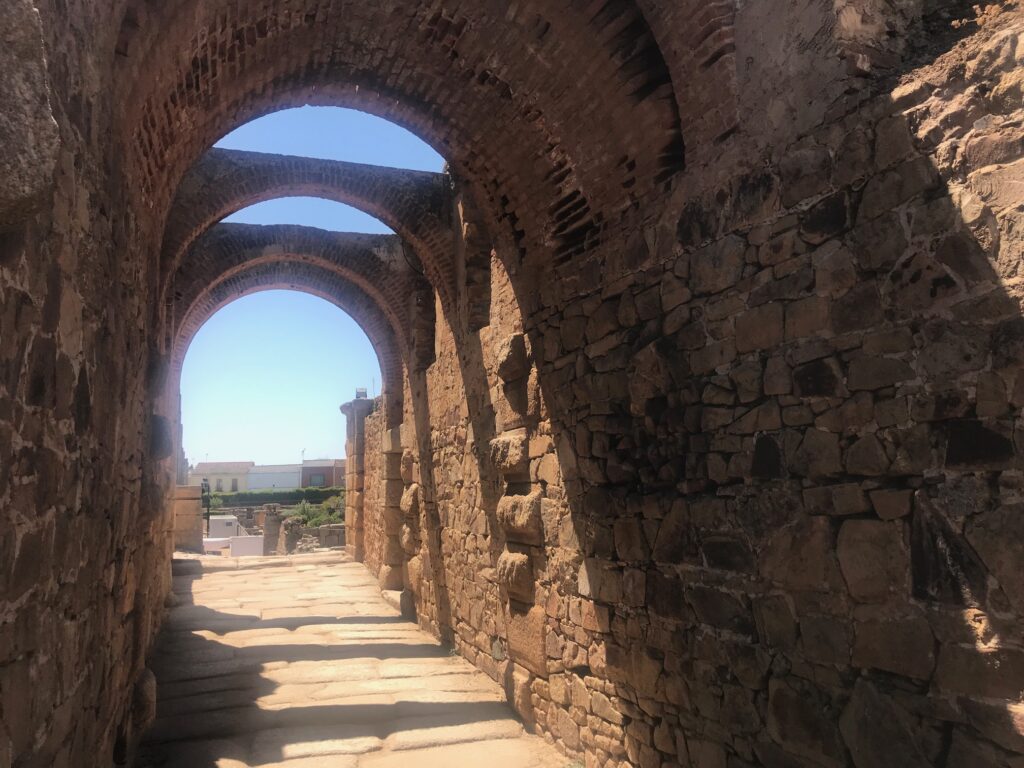
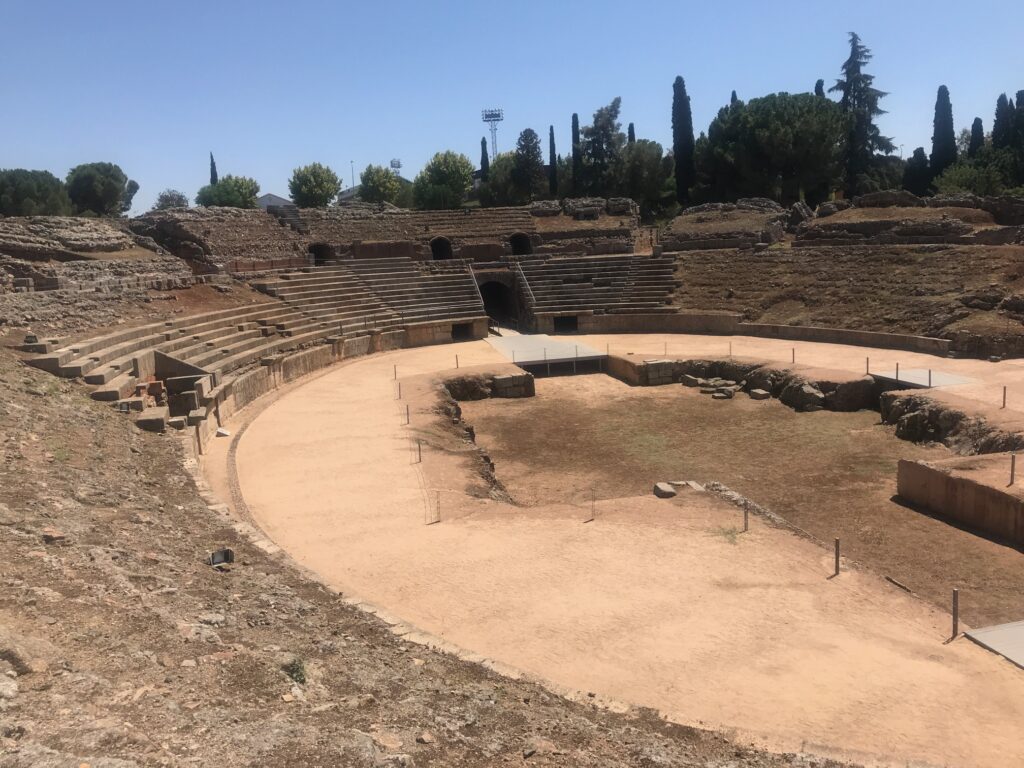
Start early at Mérida’s showstopper: the Teatro Romano and the adjacent Amphitheatre. The theatre’s two-storey marble colonnade is jaw-dropping; stand on the stage and whisper – you’ll hear the acoustics snap to attention. In summer, the Classical Theatre Festival brings live performances back to these stones, an unforgettable evening if your dates align (consider older kids/teens for late start times).
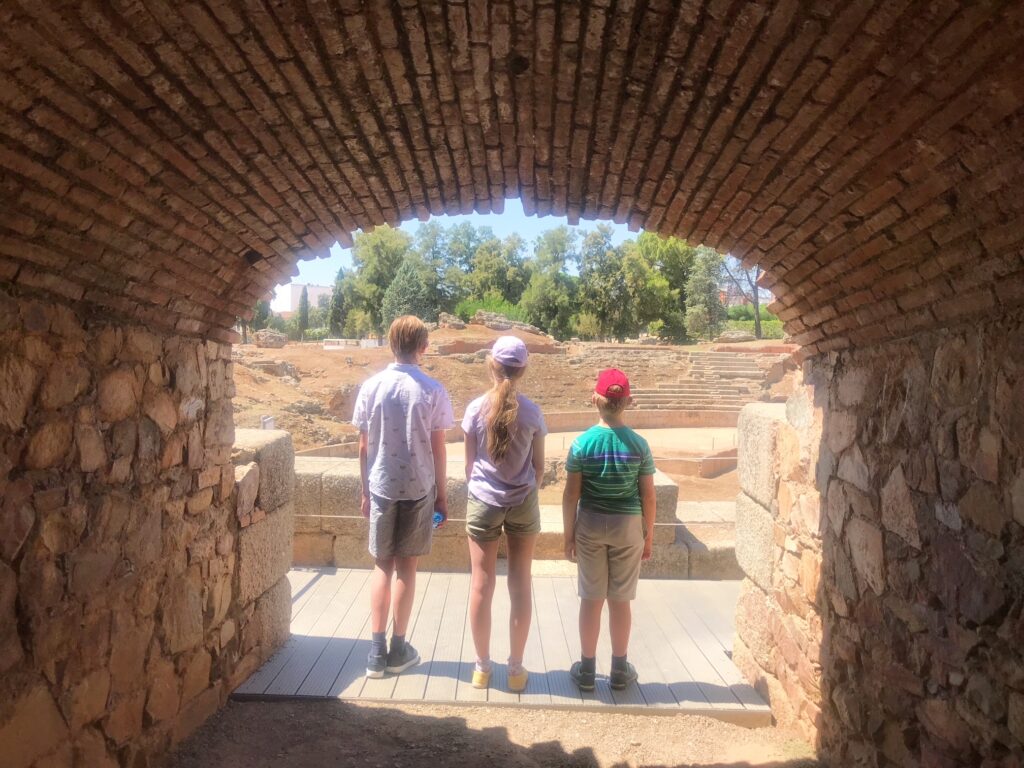
We found the amphitheatre in particular, the most evocative place. Standing where the gladiators would have stood before charging into the arena kept all of us captivated. It’s a not-to-be-missed site.
Book your skip-the-line tickets here.
2) National Museum of Roman Art (MNAR)
Directly opposite the theatre complex, Rafael Moneo’s brick-arched museum is a treasure chest: mosaics the size of living rooms, glassware, sculpture, and everyday objects that make Roman Mérida feel real. Kids love the scale of the mosaics and the miniature models; adults linger over the inscriptions and jewellery.
3) Temple of Diana & Forum area
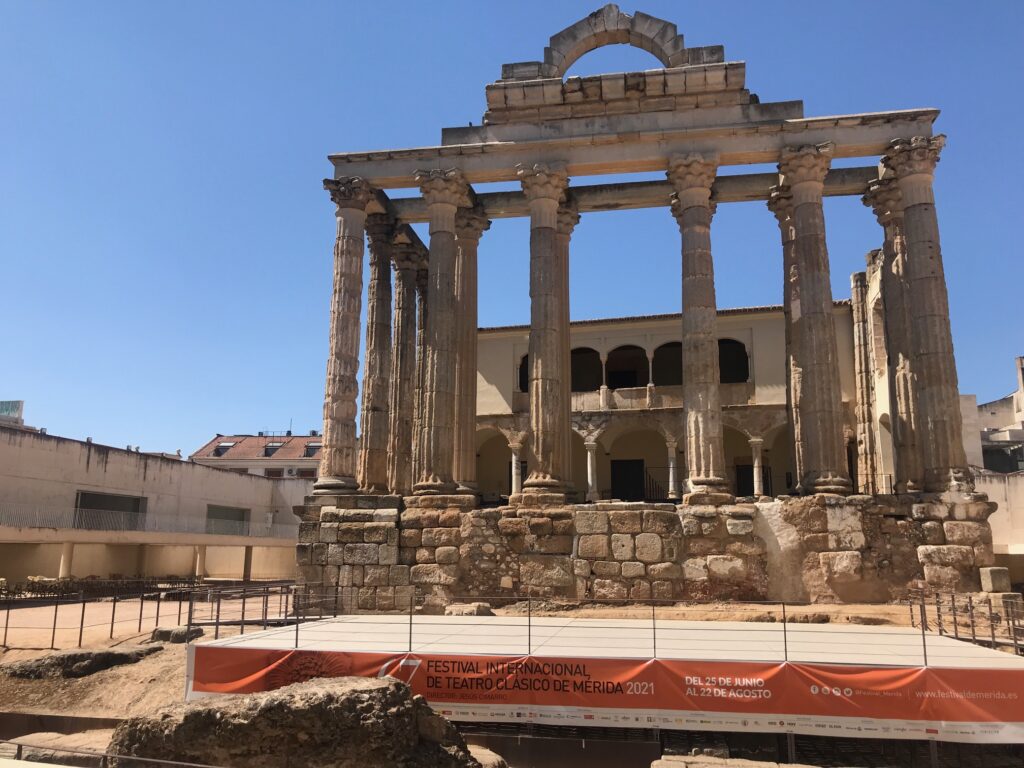
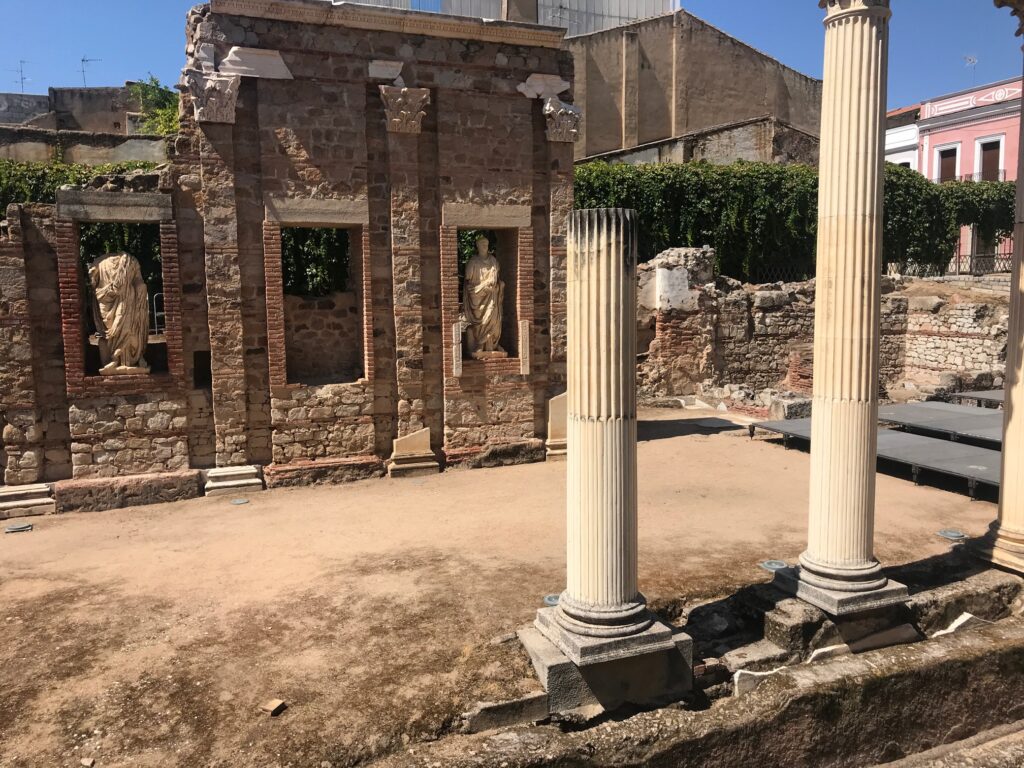
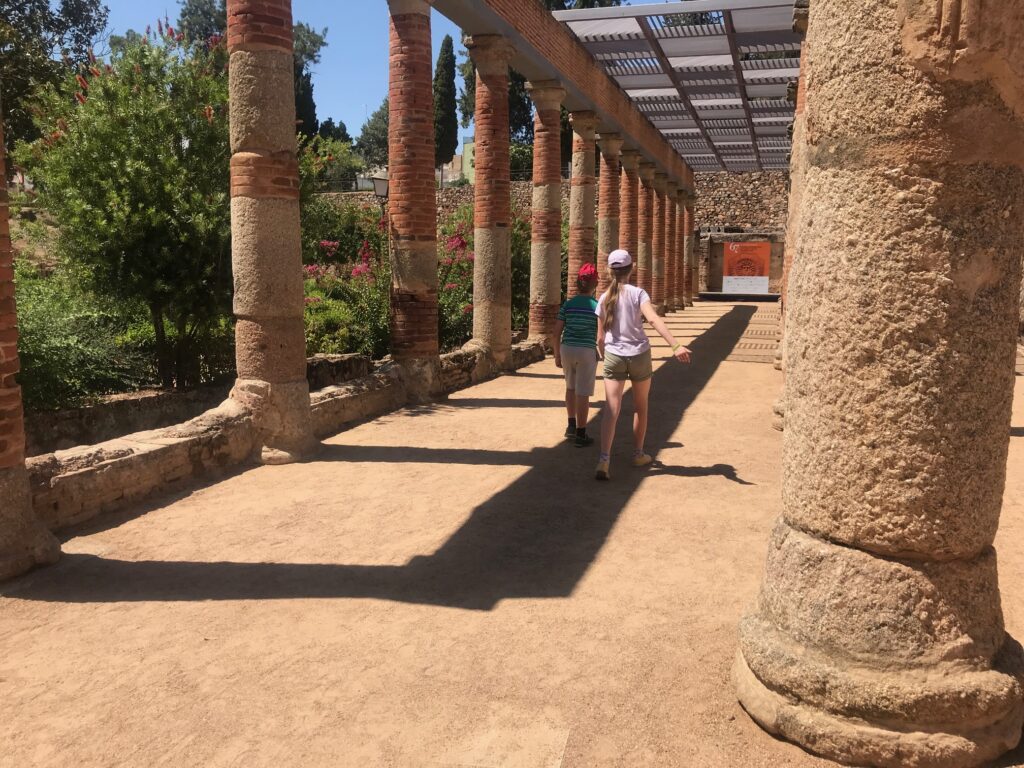
Wander five minutes to the Temple of Diana, a photogenic portico framed by colonnades. The surrounding forum remnants and the nearby Arch of Trajan bring the city plan into focus. Great spots to explain how Roman life radiated around civic centres.
4) Alcazaba & Roman Bridge – Merida Spain
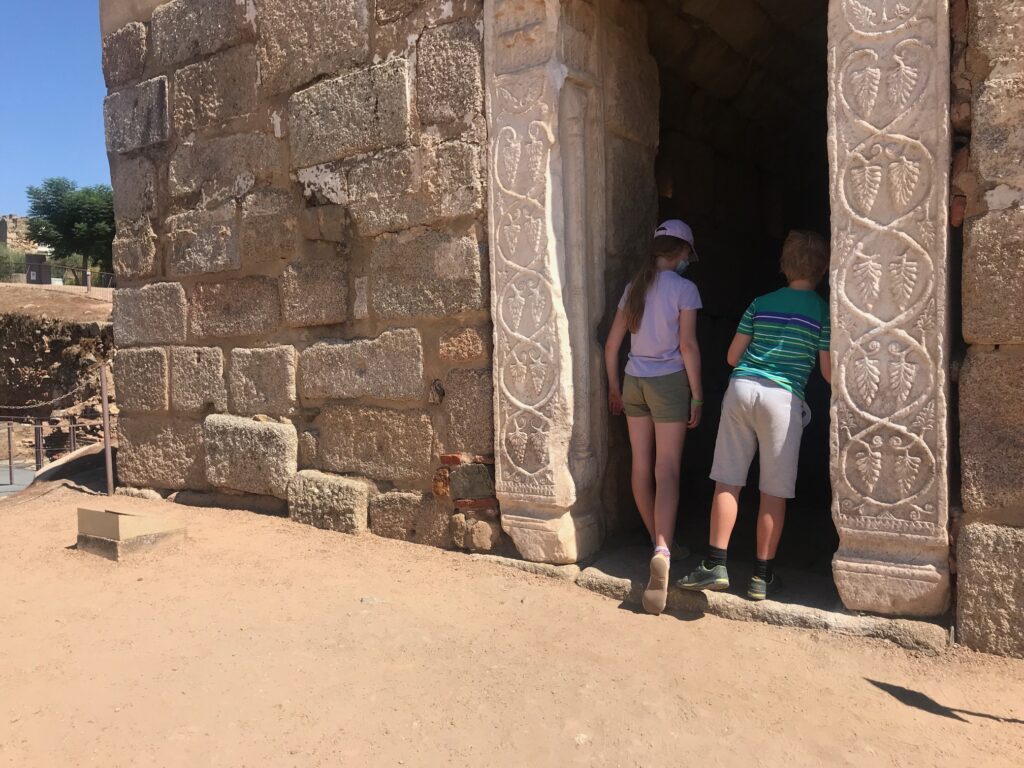
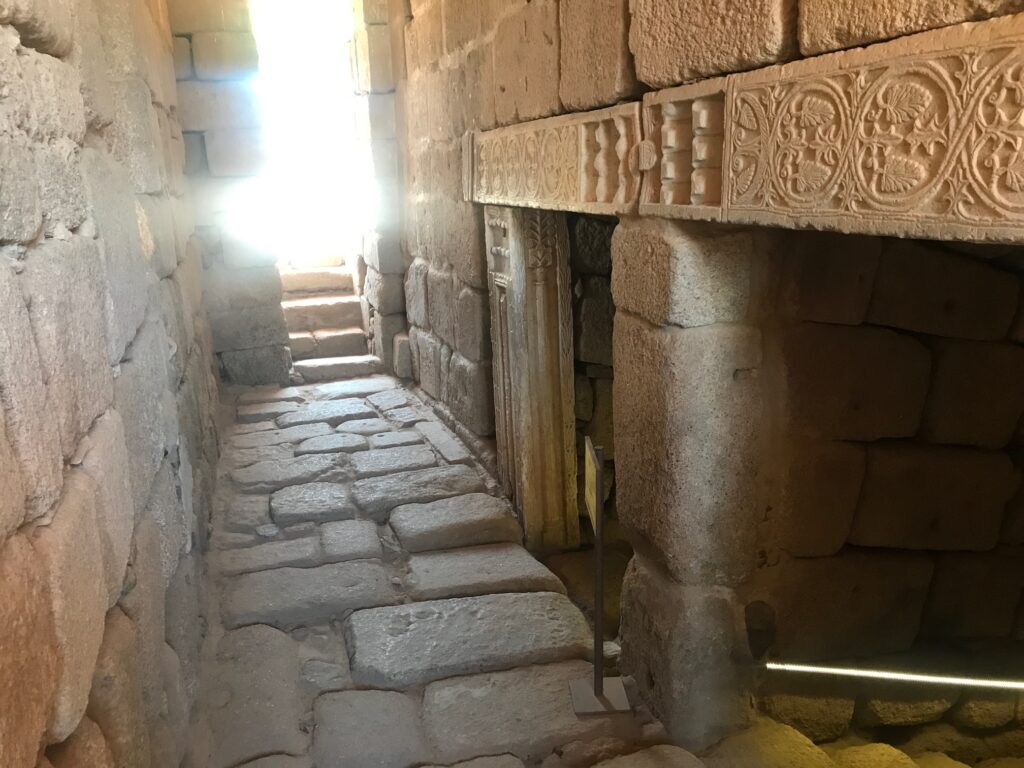
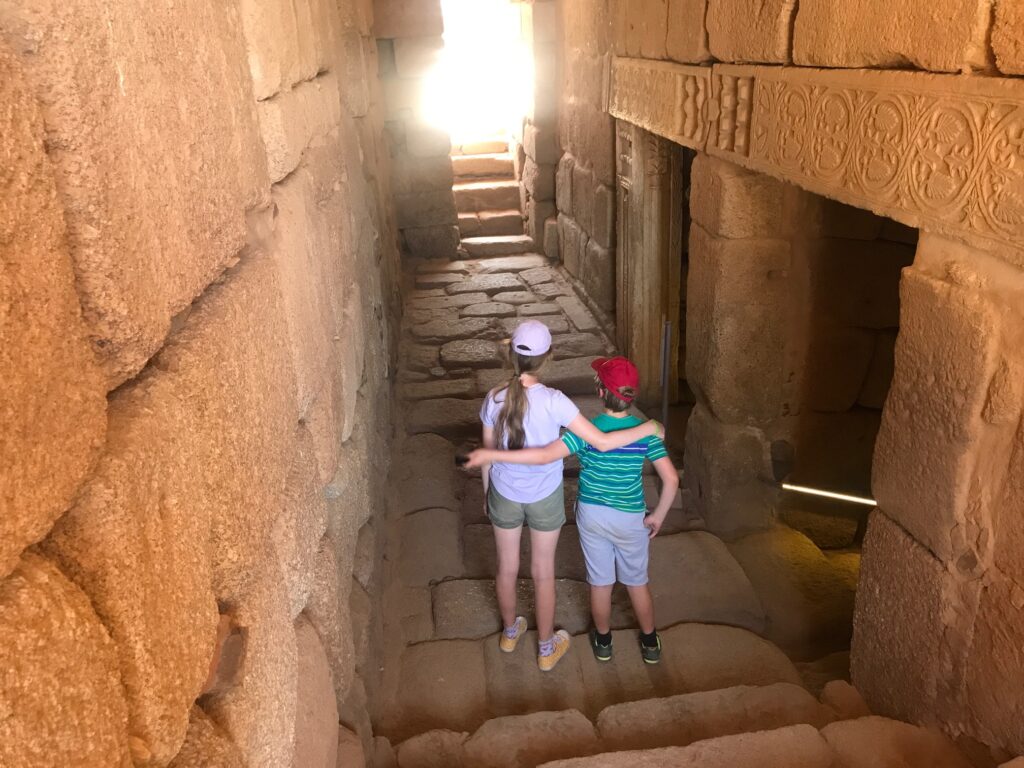
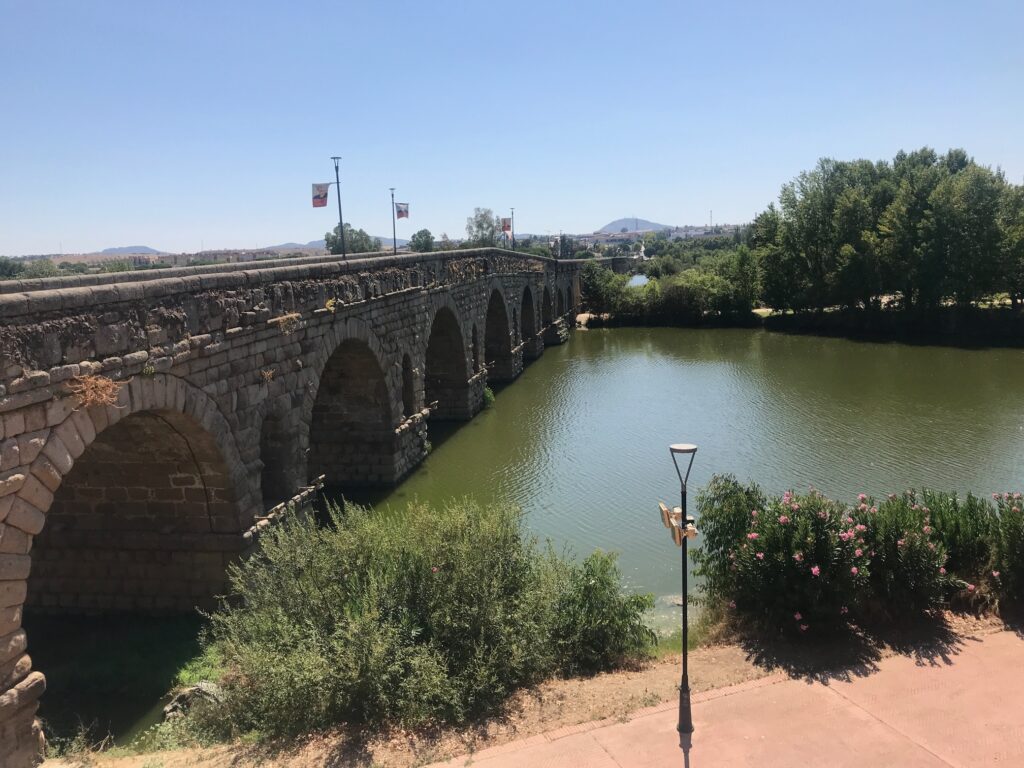
Drop to the river to visit the Alcazaba, one of the earliest Islamic fortresses in the Iberian Peninsula. Its cistern, fed by the Guadiana, is wonderfully atmospheric. Then stroll the Puente Romano, one of the longest surviving Roman bridges in the world – a lovely amble with swallows skimming the water.
5) Casa del Mitreo & Columbarios
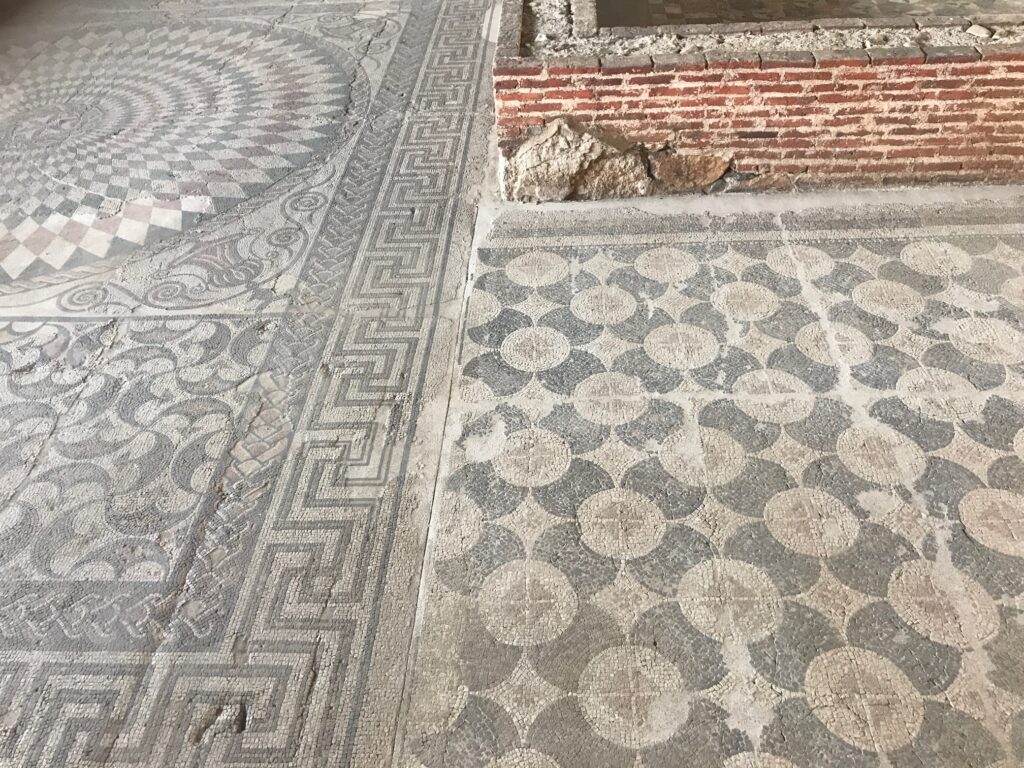
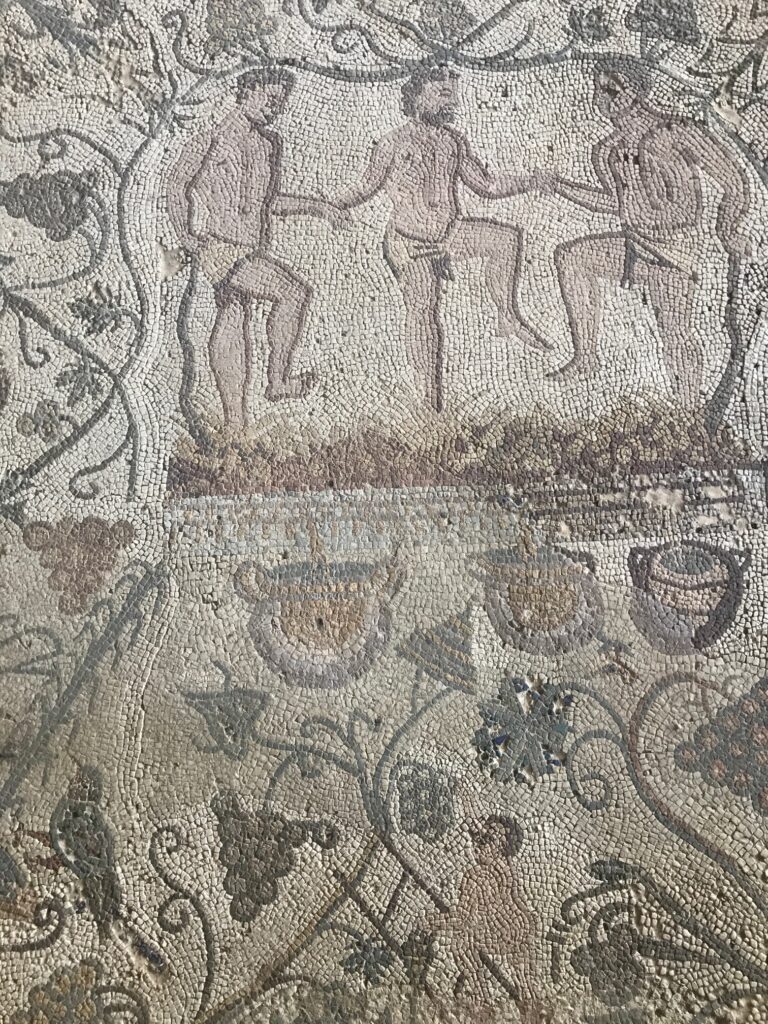
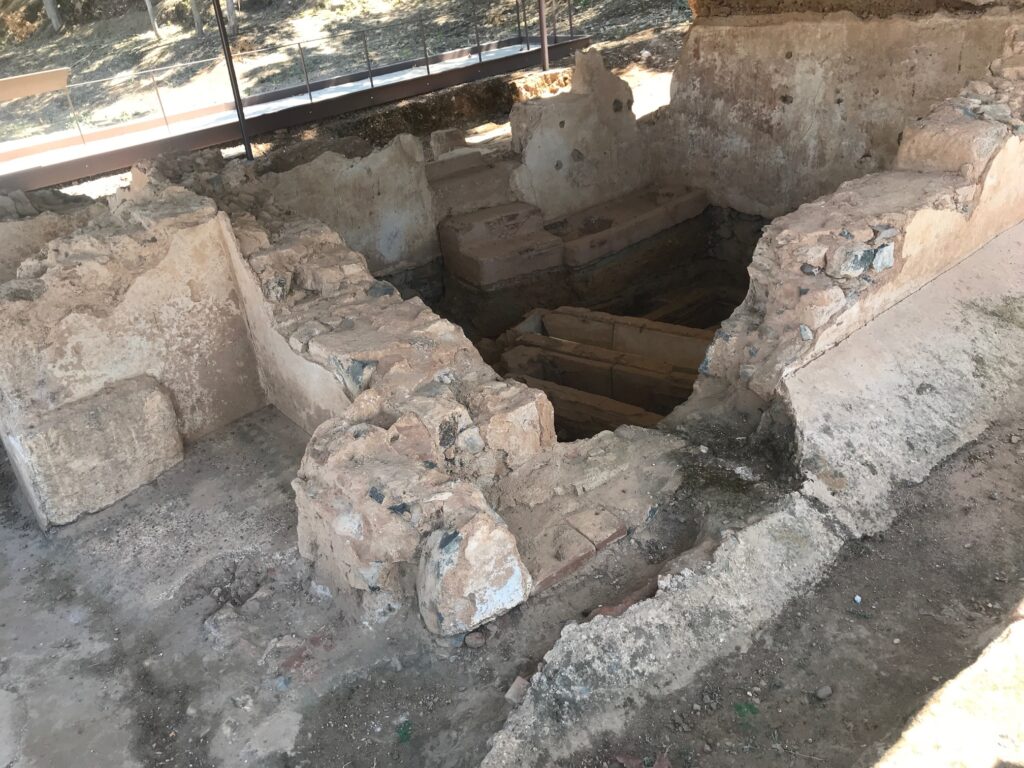
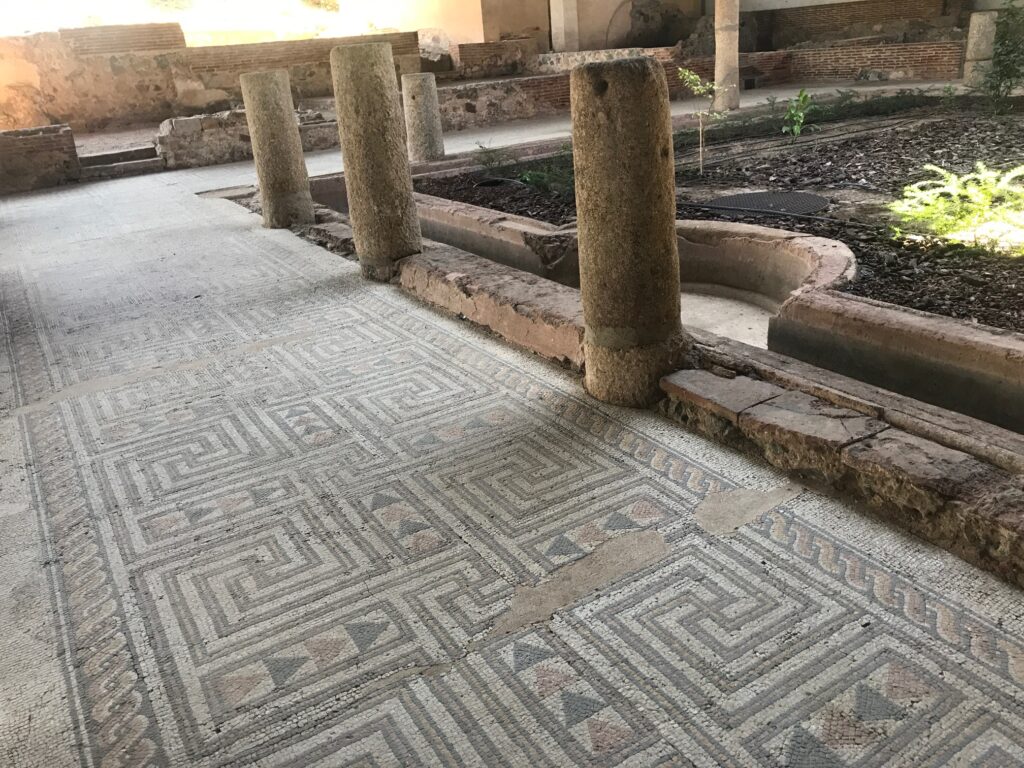
A short hop away, Casa del Mitreo preserves a Roman domus with patios and fresco traces; nearby Los Columbarios reveals family funerary enclosures – quiet, evocative spaces.
6) Acueducto de los Milagros & the reservoirs
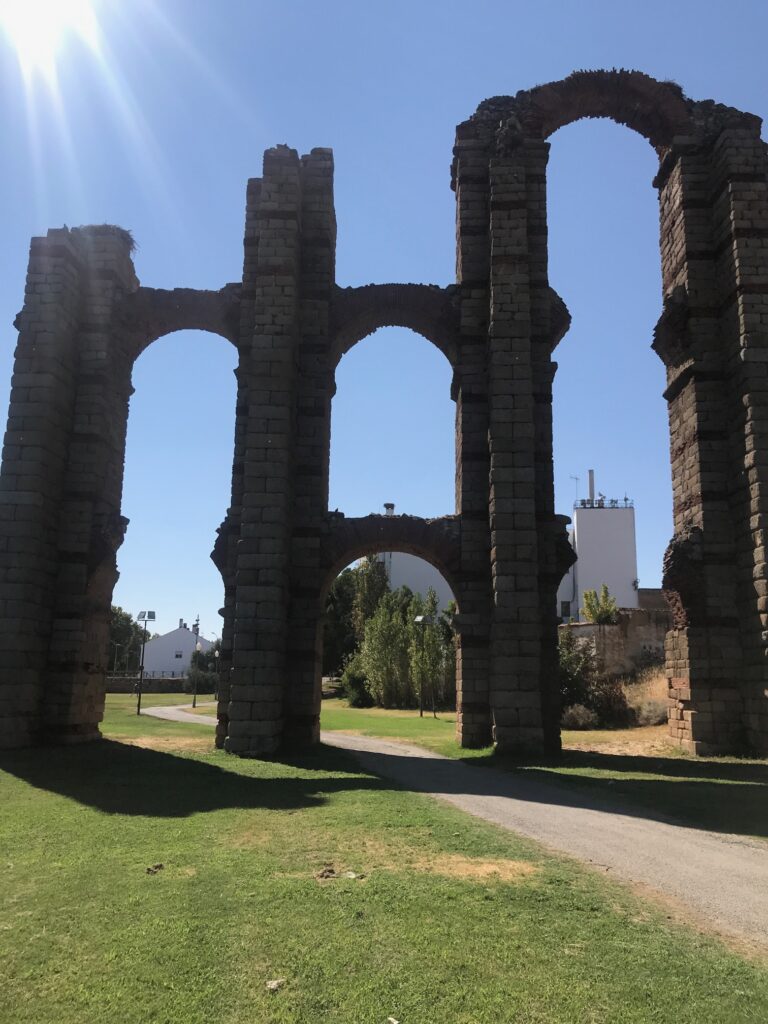
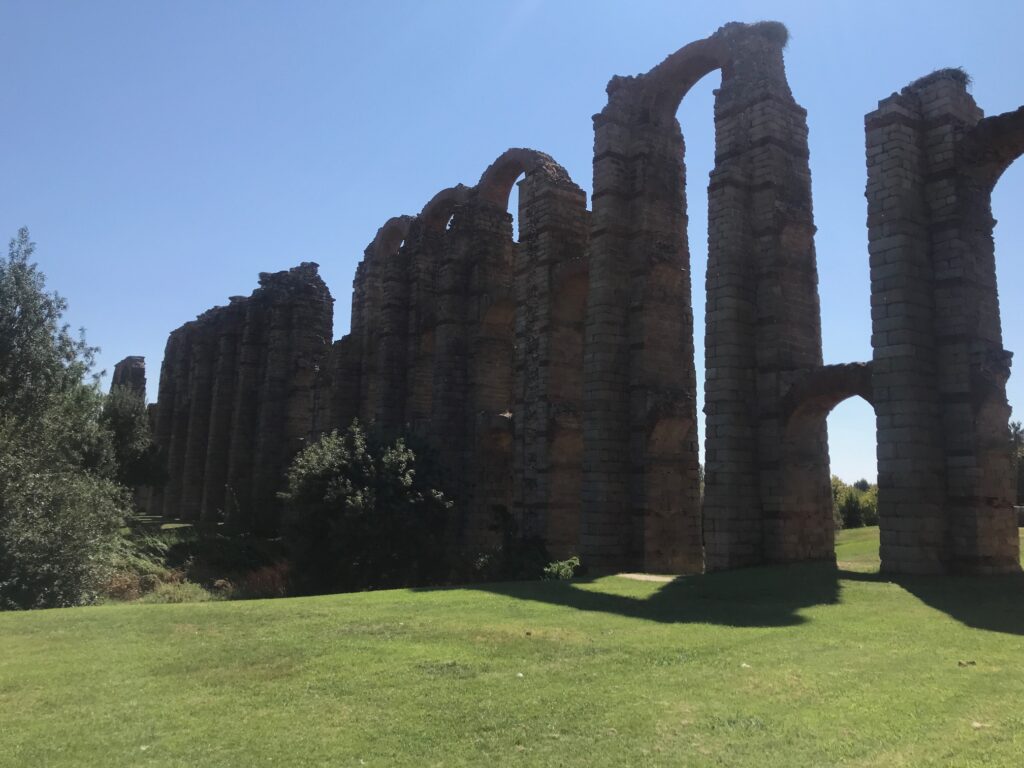
Head north to the Aqueduct of Los Milagros; its soaring brick-and-stone arcades look spectacular in golden hour and are brilliant for photos (and run-around time if you’re with kids). The aqueduct once brought water from the Proserpina Reservoir, a Roman dam still forming a tranquil lake just outside town – locals go for walks and summer swims here.
7) Roman Circus & Morerías
Finish at the Roman Circus, one of the best-preserved chariot tracks in the former empire. Stand on the spina and imagine the roar of race day, then weave through the Morerías archaeological zone where modern walkways float over layered ruins.
One-day route: Theatre/Amphitheatre → MNAR → Temple of Diana/Forum → lunch → Alcazaba & Bridge → Aqueduct at sunset.
Two days: Add Casa del Mitreo/Columbarios, Roman Circus, Basilica of Santa Eulalia, and a sunset drive to Proserpina.
See more indepth itineraries further down our guide.
Where to eat in Mérida

Mérida sits in Extremadura’s dehesa heartland, famed for acorn-fed Ibérico pork, Torta del Casar cheese, La Vera paprika, wild asparagus in spring, and cherries from the Jerte valley in season. Pair plates with Ribera del Guadiana wines. Vegetarians eat well on salmorejo, grilled veg, tortilla, cheeses, and seasonal stews.
Some of our top suggestions of where to eat in Merida Spain –
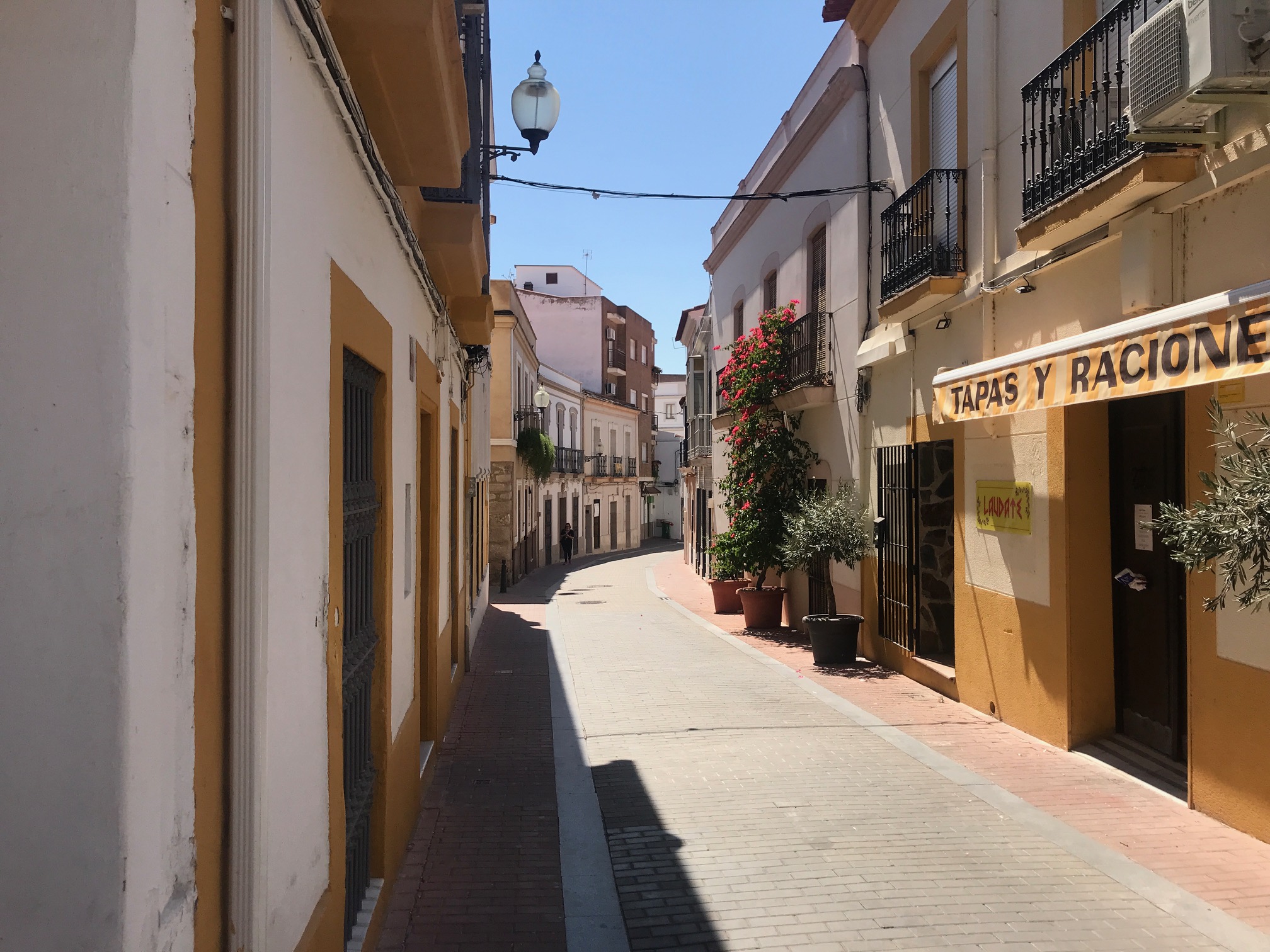
- Plaza de España & Calle Santa Eulalia: Cluster of tapas bars with outdoor seating – perfect for a grazing lunch of tapas, cured cheeses, croquetas, and salmorejo (if you’re with kids they’ll love running around the fountain).
- Around the Temple of Diana: Atmospheric at dusk; gastro-taverns line the surrounding streets for modern takes on regional produce (think presa ibérica, or honeyed aubergine).
- Calle José Ramón Mélida (by the theatre): Lively pre-show scene with menus del día at lunch and shareable raciones later – perfect if you’re heading to an evening performance.
- Mercado Gastronómico San Albín: A stylish food-hall-style market where families can fan out and pick from different stalls – great for mixed tastes and quick bites between sights.
- Riverside near the Roman Bridge: Cafés with views across the Guadiana – come for sunset, stay for dessert (flan de queso, fig cake, or simple helado).
Our top pick of not to be missed:
Torta del Casar or Ibores cheeses; migas extremeñas (ask for a kid-friendly portion); seasonal gazpacho/salmorejo; and local wines from Ribera del Guadiana.
Where to stay in Merida Spain
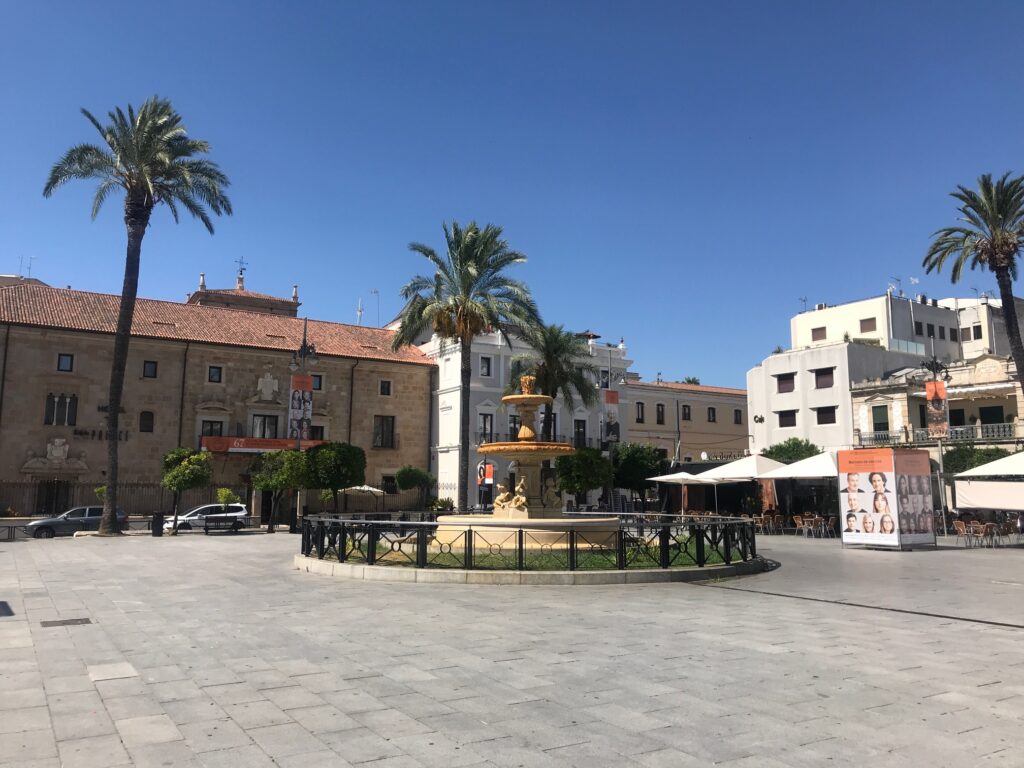
Mérida’s compact center makes most hotels walkable to the ruins. some of our favourite areas are –
- Historic-centre boutique hotels: Steps from the Temple of Diana and Plaza de España. Ideal for couples and culture lovers who want to stroll everywhere.
- Family-friendly apartments: Around Calle Santa Eulalia/Alcazaba; extra space for luggage, with kitchens for easy breakfasts.
- Riverside or outskirts hotels: Easy parking and quick access to the ring road for day trips to Cáceres or Trujillo.
Our top tip for families: request a room away from late-night bar hubs in festival season (July–August theatre performances).
Practical tips
- Tickets: Grab the combined monuments ticket first thing to save money and queuing. Carry ID; some sites offer reduced admissions for children/students.
- Timing: Sights open in the morning, often close for siesta, and reopen late afternoon – structure museum time accordingly.
- Shade & breaks: The aqueduct lawns, Parque López de Ayala, and the river promenade are perfect for snack stops.
- Footwear & water: Surfaces are uneven around ruins; carry a refillable bottle (there are fountains and lots of cafés).
- Pushchairs: Most major sites have accessible routes, but a baby carrier is handy for stepped areas of the Alcazaba and theatre.
Read our complete guide to Spain with kids.
Getting to Mérida & getting around
- By train: Direct services from Madrid (via Puertollano or Badajoz) and from Seville make Mérida an easy rail hop; the station sits a short walk from the centre.
- By road: Mérida lies on the A-5/A-66 crossroads; parking is simpler on the edges of the old town.
- On foot: The core is flat and walkable; most headline sights are within a 10–15-minute stroll of each other.
- By bike/e-scooter: Useful for reaching the Aqueduct/Proserpina reservoir; stick to river paths and quieter streets.
Easy day trips from Merida Spain
- Cáceres (1 hr): A perfectly preserved medieval and Renaissance city – a different time capsule and another UNESCO site.
- Trujillo (1 hr 15 min): Conquistador palaces, castle views, and one of Spain’s loveliest main squares.
- Cornalvo Natural Park (20–30 min): Gentle trails, birdlife, and the Roman Cornalvo dam – an outdoorsy counterpoint to city ruins.
- Alange (25 min): Lakeside village known for its Roman-origin thermal baths – relaxing option for adults while kids enjoy the reservoir beach in summer.
A sample 1–2 day itinerary for Merida Spain
Day 1
Morning – Roman Theatre & Amphitheatre → MNAR
Lunch – Tapas around Plaza de España
Afternoon – Temple of Diana & Arch of Trajan → Alcazaba & Roman Bridge
Evening – Golden-hour photos at the bridge; dinner near Temple of Diana
Day 2
Morning – Casa del Mitreo & Columbarios → Basilica of Santa Eulalia
Lunch – Mercado Gastronómico San Albín (easy with kids)
Afternoon – Aqueduct of Los Milagros (picnic/play) → Proserpina Reservoir (swim/walk in warm months)
Evening – If in July/August, catch a Classical Theatre Festival performance at the Roman Theatre.
Merida with kids? Why Mérida works so well with children
- Everything’s close: Short walking distances between “wow” sights keep boredom at bay.
- Hands-on history: The museum models and massive mosaics are naturally engaging; amphitheatre tunnels and bridge ramparts feel like a real-life adventure. My children loved seeing history so up close and tangible.
- Open spaces: Aqueduct lawns, riverside paths, and the bridge create built-in play time between ruins.
- Simple food wins: Markets and tapas bars make it easy to build a kid-friendly meal from patatas bravas, tortillas, croquetas, and fresh fruit.
Best time to visit
Spring (March–May) and autumn (Sept–Nov) bring soft light and comfortable temperatures – perfect for ruins-hopping. Summer is hot (shade breaks essential) but adds the magic of night-time performances in the Roman Theatre. Winter is quiet, atmospheric, and great for photography.
We visited in the height of summer and the heat was intense. Something to keep in mind if you’re looking to be there in July or August.
Quick FAQ
Is Mérida worth it if I’ve seen Rome?
Absolutely. Nowhere else in Spain layers so many intact Roman structures into a modern city you can walk in a day. We’ve done both and they’re very different.
How long do I need in Merida Spain?
One full day covers the greatest hits; two days let you slow down, see Casa del Mitreo/Columbarios, and catch sunset at the aqueduct.
Can I swim near Mérida?
Yes. Locals head to the Proserpina Reservoir in summer for a cool dip and lakeside cafés.
Do I need a car for Merida Spain?
Not in town. A car is handy for day trips to parks and hill towns, but trains and buses work for Cáceres/Trujillo.
What we think about Merida Spain
Mérida is history you can touch, not sealed behind velvet ropes but woven into cafés, plazas, and family routines. Come for the theatre’s marble backdrop, stay for the river walks, the aqueduct’s evening glow, and plates of Extremaduran comfort food. Whether you’re a ruins buff, a weekend city-breaker, or a family hunting for an easy, walkable cultural stop, Mérida is one of Spain’s most rewarding small cities. We think it’s somewhere beautiful and that’s a real surprise. It’s Spain at it’s most real and we love it for that.