Travelling by car with young children can be one of the most rewarding ways to explore. It gives you the freedom to stop where you like, discover hidden gems along the way, and travel at your own pace. But to make the journey as smooth as possible when travelling safely with young children, a little planning goes a long way.
When you’re heading off on a family adventure – whether it’s a weekend at the coast or a countryside escape – keeping your little ones safe on the road is one of the most important parts of the journey. Car seat safety can feel daunting, especially when you’re juggling luggage, snacks and excitement in the back seat. But a few simple checks can make all the difference in keeping your child safe, comfortable, and ready to explore once you arrive.
*AD / This post contains affiliate links & as an Amazon Associate we earn from qualifying purchases. We may also have been compensated in this post either financially or with products / stays. To read more see our Disclosure Policy.
Table of Contents
Plan rest breaks and play stops when travelling safely with young children
Children need regular breaks to stretch, snack, and burn off energy. Aim to stop every couple of hours, even on shorter journeys. Motorway services with play areas or nearby parks are ideal, but sometimes a simple lay-by picnic can be just as refreshing. Bring a ball, a skipping rope, or a travel-sized game so little legs can move before getting back in the car. If your route allows, plan a fun stop midway – perhaps a farm shop, a beach, or a woodland trail. Breaking up the journey helps everyone feel calmer and makes the drive part of the adventure.
Pack smart snacks and drinks
Hunger and boredom often arrive together on car journeys. Pack a variety of easy-to-eat snacks like rice cakes, fruit slices, or oat bars, and keep them within reach. Avoid messy foods like chocolate or yoghurts unless you’re ready with plenty of wipes! Individual snack boxes can help prevent squabbles over sharing, and refillable water bottles are a must for longer trips. A small cool bag works brilliantly for keeping things fresh, especially in summer.
Keep little minds entertained whe travelling safely with young children
A bit of entertainment can transform the mood of a long journey. Download family-friendly podcasts or audiobooks before you go – storytime classics like Julia Donaldson, Roald Dahl, or Paddington work wonders for young listeners. There are also brilliant educational podcasts for curious kids who love learning as they travel. For musical families, create a sing-along playlist full of upbeat tunes – from Disney favourites to family classics. Singing together passes the time quickly and keeps everyone smiling. You can even turn it into a mini road-trip karaoke session.
Comfort is key
Long journeys can be tiring, especially for little ones. Make sure each child has a small pillow or travel cushion for naps, and dress them in soft, layered clothing that’s easy to adjust with changing temperatures. Sunshades for the windows can make a big difference on bright days, and keeping a light blanket handy adds a sense of comfort and calm. If you’re travelling at night, bring a soft nightlight or gentle music to help little ones drift off while you drive.
Involve your children in the adventure
Even the youngest travellers enjoy feeling part of the journey. Show them the map before you leave and talk about where you’re heading. Older children can help plan stops or choose a favourite song for each leg of the trip. Turn the journey into a game – spot different coloured cars, count bridges, or play “I spy” with things you pass on the road. Making travel interactive helps build excitement and creates lovely shared memories along the way.
Getting car seat safety right from the start
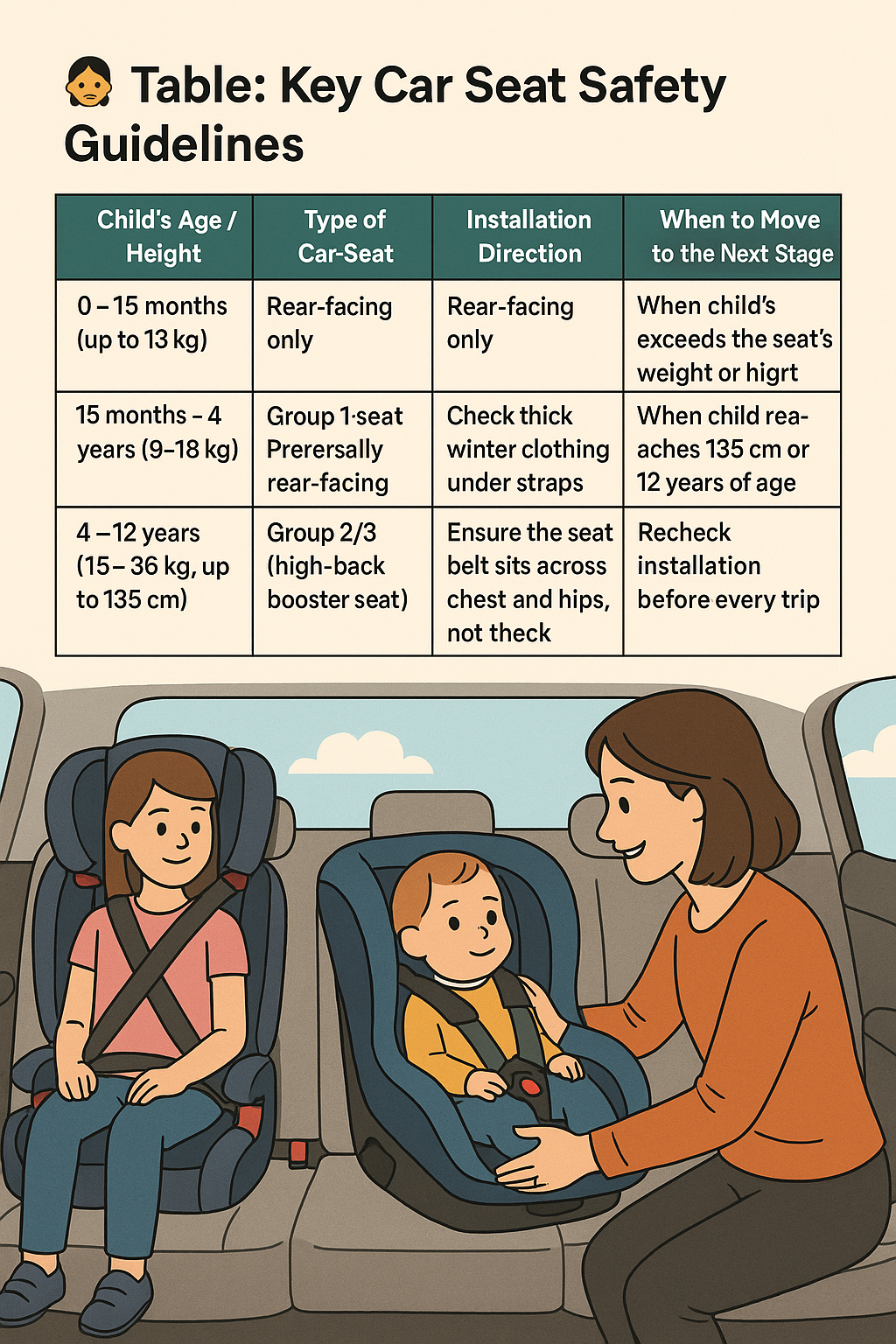
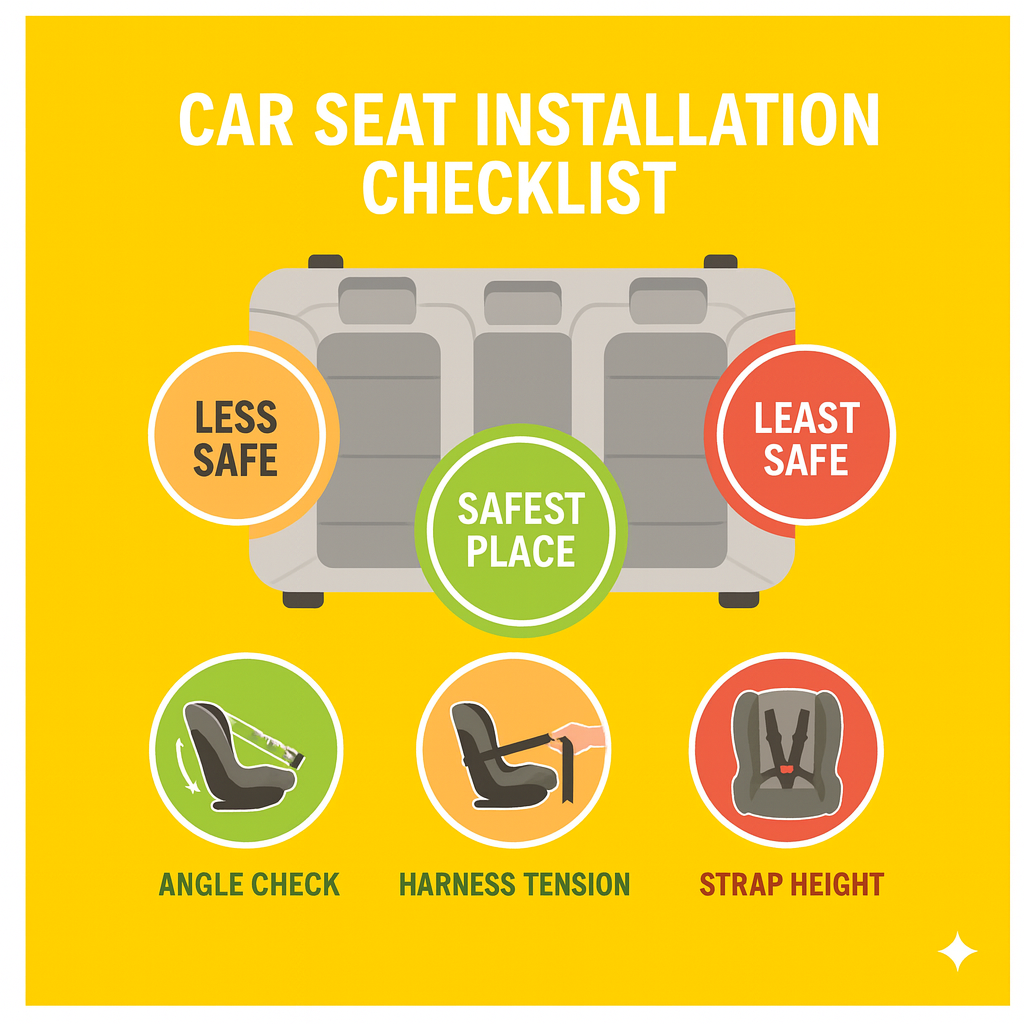
Many parents assume that once a car seat is installed, that’s the job done. In reality, small mistakes are surprisingly common – and can have serious consequences even in low-speed bumps. The safest spot for your child’s car seat is the rear seat, away from airbags and as far from the doors as possible. If your car allows it, the middle rear seat offers the best protection, as it’s furthest from side impacts. If that’s not an option, either of the rear sides is absolutely fine – just never place a car seat in front of an active airbag. Children in the UK must use a car seat until they’re 12 years old or 135cm tall, whichever comes first. Keeping your child rear-facing for as long as possible, ideally until at least age four, offers the best protection in a collision.
Why rear-facing travel matters
Rear-facing seats spread the force of a sudden stop across your child’s back and head, protecting their neck from jolting forward. While many UK parents switch to forward-facing at around two, research shows that staying rear-facing for longer significantly reduces the risk of injury. In countries like Sweden, where most children remain rear-facing until four, child injury rates in car accidents are dramatically lower. So if your seat allows it, keep them rear-facing until they outgrow the height or weight limit. When you do switch, use a five-point harness to keep them properly restrained. And don’t be tempted to rush to a booster seat too soon – high-back boosters offer far more support and help position the seatbelt correctly across your child’s chest and hips.
Installing the seat correctly
Whether you’re setting off in your own car or hiring one for a weekend away, it’s worth taking five minutes to double-check your car seat installation. If your vehicle has Isofix anchor points (standard in most cars made after 2011), use them – they’re quick, secure, and almost foolproof. If you’re using a seatbelt installation, thread the belt exactly where the instructions show and pull it tight – using your body weight if necessary. Once fitted, the seat shouldn’t move more than an inch when you tug it. Forward-facing seats also need the top tether strap secured, which prevents the seat from pitching forward. Always check your car’s handbook for the correct anchor point.
Common mistakes to avoid on family journeys
A loose or twisted harness might not seem serious, but it can drastically reduce the protection your child gets in a crash. The harness should lie flat against your child’s shoulders – snug enough that you can’t pinch any fabric between your fingers. In colder months, avoid strapping your child in while wearing bulky coats or snowsuits, as this padding compresses on impact and can create dangerous slack. Instead, remove the coat and lay it over them once they’re buckled in. Check the strap height as your child grows – for rear-facing seats, straps should be at or below the shoulders, and for forward-facing, at or above.
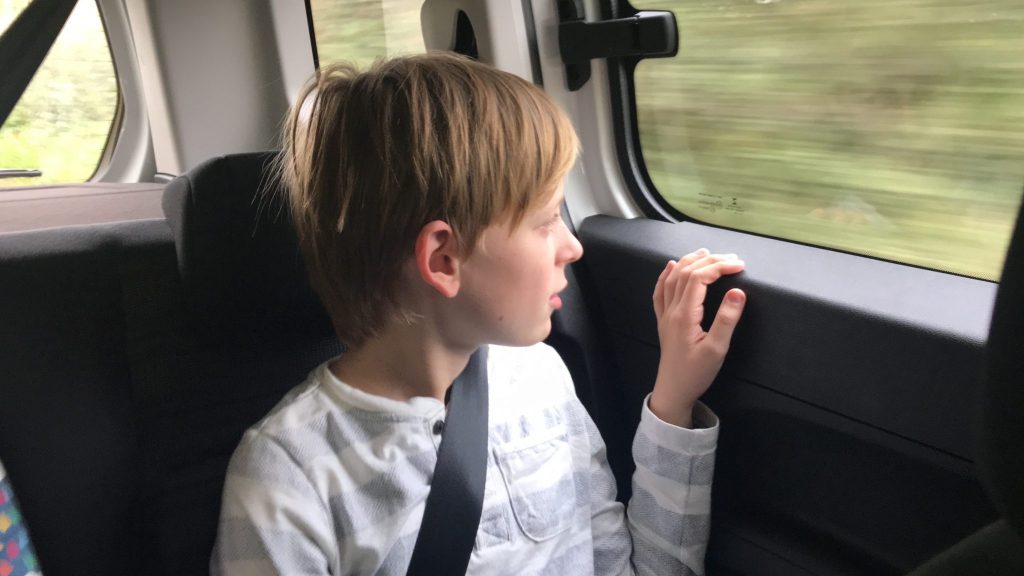
Keep your car seat – and air clean – on every trip
Car seats don’t last forever. Plastic weakens over time, and most expire around six years after manufacture. Check the expiry date and replace any seat that’s been involved in a collision, even if it looks undamaged. Regularly recheck installation too, especially if you’ve moved the seat between cars. It’s also worth thinking about what your children are breathing on the road. Cabin air filters remove dust, pollen, and pollution – essential for little lungs, particularly on longer journeys or city drives.
Regular filter changes keep the air inside your vehicle clean and fresh. AUTODOC states that changing air filters, replacing these filters every 12 months or 15,000 miles protects your family from breathing contaminated air during daily school runs and long family trips.
Safe, smooth, and full of fun
A little preparation before setting off can make all the difference. By double-checking your car seat installation, planning regular rest stops, and packing plenty of snacks and entertainment, you’ll set your family up for a journey that’s both safe and enjoyable.
Travelling by car with young children doesn’t have to be stressful – it can be an adventure filled with laughter, stories, and moments you’ll remember long after you arrive. So buckle up, cue your favourite playlist, and enjoy the ride. After all, the best family holidays often start before you even reach your destination.