Located on a serene hilltop in Central Java (just outside of Yogyakarta), Borobudur Temple stands as the world’s largest Buddhist temple and one of Indonesia’s most iconic cultural treasures. Built during the era of the Śailendra dynasty between about 778 and 850 AD, this monumental temple combines spiritual symbolism, extraordinary artistry, and architectural prowess. There’s something mystical and almost magical about this amazing place. We visited on our family trip to Indonesia and fell in love with it. It was a highlight of our trip to Indonesia. So these are all our top tips for visiting Borobudur Temple Indonesia, with everything you need to know for your visit.
👩💻 About the author – Nichola is a family travel expert and has written for The Guardian, The Telegraph, Lonely Planet Magazine and Wanderlust, amongst many others. She’s spent over a decade travelling the world with her children, finding the best places for you to explore too.
*AD / This post contains affiliate links & as an Amazon Associate we earn from qualifying purchases. We may also have been compensated in this post either financially or with products / stays. To read more see our Disclosure Policy.
Find skip-the-line tickets to Borobudur temple here.
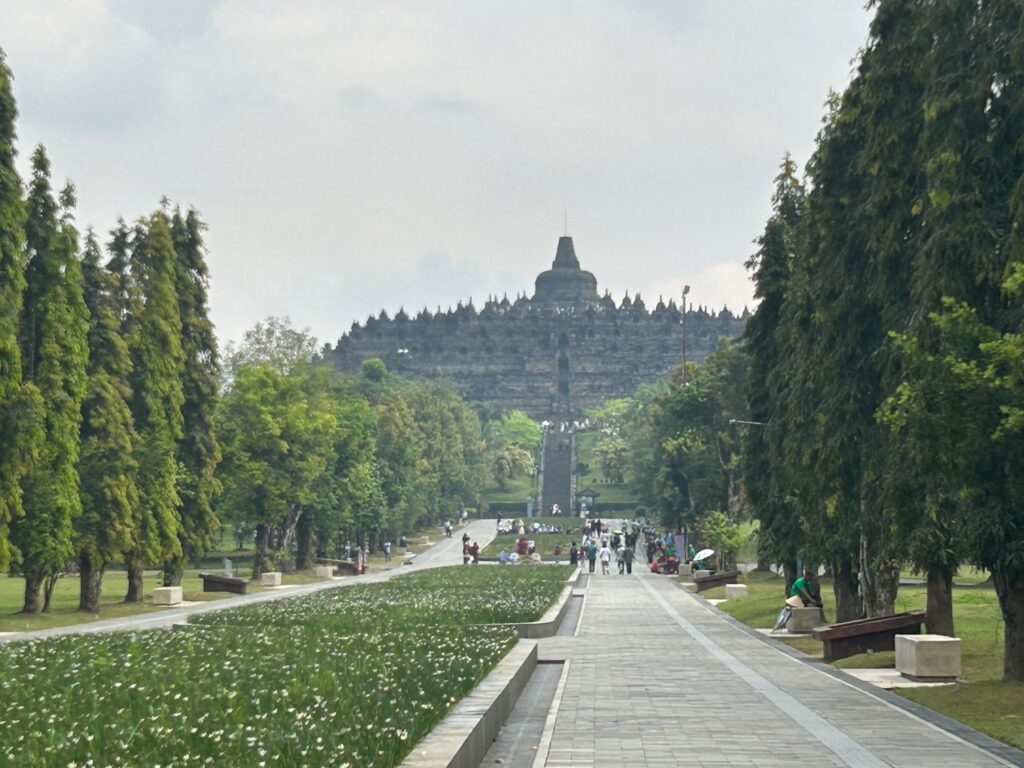
Table of Contents
All about Borobudur Temple – carved in symbolism
Borobudur is much more than a structure – it’s a journey. Designed as a stone mandala, it represents the Buddhist cosmos and spiritual progression:
- The square base and five lower terraces (Kamadhatu and Rupadhatu) symbolize earthly desires and the transition from form to formlessness.
- The three circular upper terraces (Arupadhatu) lead pilgrims toward Nirvana.
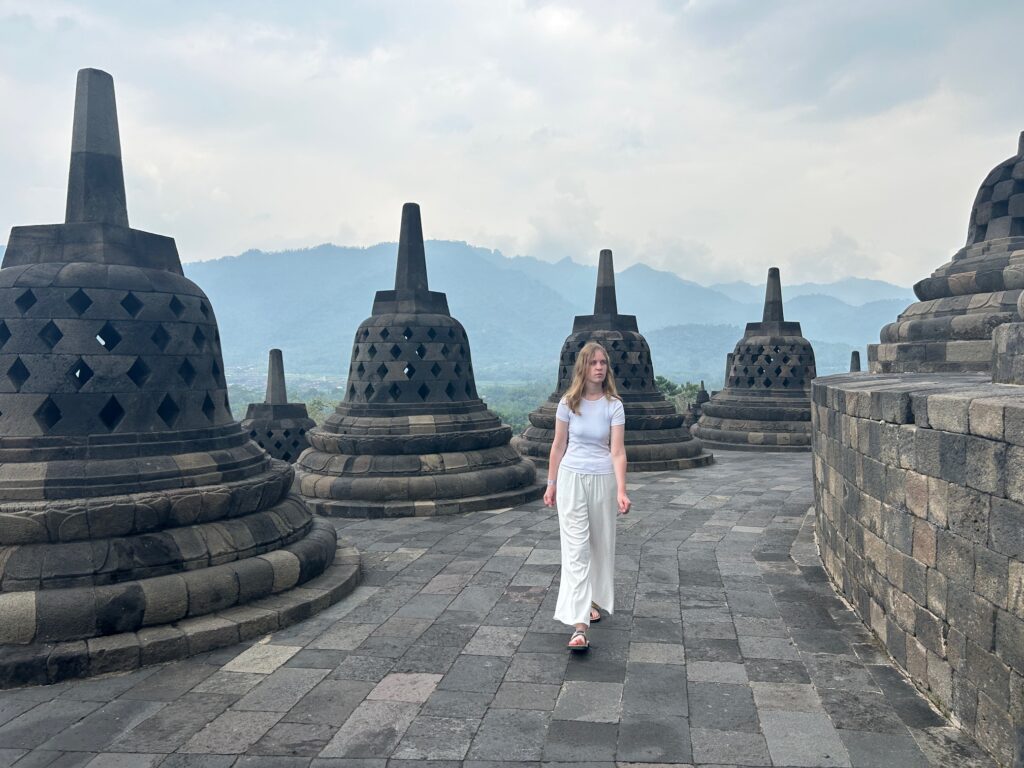
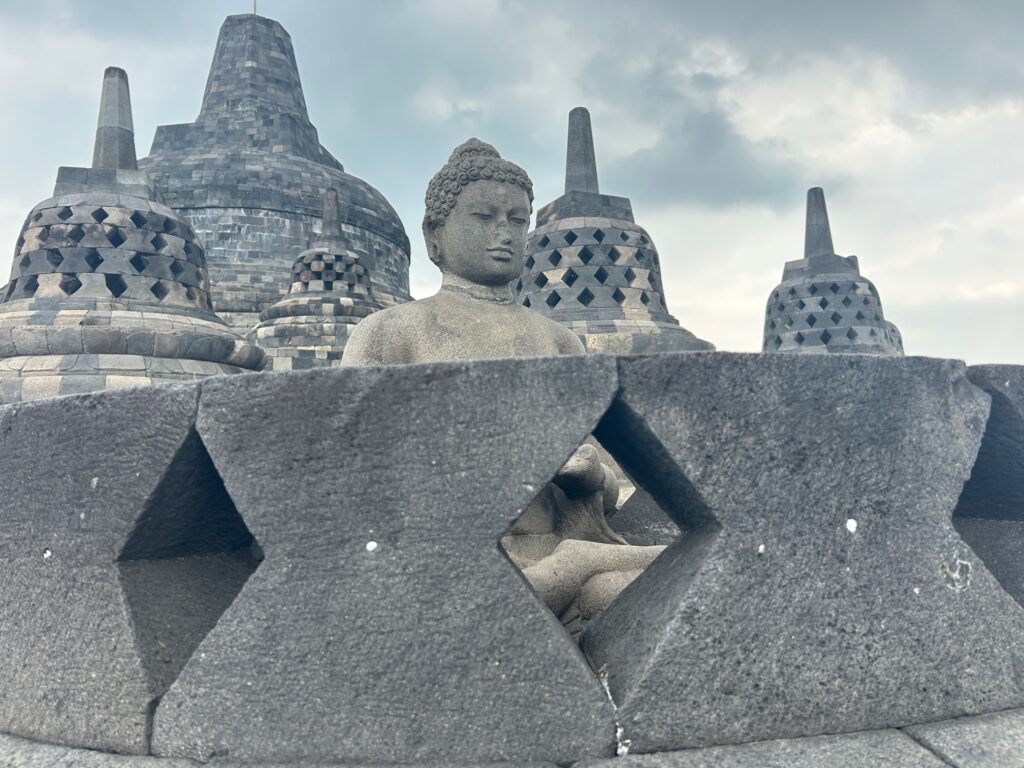
- At the very top stands a large central stupa surrounded by 72 smaller perforated stupas, each cradling a meditating Buddha statue

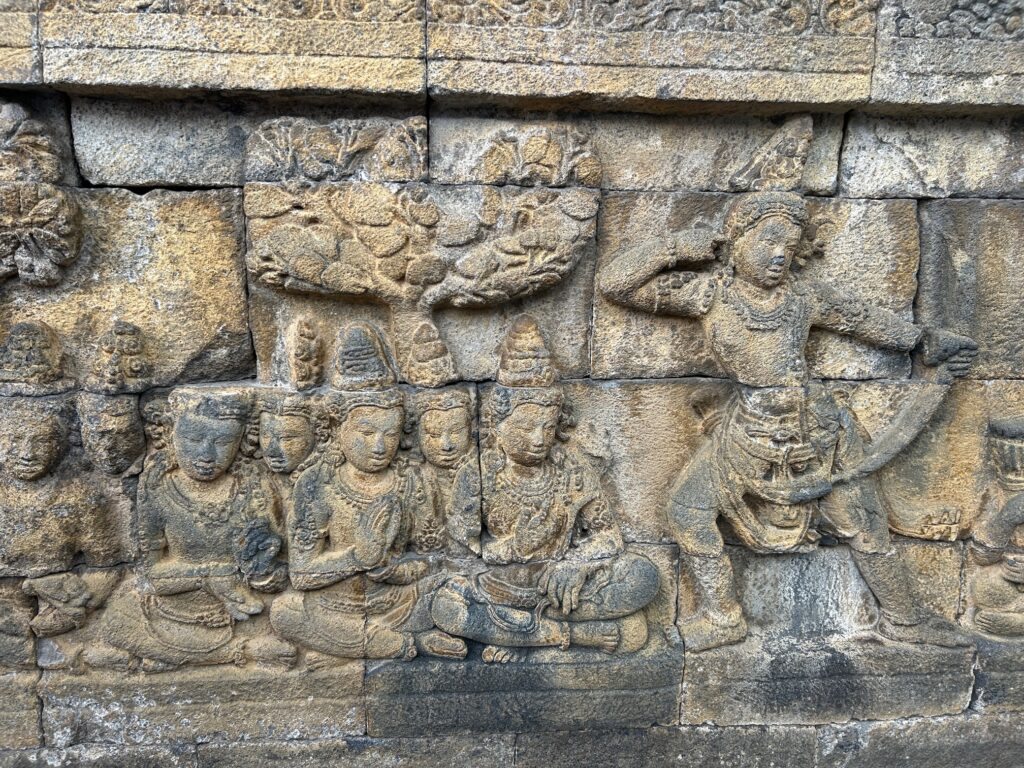

Carved across the walls and balustrades are over 2,672 narrative relief panels, illustrating the life of the Buddha and various Buddhist teachings. In total, there are 504 Buddha statues, each with a unique hand gesture (mudra) embodying different spiritual principles
A history of Borobudur Temple. Lost and found: from jungle to UNESCO

Borobudur was abandoned around the 14th century as Buddhism declined in Java, gradually succumbing to volcanic ash and jungle overgrowth. It remained hidden until rediscovered in the early 19th century by Stamford Raffles in 1814. A major restoration began under Dutch supervision in 1907–11, followed by a UNESCO-led conservation from 1973 to 1983 Designated a UNESCO World Heritage site in 1991, Borobudur today attracts millions of visitors annually and stands as a testament to global heritage and resilience
Exploring the site: layout and museums
Because of a number of negative situations for the temple, primarily the rise of parkour and viral videos jumping from the structure, access is now only with a guide. Here you can visit the following.
The core temple

Visitors begin by ascending six square terraces, circumnavigating each level clockwise and studying the stone panels that depict Jataka tales (the Buddha’s past lives) and spiritual lessons. As you pass through the circular terraces, the landscape shifts to panoramic vistas and the majestic stupas.
To complete the spiritual knot, you climb upward through the Mandala, emerging at the summit where dense stonework surrounds the stupes – ephemeral encounters with enlightenment. The climb is contemplative, echoing the intended journey from ignorance to awakening.
Karmawibhangga museum
Situated just outside the temple, this museum displays the original “hidden foot” reliefs that portray moral and ethical lessons omitted from the public walls. Exhibits also include restoration tools, blocks replaced during conservation, and interpretative displays that help contextualise Borobudur’s architecture
Samudra Raksa museum
Also part of the Borobudur Archaeological Park, this museum features a full-scale replica of the 8th-century “Borobudur ship,” reflecting the maritime trade routes once depicted on its walls. It’s an excellent stop to understand how ancient Javanese society connected across the Indian Ocean
Getting your Borobudur tickets
Opening hours & tickets
- General admission: The temple grounds are open from 6:30 AM to 5:30 PM, with entry allowed from 7:00 AM onward – though ticket counters open at 6:30 AM .
- Climb-up tickets: Required to ascend to the upper terraces. Sold in hourly time slots (e.g., 8:30, 9:30, etc.), with a daily cap of 1,200 visitors and limited to 150 per slot.
- Pricing:
- Foreign adults: ~IDR 400,000–455,000 (approximately £20)
- Foreign children: ~IDR 225,000–350,000 (£10-£15)
- Domestic: considerably less (≈IDR 50,000–150,000)
- Sunrise/sunset tours: Limited availability—sunrise begins around 4:30 AM with special tickets and guided support.
Our top Borobudur tips – Every day a number of tickets are released. Book in as far in advance as these sell out. You can also get tickets by booking a tour but some tours only visit the temple grounds (still amazing) whilst others allow you to ascend the temples. The tickets to ascend had sold out on the day we wanted to visit so we booked a private driver and travelled there to try and buy some on the day. Each day a few more are released and we were lucky enough to get one of these.
Because of damage done to Borobudur by tourists in the past, now you can only visit with a guide. The tour in medium sized groups takes around an hour and as part of this you have approximately 30 minutes of your own time to wander amongst the stupors.
Find skip-the-line tickets to Borobudur temple here.
Tip: arrive early
Early mornings (6:30–8:30 AM) offer cooler temperatures, soft light, fewer crowds, and dramatic sunrise views – ideal for photography and quiet reflection
Attire and belongings
- Dress respectfully: Cover shoulders and knees (sarongs available for rent on-site).
- Footwear: Sandals are provided for climb-up tickets – personal shoes aren’t allowed on upper tiers. You do get to keep the sandals which are a nice souvenir afterwards.
- Essentials: Bring bottled water (but you will be given a small bottle as part of your ticket), suncream, a hat, and light clothing.
- Backpacks: Zip items securely; avoid carrying food or valuables that might distract or be damaged.
Our tip – we took in a bag of food which got taken at security (drinks are fine). They keep it for you and you’ll get it back at the end of your visit.
Guided tours
Local guides (in multiple languages) enhance the experience with historical context and storytelling. Tickets to ascend the structure include a guide automatically.
Facilities
While there is nothing on the structure itself, of course, there are loos just before you go up and also places to buy drinks.
Top tips for visiting Borobudur Temple
- Stay close – opt for nearby Borobudur-area hotels for early visits . We stayed at Tirtodipuran Hotel Yogyakarta which took about an hour and half.
- Dress respectfully – cover shoulders and knees, use rented sarongs.
- Time your climb – book climb-up slots online early via official channels.
- Hydrate and protect – bring water and wear sun protection.
- Go guided – understand the rich symbolism and legends behind each relief.
- Manage crowds – start early or late to avoid midday peak traffic.
- Observe respect – no touching carvings, loud talking, or littering.
- Combine visits – include nearby temples for a rich cultural day.
Nearby sights to expand your day
- Pawon and Mendut Temples: Often part of ritual pilgrimages, both temples are within a few kilometres and warrant a visit . Find out more here.
- Setumbu Hill: Offers spectacular sunrise views over the temple, especially when bathed in golden light .
- Yogya/Prambanan combo tours: Combine Borobudur and Prambanan in a full-day journey between Yogyakarta and Jakarta. Find combination tours here.
- Merapi volcano: Nearby Mount Merapi can be explored on jeep tours for volcanic intrigue and panoramic views. Find out more here.
Cultural and spiritual significance of Borobudur Temple Indonesia
Pilgrimage and Vesak
Borobudur remains a working pilgrimage site. Each Vesak (Waisak) during the full moon in May–June, thousands gather here – moving around the temple from nearby Mendut and Pawon, performing meditation, prayers, and releasing lanterns.
Meditative architecture
The terraces guide physical and spiritual ascent. The relief panels illustrate karmic principles and moral narratives, encouraging reflection through walking, contemplation, and stone carvings
Cosmic alignment
Scholars note the temple and its satellite temples (Mendut, Pawon) align astronomically along solar meridians. Connecting spiritual and natural worlds through sacred geometry
Conservation challenges for Borobudur Temple
- Visitor wear and tear: High traffic led to erosion of stair stones. Wooden walkways and rubber covers have been installed to protect vulnerable sections .
- Vandalism: Despite guards and surveillance, occasional graffiti occurs, prompting stricter preservation measures.
- Environmental threats: Earthquakes, volcanic ash, soil erosion, and heavy rainfall challenge the structure’s stability, necessitating ongoing conservation by UNESCO and local teams .
- Visitor limits: To reduce overcrowding and degradation, climb-up entry is capped and managed via slot booking.
Experiences at Borobudur Temple to consider
- Sunrise climb: Ideal for early risers – it offers ethereal views above a sea of clouds. Find out more here.
- Guided tours: Especially helpful to understand the narrative detail of relief panels. Find out more here.
- Vesak participation: Witnessing the lantern festival is moving and surreal.
- Photography: The tiered structure and surrounding volcanoes offer dramatic framing throughout the day.
Final thoughts on Borobudur Temple Indonesia
Visiting Borobudur is more than a sightseeing trip, it’s a journey through history, spirituality, and artistry, where each step invites quiet reflection. As a cultural landmark, it pulses with ancient symbolism, inviting pilgrims and travellers alike to slow down, look closer, and connect. Despite modern challenges of tourism and preservation, its soaring stupas, carved reliefs, sacred geometry, and volcanic backdrop continue to inspire wonder.
We absolutely loved our visit here. Spotting buddhas beneath intrictate stupors, seeing the surrounding landscape covered in mist, looking at delicately carved panels all telling an amazing story. If you get the chance to visit you won’t regret it.
Find skip-the-line tickets to Borobudur temple here.