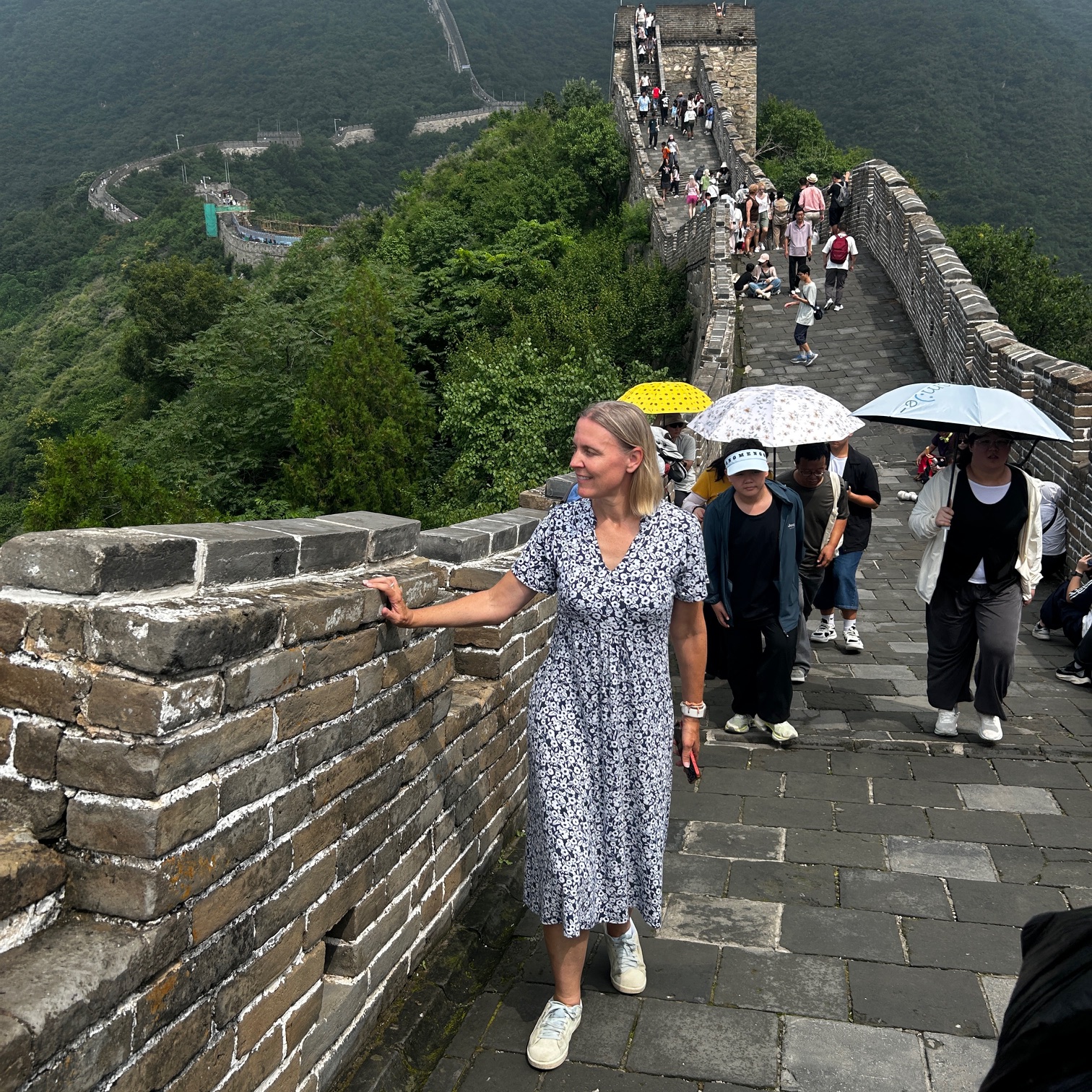
Visiting the Great Wall of China was one of the experiences we were most looking forward to on our family holiday in China. It is one of those places that you see photographs of for years before you visit, and the children couldn’t wait to see it for real. We had been lucky to have visited 20 years ago (both to Mutianyu and to. a more remote location at Jinshanling) and we couldn’t wait to return. On this trip we visited the Mutianyu section of the Great Wall during our time in Beijing, travelling out with Catherine Lu Tours, and it turned out to be one of the highlights of our time in the city. We visited in August, so the weather was very hot and humid, and there were plenty of other visitors there too. But with a little planning, and particularly by using the cable car rather than attempting to walk all the way up from the bottom, it was a very manageable day out for our family. If you’re planning on visiting the Great Wall of China with kids, these are the things I would recommend knowing before you go.
👩💻 About the author – Nichola is a family travel expert and has written for The Guardian, The Telegraph, Lonely Planet Magazine and Wanderlust, amongst many others. She’s spent over a decade travelling the world with her children, finding the best places for you to explore too.
*AD / This post contains affiliate links & as an Amazon Associate we earn from qualifying purchases. We may also have been compensated in this post either financially or with products / stays. To read more see our Disclosure Policy.
Table of Contents
Why we chose Mutianyu – Great Wall of China tips

There are several different sections of the Great Wall that can be visited around Beijing and choosing which one to explore can make a big difference to your experience.
We chose Mutianyu, which is around 70km north-east of central Beijing. It is one of the best-preserved sections of the Ming Dynasty Great Wall and is particularly spectacular because of its setting among the mountains.
The Mutianyu section was originally established as a fortified pass in 1404 during the early Ming Dynasty and was subsequently restored. It was added to the UNESCO World Heritage List in 1987 as part of the Great Wall World Heritage Site.
The Great Wall itself is far older and much more extensive than the sections most visitors see around Beijing. It isn’t actually one wall built at one particular time. Defensive walls and fortifications were constructed and rebuilt by different Chinese dynasties over more than 2,000 years. Around 220 BC, Qin Shi Huang connected earlier defensive walls, while the Ming Dynasty carried out some of the most extensive rebuilding, producing many of the impressive brick and stone sections that we recognise today.
Standing on the wall at Mutianyu, seeing it snake up and down the mountain tops, you could really imagine the history here.
Visiting the Great Wall of China with kids

Visiting the Great Wall is on many people’s bucket lists, but I know that families can worry about how accessible it is. We visited with our children who are teenagers but this guide will hopefully help those with kids of all ages.
It’s important to know that, as expected, there are steps, slopes and sections of uneven paving, and some parts are considerably steeper than others.
That doesn’t mean you need to be particularly athletic to visit. It is perfectly possible to have a wonderful experience without walking for miles along the wall.
In fact, one of the best decisions we made was to take the cable car up.
Take the cable car at Mutianyu – Top tips for Great Wall of China


For us, the cable car made visiting the Great Wall so much easier.
Rather than using up lots of energy climbing from the bottom, we were taken up to the wall and could concentrate our energy on actually walking along it.
We also took the cable car back down.
This meant that we could spend our time enjoying the views and exploring sections of the wall rather than turning the visit into a much more strenuous hike.
There are different routes around Mutianyu and the cable car provides access to the upper part of the attraction. The official site currently recommends routes that combine the cable car with walking along the wall, including a shorter option around the No. 14 and No. 15 watchtowers.
For families, I think this is a particularly good option.
You can still get the feeling that you have properly walked the Great Wall, without exhausting everyone before you’ve even reached it.
Don’t expect the Great Wall to be flat – Top tips for the Great Wall of China
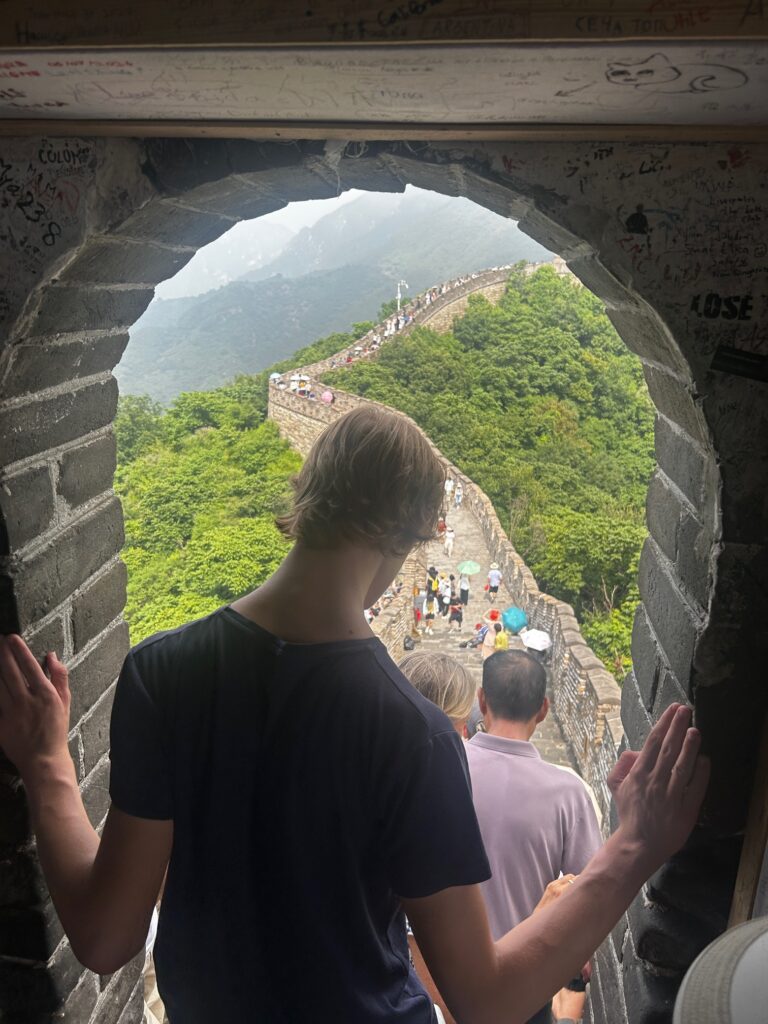

This sounds obvious, but photographs of the Great Wall can make it look rather like a long, level path.
It isn’t.
There are lots of steps and changes in gradient and some sections are much steeper than others. The surface at Mutianyu is well maintained rather than crumbling, but it isn’t always perfectly smooth either.
I would definitely wear proper walking shoes or trainers.
I wouldn’t recommend sandals, particularly if you’re visiting with children. You don’t need serious hiking boots, but shoes with a good grip will make the experience much more comfortable. I definitely found some of the parts a little slippery as the stone was so smooth.
If you’re travelling with younger children, I absolutely wouldn’t take a pushchair onto the wall. There are too many steps and uneven sections for it to be practical.
Keep hold of younger children
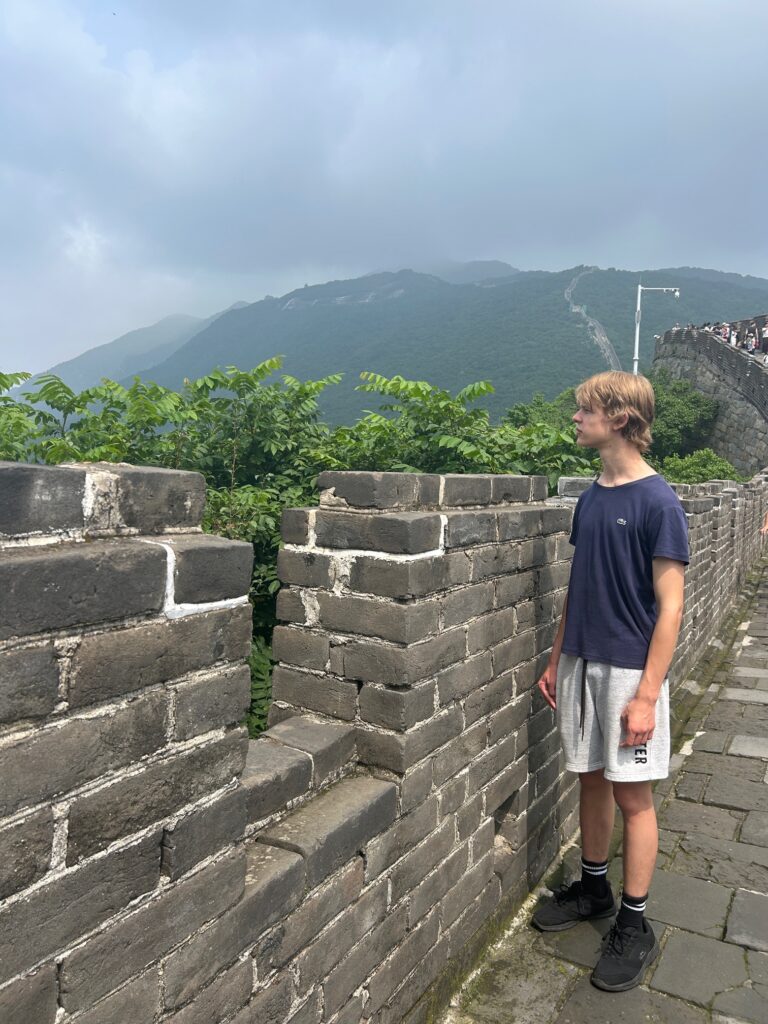
For older children, the Great Wall is a brilliant adventure.
For younger children, I would take a little more care.
There are steep drops from some sections of the wall and although there are barriers in many places, this isn’t somewhere I would let young children run ahead.
There are also plenty of steps and busy sections where it is easy for people to become separated.
If you have toddlers or younger children, keep them close and hold their hands on the steeper sections.
For us, with teenagers, it was much easier, but even then we were conscious of the gradients and crowds.
Go early or late if you can – Great Wall of China top tips

This is probably my biggest practical tip.
Try to visit early in the morning or later in the afternoon.
We visited during the day in August and it was hot, humid and busy.
The Great Wall is an enormous attraction, but that doesn’t mean you will necessarily feel as though you have it to yourself. Mutianyu can get very busy around the cable car and the most accessible sections.
If you arrive early, you have a much better chance of enjoying the wall before the biggest crowds arrive. Alternatively, visiting later in the day can work well too, particularly if you can time it around the end of the busiest period.
Mutianyu’s current operating arrangements vary by season, and the cable car has its own operating hours, so it is worth checking the official information before you travel.
If you are travelling in summer, I would be particularly keen to go early.
Be prepared for the heat

As I said, when we visited in August it was hot and humid.
Walking on the Great Wall in those conditions was considerably harder than it would have been in cooler weather.
Take plenty of water and don’t underestimate how much the heat will affect you. Wear a hat, use sun cream and take regular breaks.
We were very glad of our iced coffees afterwards.
There are refreshments and places to buy drinks around the visitor facilities, so you don’t need to carry an enormous amount of food and drink with you.
But I would still arrive with water, particularly if you are travelling with children.
There are facilities – Great Wall of China top tips


One of my slightly less glamorous but obviously useful tips is that you don’t need to worry about finding a loo.
There are toilets around the visitor facilities and at various points within the scenic area. We noticed them at the service area, commercial street and several locations closer to the wall and cable car.
So if you’re visiting with kids, you don’t need to panic about making sure everyone goes before you start.
Don’t be afraid to walk away from the crowds
One thing that surprised us was how much the experience changed once we moved away from the busiest areas.
The sections around the cable car and main viewpoints were crowded when we visited.
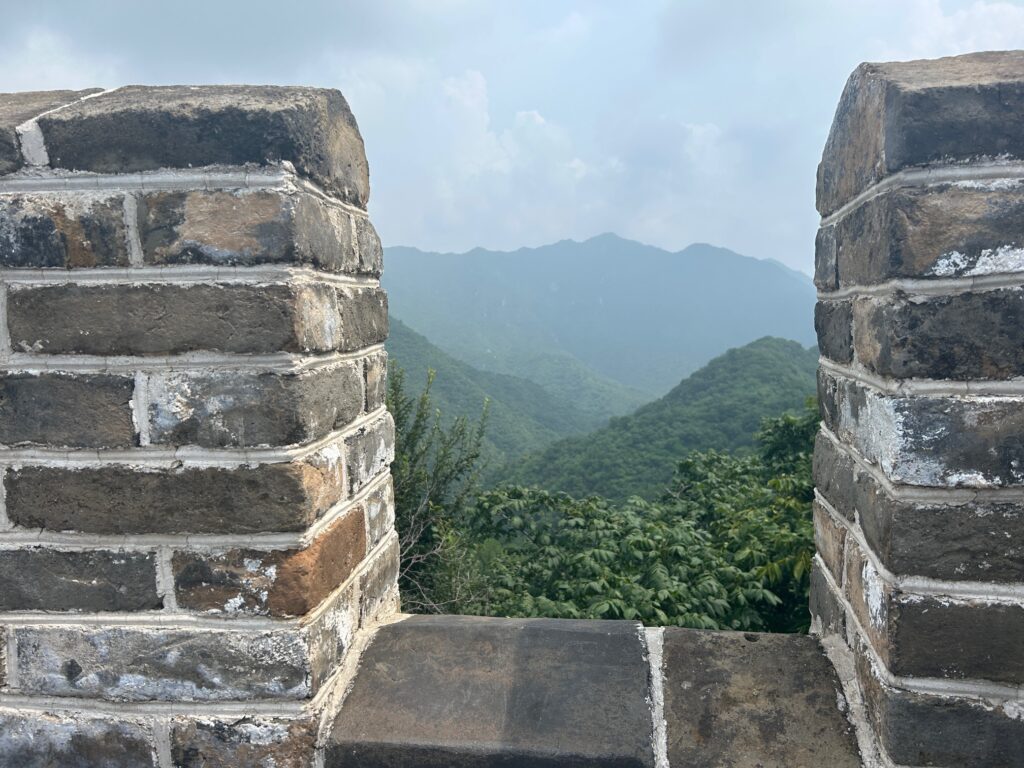
But the Great Wall stretches away across the mountains, and if you keep walking you can get further away from the main concentration of visitors.
This is where I think it is worth allowing a little more time than you might initially expect.
We spent around an hour to two hours actually on the wall, but you could easily spend considerably longer if you wanted to explore further.
You don’t need to walk for hours to say you’ve experienced the Great Wall, though. With children especially, I think it is better to enjoy the time you have rather than turning it into an endurance test.
There are places to shelter – Great Wall of China top tips
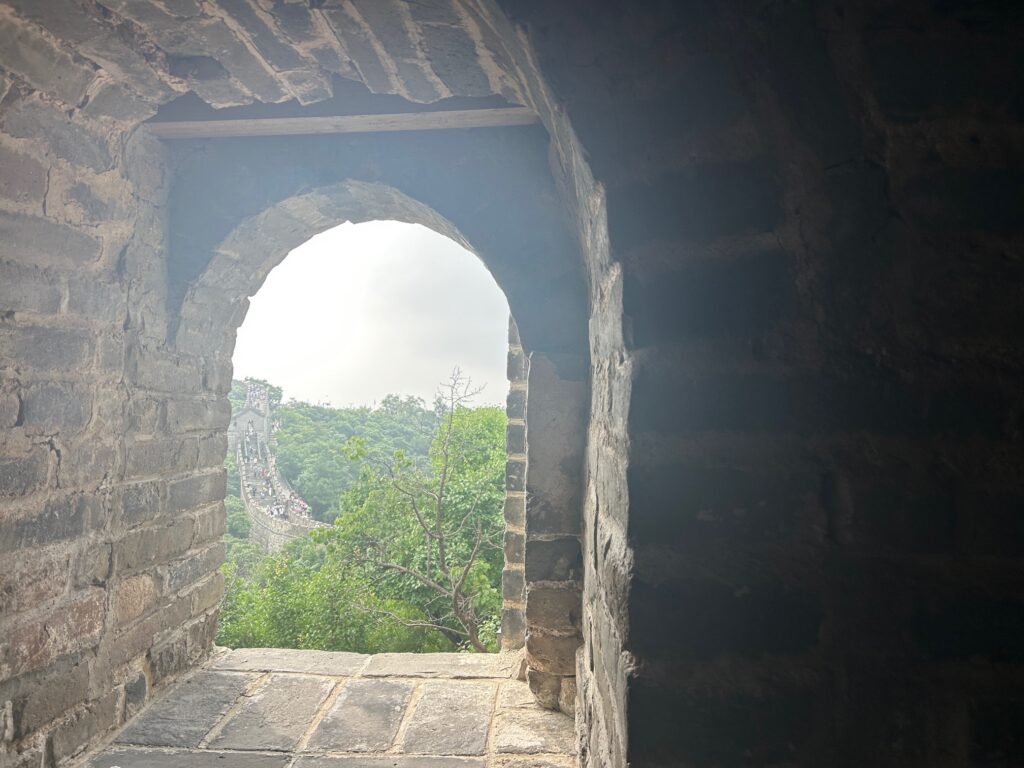
There are watchtowers and covered areas along the wall where you can get some protection from the sun.
Don’t expect them to be places where you can settle down for a long break, though. They are historic structures and can be busy, particularly when lots of people are looking for shade.
We used them more as an opportunity to pause, look around and get a little respite from the sun before carrying on.
The watchtowers are also part of what makes walking this section so interesting. They give you a sense of how the Great Wall actually functioned as a military defensive system rather than simply being the spectacular landmark it is today.
Take your time to look at the watchtowers

Following on from the above tip, one of my favourite things about Mutianyu was seeing the wall as a series of towers and defensive positions rather than just a long line of bricks.
The watchtowers were important parts of the defensive system, providing positions from which soldiers could observe the surrounding landscape and communicate along the wall.
UNESCO describes the Great Wall as a complex defensive system incorporating walls, watchtowers, shelters, fortresses and passes rather than simply a single continuous wall.
This is also why having a guide made such a difference to us – see below.
Go with a guide if you can

We visited Mutianyu with Catherine Lu Tours and it made the day so much easier.
We had a private, air-conditioned minivan for the journey from Beijing, which was particularly welcome in the August heat. Our driver dropped us as close as possible to the visitor area, and our guide Lena helped us navigate the route and the crowds.
But the biggest benefit for us was having someone who could actually explain what we were looking at.
Without a guide, you can obviously walk along the wall and admire the views, but there is something very different about standing in one of the watchtowers while someone explains its history and the role it played.
Lena brought the history alive for us, and that made the experience much more meaningful.
Catherine Lu Tours specialises in private and tailor-made tours around Beijing, including family trips to Mutianyu. The company was founded in Beijing in 2010 and has guides who specialise in the city’s historical and cultural attractions.
For us, having the transport, guide and itinerary organised also meant that we could concentrate on enjoying the day rather than working out where we needed to go next.
What should you take to the Great Wall?
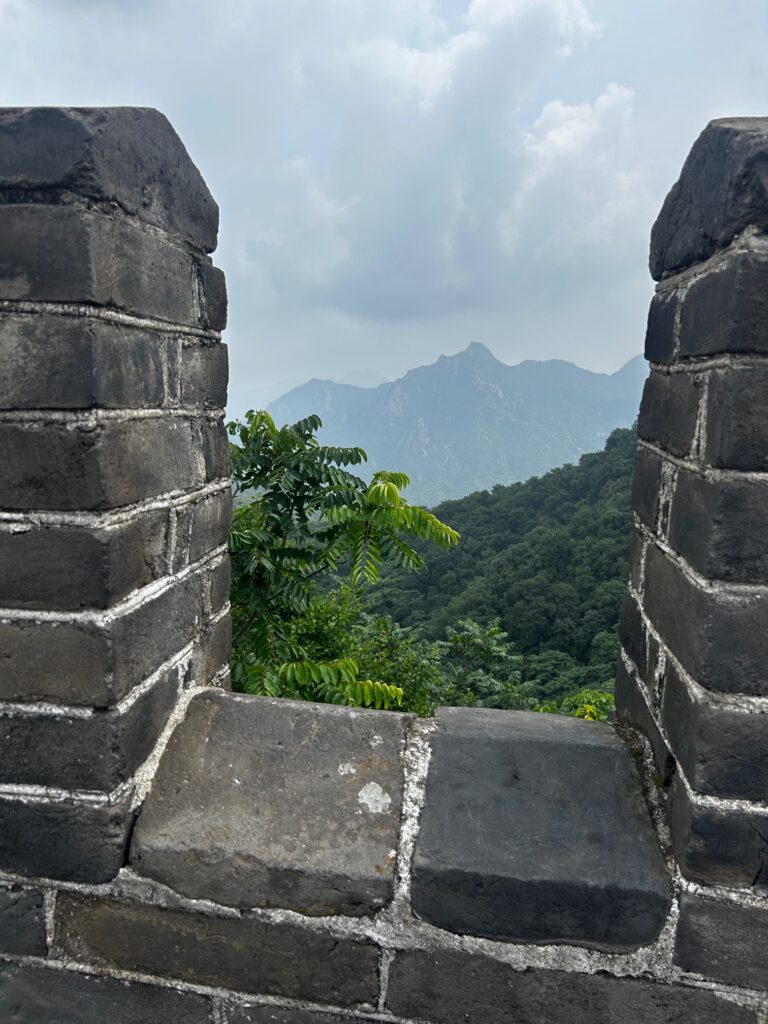


You really don’t need to pack a huge amount.
I’d recommend:
- Plenty of water
- Sun cream
- A hat
- Sunglasses
- Comfortable walking shoes or trainers
- A small backpack
- A phone or camera
- Light layers depending on the season
- Some snacks for children if needed
In summer, I would prioritise water and sun protection.
In winter, the advice is very different. Temperatures can be extremely cold and snow is possible, so warm layers, gloves and shoes with good grip become much more important.
Spring and autumn would probably be my preferred seasons for walking the wall. When we visited in summer, although the lush green mountains were beautiful, the heat made the walking much harder.
What is the best time of year to visit the Great Wall?

There is something special about the Great Wall in every season.
Spring should bring milder temperatures and fresh green landscapes.
Summer is lush and green, but can be hot, humid and busy. This is when we visited.
Autumn is arguably one of the most beautiful times, particularly when the mountains around the wall are covered in autumn colour.
Winter can be cold and snowy, but the landscape can look extraordinary when the wall and mountains are dusted with snow.
For walking, I would choose spring or autumn if you have the choice.
How long do you need at the Great Wall? Top tips for the Great Wall of China
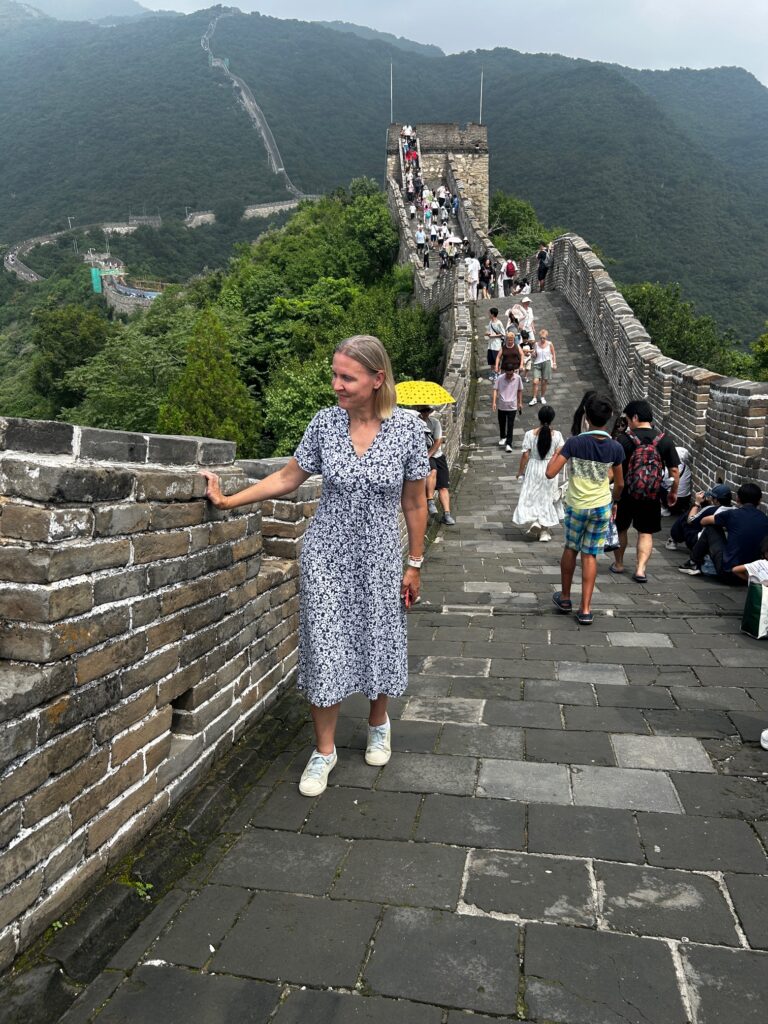

We spent approximately one to two hours on the wall itself.
That was enough time for us to take the cable car up, walk along several sections, explore some of the watchtowers and stop to enjoy the views without making the day too exhausting.
You could easily spend longer here if you wanted to walk further.
With children, though, I wouldn’t feel that you have to spend half a day walking.
The Great Wall is one of those places where even a relatively short visit feels significant. Once you’ve stood there and looked out across those mountains, you will have experienced the thing you came all this way to see.
Is the Great Wall suitable for kids?

Yes, absolutely.
I’d say the Great Wall is one of the experiences in China that children are likely to remember for years, but you do need to choose your route and expectations carefully.
For younger children, use a carrier rather than a pushchair and keep them close on steep sections.
With school-age children, the cable car is a great way of making the experience manageable without removing the sense of adventure.
For teenagers, as we discovered, it is a brilliant opportunity to get out into the mountains and experience one of the world’s most famous historic sites without it feeling like a traditional museum visit.
And if your children are interested in history, having a guide explain what they are seeing makes a huge difference.
Our experience of visiting the Great Wall of China at Mutianyu


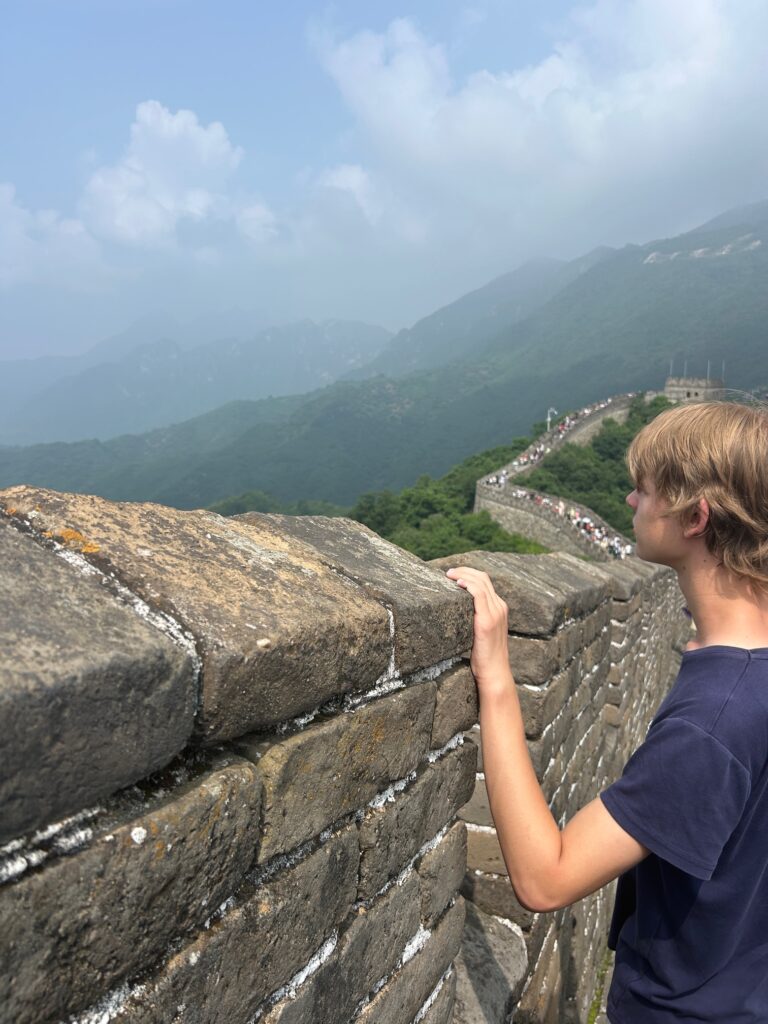
For us, the Great Wall was every bit as impressive as we had hoped.
We arrived on a very hot and humid day and took the cable car up to the wall. From there, we climbed our way along several sections, stopping to look out across the mountains and take in the sheer scale of what we were seeing.
The wall stretched away into the distance, following the ridges of the mountains.
It was one of those moments when photographs really don’t convey the scale of a place.
We were hot, and there were plenty of people around us, but it didn’t detract from the experience.
Having Lena with us made a real difference too. She told us about the history of the wall as we walked, giving us a much better understanding of what we were actually seeing.
It’s such a tactile experience. Being able to touch the wall, and walk in the steps of the original builders, so many years ago. It’s a really tangible way to experience the history.
Afterwards, we returned down by cable car and were very happy to find our air-conditioned minivan waiting for us.
I think the combination of the cable car, a relatively manageable amount of walking and having a guide made Mutianyu a particularly good choice for our family.
Our top tips for visiting the Great Wall of China with kids

If you are planning your own visit, these are the things I would definitely keep in mind:
1. Choose your section carefully. We visited Mutianyu and loved it. I have also visited Jinshanling which I also really enjoyed and felt more remote.
2. Consider the cable car. It makes the experience much more manageable, particularly in hot weather or with children.
3. Go early or late. We left early but by mid morning it was fairly hot and crowded. I think getting up and going even earlier would have helped.
4. Wear proper shoes. The wall isn’t impossibly difficult, but there are steps, slopes and uneven sections.
5. Take water. Even if you can buy refreshments, you’ll want water with you.
6. Wear a hat and sun cream. There is plenty of exposure to the sun.
7. Don’t take a pushchair onto the wall. A carrier is much more practical for younger children.
8. Keep younger children close. Some sections are steep.
9. Allow time to get away from the busiest areas. The experience becomes much more peaceful as you walk away from the main access points.
10. Consider a guide. Having someone explain the history makes such a difference.
11. Don’t feel you have to walk for miles. An hour or two on the wall can still be an incredible experience.
12. Check the current opening and cable car arrangements before you travel. These can change seasonally and during maintenance periods.
Would we recommend visiting the Great Wall with kids?

Without hesitation.
The Great Wall was one of the highlights of our family holiday in China and one of those experiences that I think all five of us will remember for a very long time.
There are certainly easier days out. Walking the Great Wall involves steps, hills, crowds and, in summer, a lot of heat. But that’s also part of what makes it such an extraordinary experience.
For us, standing on that ancient wall and watching it disappear over the mountains was one of those travel moments where the reality really did live up to the photographs.
If you’re planning a holiday to China with kids, I would put the Great Wall very high on your list. And if you’re visiting Beijing as part of a longer China family holiday, Mutianyu makes a brilliant day trip from the city.
You can read more about our route, hotels, trains, food and experiences in our family holiday in China, including everything we did as a family from Beijing through Pingyao, Xi’an, Chengdu, Yangshuo and Shanghai.


