If you’re planning a Los Angeles to Yosemite road trip you might start in traffic, surrounded by concrete, signage, and the busy hum of the city. But after a couple of hours behind the wheel, things start to feel pretty special. The buildings thin out, the air changes, and you’re suddenly covering long distances with nothing but open road ahead of you.
That transition is just one of the many reasons so many adventurers love the Los Angeles to Yosemite road trip. You don’t need to chase every detour or over-plan this trip, either. Give it time, follow the route below, and the journey will become part of the whole experience.
Table of Contents
Getting out of Los Angeles without the stress
There’s no escaping the fact that leaving LA is the least enjoyable part of this trip, but planning ahead can help make things a lot easier. An early start can make a big difference to begin with, especially if you’re heading out on a weekday. Interstate 5 is the quickest option, but Highway 99 offers a calmer drive once you’re clear of the city.
This is where many travellers hit the road from Los Angeles with the intention of pushing through as fast as possible, but there’s no real need to rush. Breaking the drive into smaller chunks makes everything far more relaxed and sets the tone for what’s ahead.

The Central Valley stretch
Once you’re properly clear out of Los Angeles, the drive settles into a long straight through California’s Central Valley. This part of the journey is your opportunity to slow down and make a few practical stops. Bakersfield is the most common break point, with plenty of fuel stations and casual diners if you want a proper sit-down meal before continuing north.
Further along, towns like Fresno and Visalia are also perfect stops for restocking supplies or simply breaking the drive into shorter distances. Fresno’s Woodward Park, in particular, is a great place to stretch your legs, while Visalia’s town centre is packed with cafés for a quick bite to eat before jumping behind the wheel again.
A detour worth taking: Sequoia National Park

If you’ve got some flexibility in your schedule, Sequoia National Park has to be one of the best detours on this route. It’s just 45 minutes from Visalia, and a little extra time on the road pays off massively with some of the most incredible sights in California. The Giant Forest area here is home to some of the largest trees on the planet, including the General Sherman Tree, which is hard to fully comprehend until you’re standing beneath it.
Lots of short walking trails also wind through the forest, making it easy to explore without committing to a full-day hike. Moro Rock is another must-visit spot, which is a steep but manageable climb to beautiful views across the foothills. Even spending half a day here adds a little extra magic to the road trip and makes the final push towards Yosemite feel even more exciting.
The Sierra Nevada
Leaving the Valley behind, the road begins to climb steadily into the Sierra Nevada. Temperatures cool, pine forests replace farmland, and the scenery really starts to demand your attention. Pull-outs appear more frequently along this stretch of road, too, and it’s worth using them not just for photos but to take in how quickly the landscape changes.

Towns like Oakhurst and Mariposa make good final stops before Yosemite, but of the two, Mariposa has a bit more character. There’s a whole Gold Rush-era theme to explore here, and the Mariposa Museum and History Centre holds everything you could ever want to know about the area before heading into Yosemite National Park.
Inside Yosemite National Park
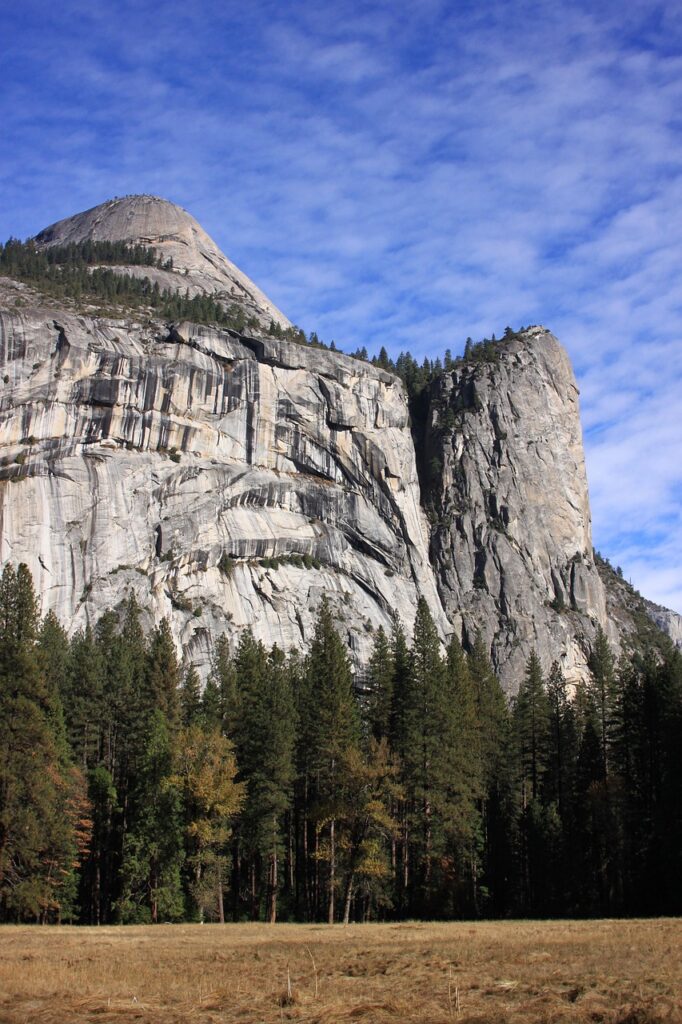
One of the first must-see viewpoints once you’re inside Yosemite is Tunnel View, where El Capitan, Half Dome, and Bridalveil Fall come into view all at once. As you might expect, it’s busy here, but it’s worth the effort for the unforgettable experience.
If you want to get up close and personal with Bridalveil Fall, it’s just a short walk from the car park, while Yosemite Falls can be reached by a longer walk with great views along the way, especially in the spring when snowmelt is at its peak. El Capitan Meadow is another unmissable spot, and it also offers you the chance to see climbers in action, inching their way up the granite face.
The Los Angeles to Yosemite road trip works best when it’s treated as more than just a means to an end. The stops, the changing scenery, and the gradual shift in pace are what make it so memorable, and those details are the ones that will stick with you long after you’ve returned to traffic and city life.