Knidos, located on the stunning Datça Peninsula in southwestern Türkiye, is a captivating destination steeped in history and natural beauty. This ancient city, once a thriving Greek and Roman settlement, boasts fascinating ruins, lovely coastal views, and a sense of wonder. We loved our visit to Knidos as part of our family summer holiday to Marmaris, Turkey. There’s something particularly evocative about this area. It was a highlight of our trip. Whether you’re a history enthusiast, a family looking for an fun outing, or a traveller seeking picturesque landscapes, Knidos offers something for everyone.
Table of Contents
The history of Knidos
Ancient origins
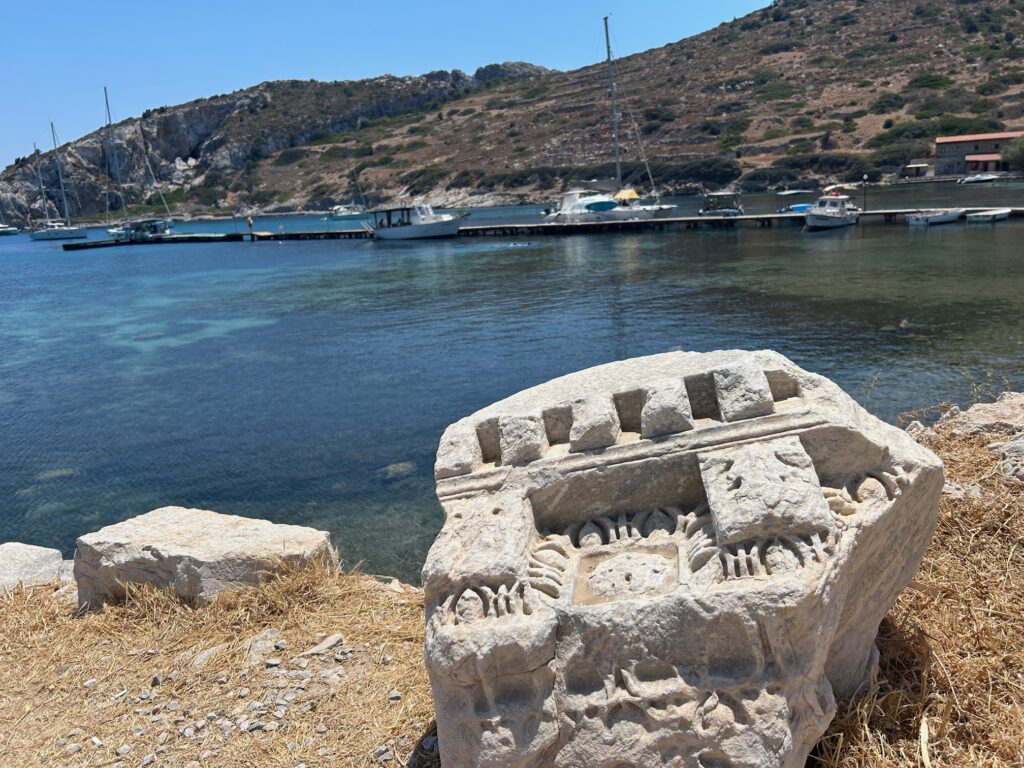
Knidos was founded around 3600 BCE and later became a significant Greek city by the 4th century BCE. It flourished as a prominent trading hub and cultural centre due to its strategic location between the Aegean and Mediterranean Seas. Knidos was renowned for its advancements in art, architecture, and science.
The statue of Aphrodite of Knidos
One of the city’s most famous historical treasures was the Statue of Aphrodite, sculpted by Praxiteles in the 4th century BCE. This iconic piece of art, celebrated for its beauty and symbolism, attracted visitors from far and wide, cementing Knidos’ reputation as a centre for art and culture. Over time, the fate of the statue became uncertain. Historical accounts suggest it may have been moved to Constantinople (modern-day Istanbul) during the 4th century ADE as part of the Roman Empire’s effort to preserve cultural treasures. Unfortunately, it is believed to have been lost during the Fourth Crusade in 1204 when Constantinople was sacked, or possibly destroyed by a fire or earthquake in later centuries. While the original statue no longer exists, its legacy endures through Roman copies and descriptions by ancient writers. Today, visitors to Knidos can explore the ruins of the Temple of Aphrodite, where this masterpiece once captivated all who gazed upon it.
Hellenistic and Roman periods
Knidos continued to thrive under Hellenistic and Roman rule, serving as an important port city and cultural centre. Temples, theatres, and agoras were constructed, many of which can still be seen today. The city also played a role in astronomy and medicine, with Eudoxus of Cnidus, a renowned mathematician and astronomer, calling it home.
Decline and rediscovery
By the 7th century ADE, Knidos began to decline, partly due to invasions and changes in trade routes. The city was eventually abandoned but rediscovered in the 19th century by archaeologists. Excavations have since uncovered remarkable structures, offering insight into its rich past.
What to see on a visit to Knidos
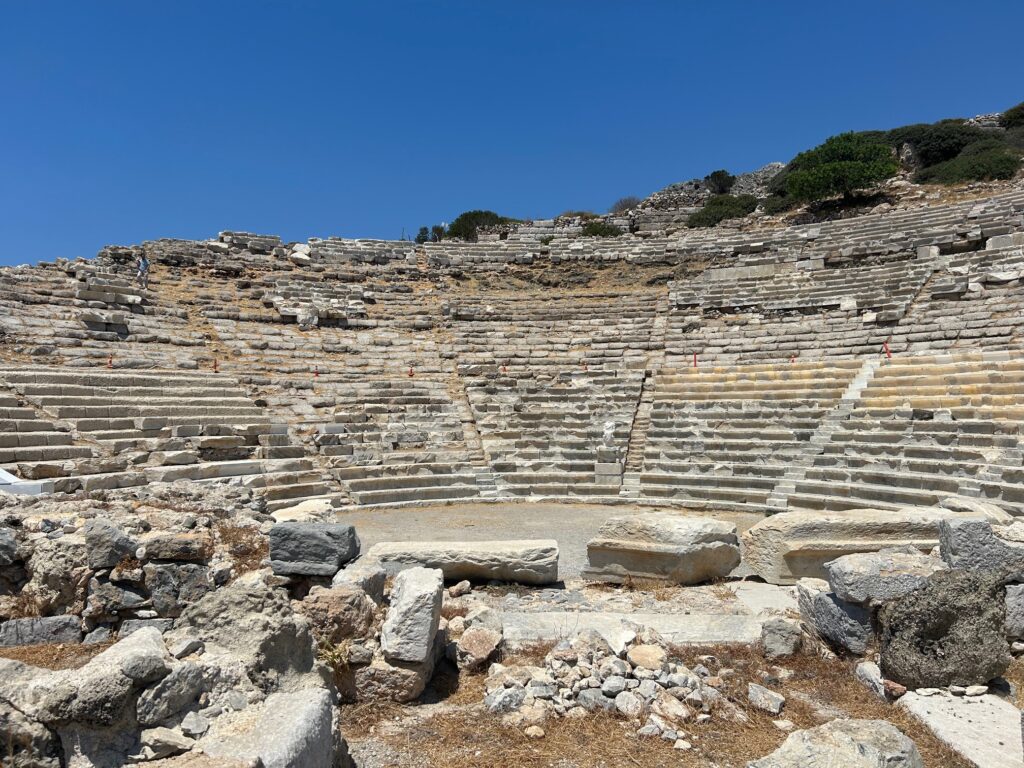
Knidos is an open-air museum, featuring well-preserved ruins that reflect its grandeur. Highlights include:
1. The Ancient Theatre
- One of the most striking features is the Hellenistic theatre, which once seated 5,000 spectators. Its tiered seating and impressive acoustics offer a glimpse into ancient entertainment.
- Climb to the top for panoramic views of the Aegean Sea.
2. The Temple of Aphrodite
- This sacred site was dedicated to Aphrodite, the goddess of love and beauty. The circular temple base remains, hinting at its former splendor.
- Imagine the allure of the famous statue that once stood here.
3. The Agora
- The marketplace served as the heart of the city’s commercial and social life. Strolling through the agora allows visitors to envision the bustling activity of traders and citizens.
4. The Necropolis
- The ancient cemetery features intricate tombs and sarcophagi. It offers a glimpse into the burial practices of Knidos’ inhabitants.
5. The Harbour
- Knidos had two harbours, one for commercial use and another for military purposes. Their remains highlight the city’s maritime importance.
6. The Lighthouse and walls
- The defensive walls and remnants of the lighthouse illustrate the city’s efforts to protect itself from invaders.
7. The Acropolis
- Positioned on a hill, the Acropolis offers stunning views and was likely a site of religious ceremonies.
Top tips for visiting Knidos

- Arrive early: Visit early in the day to avoid crowds and the heat, especially during summer.
- Bring comfortable footwear: The terrain can be uneven, so sturdy shoes are essential.
- Pack water and snacks: Facilities are limited, so bring refreshments. There is a cafe here for food though.
- Sun protection: Sunscreen, hats, and sunglasses are crucial for protection under the Mediterranean sun.
- Photography gear: Don’t forget your camera to capture the stunning ruins and scenery.
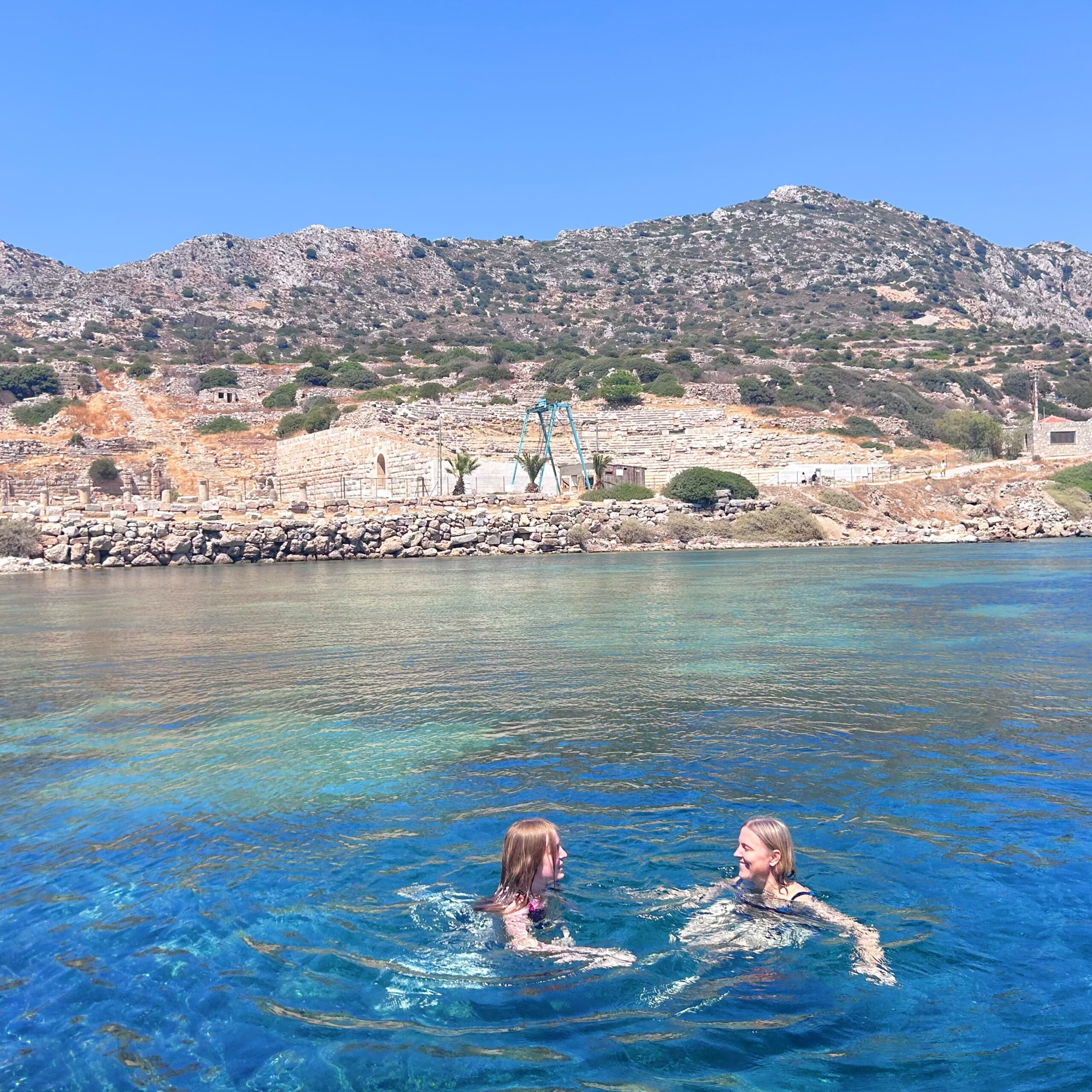
- Bring swimwear: We loved swimming in the harbour so bring swimming costumes and towels.
Visiting Knidos with kids
Knidos can be a fascinating and educational experience for children. Here’s how to make the visit kid-friendly:
1. Educational activities:
- Prepare kids in advance with stories about Greek mythology, especially tales of Aphrodite and ancient gods.
- Bring a sketchbook for kids to draw the ruins or take notes about what they learn.
2. Fun exploration:
- Turn the visit into a treasure hunt by asking kids to find specific landmarks, such as the theatre or harbour ruins.
- Let them climb the steps of the theatre for an exciting view.
3. Practical tips for families:
- Bring plenty of water and snacks to keep kids energised.
- Allow breaks in shaded areas to rest and cool down.
- Keep younger children close, as some areas may have steep drops or rocky paths.
Best time to visit Knidos

- Spring (April-May): Mild weather and blooming flowers make it ideal for sightseeing.
- Autumn (September-October): Cooler temperatures and fewer crowds.
- Summer (June-August): Beautiful but can be hot, so visit early in the morning.
Nearby attractions
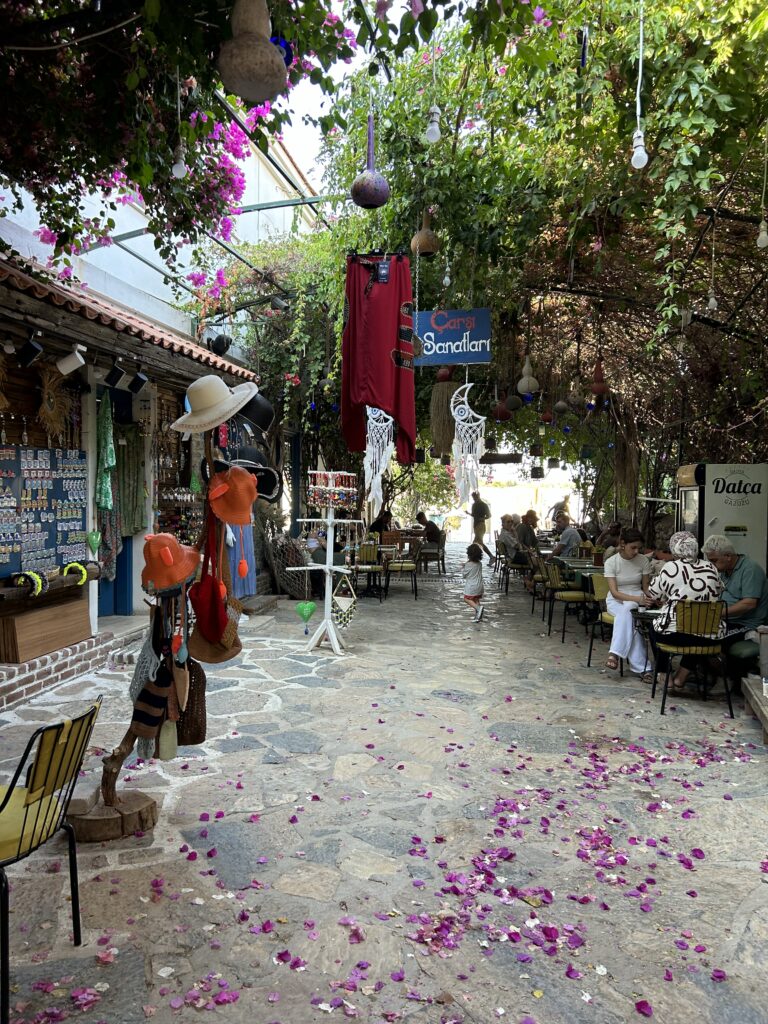
- Datça Town: Explore local shops, traditional markets, and seaside cafes.
- Old Datça (Eski Datça): Outside of the modern town and packed with souvenir shops and cafes.
- Palamutbükü Beach: A stunning beach nearby, perfect for swimming and relaxing after your visit.
- Knidos Lighthouse: Offers additional panoramic views of the coastline.
Getting to Knidos
By car
Driving is the most convenient way to get to Knidos, especially if you’re travelling with family or want to explore the scenic landscapes of the Datça Peninsula along the way. From Datça Town, Knidos is approximately 35 kilometres (22 miles) west and can be reached in about 45–60 minutes by car.
- Route overview: Start by following the D400 highway west from Datça. This offers picturesque views of the coastline and rolling hills. The road narrows and becomes more winding as you approach Knidos, so drive carefully, especially in peak tourist seasons when traffic may increase.
- Parking: There is a dedicated parking area near the entrance to the archaeological site. Parking is free or available for a small fee during busy times.
Renting a car is a practical option, particularly for travellers who want to visit other sites and beaches in the region. Rental services are available in Datça and nearby towns. We travelled by car and felt it was the easiest way to get here by far.
By bus or dolmuş (minibus)
For budget-conscious travellers, buses and dolmuşes (shared minibuses) provide an affordable way to get to Knidos.
- Datça to Yazıköy or Palamutbükü: Public minibuses operate from Datça Bus Terminal to nearby villages such as Yazıköy or Palamutbükü.
- Transfers to Knidos: From these stops, you’ll need to take a taxi or arrange private transport for the final stretch to Knidos, as there are no direct buses to the site.
This option may involve a bit of planning and patience, as public transport schedules can be limited, especially during the off-season.
By boat
One of the most memorable ways to reach Knidos is by boat. Many visitors opt for a boat tour or a private yacht charter, departing from ports in Datça, Bodrum, or other nearby coastal towns.
- Boat tours: Daily tours often include stops at secluded bays and swimming spots before arriving at Knidos. These trips typically last 6–8 hours and provide an opportunity to enjoy the stunning coastline along the way.
- Sailing adventures: For a more luxurious experience, private yacht charters offer multi-day sailing trips, allowing visitors to anchor at Knidos and explore at a leisurely pace.
Arriving by boat provides unique views of the ancient harbour and a sense of arriving as travellers once did in ancient times.
Knidos is a remarkable destination where history, culture, and natural beauty come together. Whether you’re exploring its ancient ruins, soaking up the coastal views, or learning about Greek and Roman history, Knidos offers a memorable experience for all ages. Families, in particular, will enjoy the educational and adventurous aspects of the site. With a bit of preparation, including water, snacks, and sun protection, your visit can be comfortable and exciting. Our top tip is to swim in the ancient harbour – it’s an amazing experience.
Read more posts on Türkiye:
The best family holidays in Turkey