We had an amazing family holiday to India with kids. We loved exploring different areas of the country. This was our second time in Goa, once on an adult only trip and on the second time in Goa with kids. These are 40 of the best things to do in Goa India with kids, or without. It’s such a vibrant, beautiful part of India, there is plenty to enjoy.
*AD / This post contains affiliate links & as an Amazon Associate we earn from qualifying purchases. We may also have been compensated in this post either financially or with products / stays. To read more see our Disclosure Policy.
Table of Contents
About Goa
Goa, India’s smallest state, is renowned for its stunning beaches, vibrant nightlife, rich cultural heritage, and diverse activities. There’s a real mix from north to south Goa too.
Goa is located on the western coast of India and is a tropical paradise known for its stunning beaches, vibrant culture, and rich history. It’s got some of the most beautiful beaches in India, including Baga, Calangute, Palolem, and Anjuna.
Goa’s unique history is evident in its architecture, which reflects a blend of Portuguese and Indian influences. The UNESCO-listed Basilica of Bom Jesus and Se Cathedral in Old Goa are testament to its colonial past. The region’s rich cultural heritage is also seen in its vibrant festivals such as Carnival, Shigmo, and Sao Joao, which feature colourful parades, lively music, and traditional dances.
Goa is also a haven for nature lovers. The lush Western Ghats, Dudhsagar Falls, and wildlife sanctuaries like Cotigao and Netravali offer opportunities for trekking, birdwatching, and wildlife spotting. Its scenic landscapes, paired with historical sites, vibrant markets, and delectable cuisine, make Goa an ideal destination for all types of travellers.
The best things to do in Goa India
Explore Old Goa
Exploring Old Goa, often referred to as the “Rome of the East,” offers a captivating journey into India’s colonial past. This UNESCO World Heritage Site is renowned for its impressive Portuguese-era churches and monasteries, reflecting a blend of European architecture and local culture.
The Basilica of Bom Jesus is a must-visit landmark, famous for housing the remains of St. Francis Xavier. Its ornate interiors and baroque architecture draw visitors from around the globe. Nearby, the Se Cathedral stands as one of Asia’s largest churches, celebrated for its Gothic and Tuscan design and the “Golden Bell.”
The Church of St. Francis of Assisi and its adjoining Archaeological Museum offer insights into Goa’s art and history, with artefacts, paintings, and sculptures that reveal its vibrant heritage. The Chapel of Our Lady of the Mount, perched on a hill, provides stunning panoramic views of the Mandovi River and the surrounding landscape.
Strolling through Old Goa’s streets, it’s possible to see so many remnants of Portuguese culture, from the historic Viceroy’s Arch to intricately carved altars. The peaceful ambience, accentuated by lush greenery and the serene Mandovi River, creates an unforgettable experience.
Relax on the beaches
The beaches of Goa, often hailed as India’s coastal paradise, are a beautiful bunch. With a coastline stretching over 100 kilometres along the Arabian Sea, Goa offers a beach for every mood and preference.
In north Goa, beaches like Baga and Calangute are bustling hubs of activity. Known for their lively nightlife, water sports, and beach shacks, they attract party-goers and adventure enthusiasts. Anjuna Beach, famous for its bohemian vibe and weekly flea market, is a haven for backpackers and hippie culture aficionados. Vagator and Morjim beaches exude a relaxed charm, offering serene sunset views.
South Goa, on the other hand, is known for its tranquillity and pristine sands. Palolem and Agonda beaches are ideal for those seeking peace and solitude, with lush palm-fringed shores and gentle waves. These beaches also host yoga retreats and wellness centres, making them perfect for rejuvenation. Butterfly Beach, accessible only by boat, offers a secluded and romantic escape (see more on Butterfly Beach below).
Each beach in Goa has its unique character. It’s the perfect place to find your own favourite.
Water sports – things to do in Goa
The azure waters of Goa, golden sands, and tropical climate create the perfect setting for thrilling aquatic adventures, making Goa a must-visit destination for adrenaline fans and leisure seekers alike.
Parasailing is a popular activity, offering a bird’s-eye view of Goa’s picturesque beaches and coastline. Calangute, Baga, and Anjuna beaches are prime spots to try this exhilarating sport. Jet-skiing provides a rush as you glide across the waves at high speeds, while banana boat rides are perfect for groups or kids looking for some light-hearted fun.
For those keen on exploring the underwater world, scuba diving and snorkeling near Grande Island are unforgettable experiences. The crystal-clear waters reveal vibrant coral reefs, exotic marine life, and shipwrecks, making it a diver’s paradise. Windsurfing and kite surfing combine the thrill of surfing and sailing, challenging participants to navigate the winds and waves.
Kayaking through Goa’s serene backwaters and mangrove forests offers a more tranquil experience, perfect for nature lovers (see more on kayaking below). Paddleboarding and wakeboarding are newer additions to the array of water sports available.
Book in some water sports in Goa here.
Visit Dudhsagar Falls
Dudhsagar Falls is one of India’s tallest waterfalls. It is beautiful and located on the Mandovi River in Goa. Translating to “Sea of Milk” in Konkani, the falls derive their name from the milky white appearance of the cascading water. Nestled within the lush greenery of the Bhagwan Mahavir Wildlife Sanctuary, Dudhsagar Falls is a must-visit destination for nature lovers and adventure enthusiasts.
Standing at an impressive height of 310 metres, the waterfall plunges in four tiers, creating a dramatic spectacle, especially during the monsoon season when it flows at its peak. The roaring sound of water and the cool mist in the air enhance the magical experience. The surrounding area adds to the charm, making it a paradise for trekkers and photographers.
Visitors can reach Dudhsagar Falls by jeep safari from the nearby village of Mollem or take a thrilling trek through dense forests and railway tracks. For a unique perspective, the falls can also be seen from a train on the scenic Konkan Railway.
Find accompanied tours to Dudhsagar Falls here.
Shop at Anjuna Flea Market
The Anjuna Flea Market in Goa is a vibrant cultural hotspot that encapsulates the bohemian spirit of the region. Held every Wednesday on the sands of Anjuna Beach, this bustling market is a treasure trove for shoppers, offering a kaleidoscope of goods and experiences.
This was one of my favourite things to do in Goa. We picked up so many rugs and bags to bring home. Perfect for souvenirs from India.
Originally started by hippies in the 1960s as a platform to trade their belongings, the market has evolved into a thriving attraction, drawing locals and tourists alike. It features an eclectic mix of stalls selling handmade jewellery, colourful clothing, leather goods, accessories, souvenirs, and antiques. Visitors can also find unique handicrafts from across India, such as Rajasthani quilts, Kashmiri shawls, and Tibetan artefacts.
Beyond shopping, the Anjuna Flea Market is lots of fun. There’s often live music playing ad food stalls sell everything from Indian street food to international tastes.
It probably goes without saying but haggling is an essential part of the experience.
Take a Spice Plantation tour
Taking a spice plantation tour in Goa is a great way to find out more about this wonderful region. Known for its tropical environment, Goa is home to several spice plantations, particularly in Ponda, where visitors can explore sprawling estates brimming with aromatic spices and medicinal plants.
These guided tours provide an immersive experience, as guides explain the cultivation, harvesting, and uses of various spices like cardamom, black pepper, nutmeg, cloves, cinnamon and vanilla. The plantations also grow other crops like areca nut, coffee, and tropical fruits creating a rich sensory experience with their vibrant colours, textures, and fragrances.
A highlight of these tours is the opportunity to learn about the culinary and medicinal applications of spices. Many plantations also serve traditional Goan meals prepared with freshly harvested spices, offering an authentic farm-to-table experience.
In addition to their agricultural charm, the plantations often feature gorgeous gardens, serene walking trails, and an abundance of birdlife, making them perfect for nature enthusiasts.
Find a Goa spice plantation tour here.
Enjoy a sunset cruise – what to do in Goa India
Taking a sunset cruise in Goa is a magical way to experience the region’s natural beauty and vibrant culture. These cruises, often set along the Mandovi River or the Arabian Sea, offer an unforgettable combination of scenic views, soothing breezes, and a relaxing atmosphere as the sun sets on the horizon.
Many sunset cruises also feature live music or traditional Goan folk performances, such as the lively Dekhni dance or the Corridinho, a Portuguese-inspired folk dance. Some include refreshments, with options ranging from light snacks to lavish seafood dinners paired with local feni or wine.
Explore Fort Aguada – things to do in Goa
Fort Aguada is one of Goa’s most iconic landmarks. Located on the Sinquerim Beach in north Goa, this 17th-century fort was constructed in 1612 to protect against invasions by the Dutch and Marathas. Its name, “Aguada,” derives from the Portuguese word for water, as the fort housed a freshwater spring that served as a crucial water source for ships.
The architecture of Fort Aguada is both functional and impressive. Its massive walls, sprawling bastions, and strategic location overlooking the Arabian Sea provided a robust defence against attack. The fort also includes a four-story lighthouse, built in 1864, which is one of the oldest of its kind in Asia. While the lighthouse is no longer operational, it remains a fascinating part of the fort’s legacy.
Visitors to Fort Aguada can enjoy breathtaking views of the coastline and the endless expanse of the sea.
Enjoy a yoga retreat
A yoga retreat in Goa is a rejuvenating experience that combines wellness with the natural beauty of India’s coastal paradise. Known for its tranquil beaches, lush greenery, and vibrant culture, Goa is the perfect setting for those seeking to deepen their yoga practice or embark on a journey of self-discovery.
Retreats in Goa cater to all levels, from beginners to advanced practitioners, offering a variety of styles such as Hatha, Vinyasa, and Ashtanga yoga. Many retreats are located in serene areas like Palolem, Mandrem, and Ashwem, where participants can practice amidst the soothing sound of waves or in beautiful tropical gardens.
A typical retreat includes daily yoga sessions, meditation practices, and workshops focusing on mindfulness, breathing techniques, and holistic wellness. Some also offer Ayurvedic treatments, detox programmes, and healthy vegetarian meals prepared with locally sourced ingredients.
Visit the Salim Ali Bird Sanctuary
The Salim Ali Bird Sanctuary, named after the renowned Indian ornithologist Dr. Salim Ali, is a paradise for bird enthusiasts and nature lovers. Located on the picturesque Chorao Island in Goa, this sanctuary spans a mangrove ecosystem along the Mandovi River and offers a tranquil escape into the heart of nature.
The sanctuary is home to a diverse range of bird species, including both resident and migratory birds. Common sightings include kingfishers, herons, egrets, and cormorants, while rarer species such as the black bittern or pied avocet delight avid bird watchers. The dense mangroves also support rich biodiversity, including fish, crabs, and mudskippers.
Visitors can explore the sanctuary via guided tours or by hiring a canoe to navigate through the intricate waterways. Early mornings are the best time for bird watching, as the sanctuary comes alive with chirping and activity. A watchtower within the sanctuary offers panoramic views, perfect for photography or quiet observation.
Accessible by ferry from Ribandar, the Salim Ali Bird Sanctuary provides a unique opportunity to connect with Goa’s natural heritage.
Experience Goan cuisine
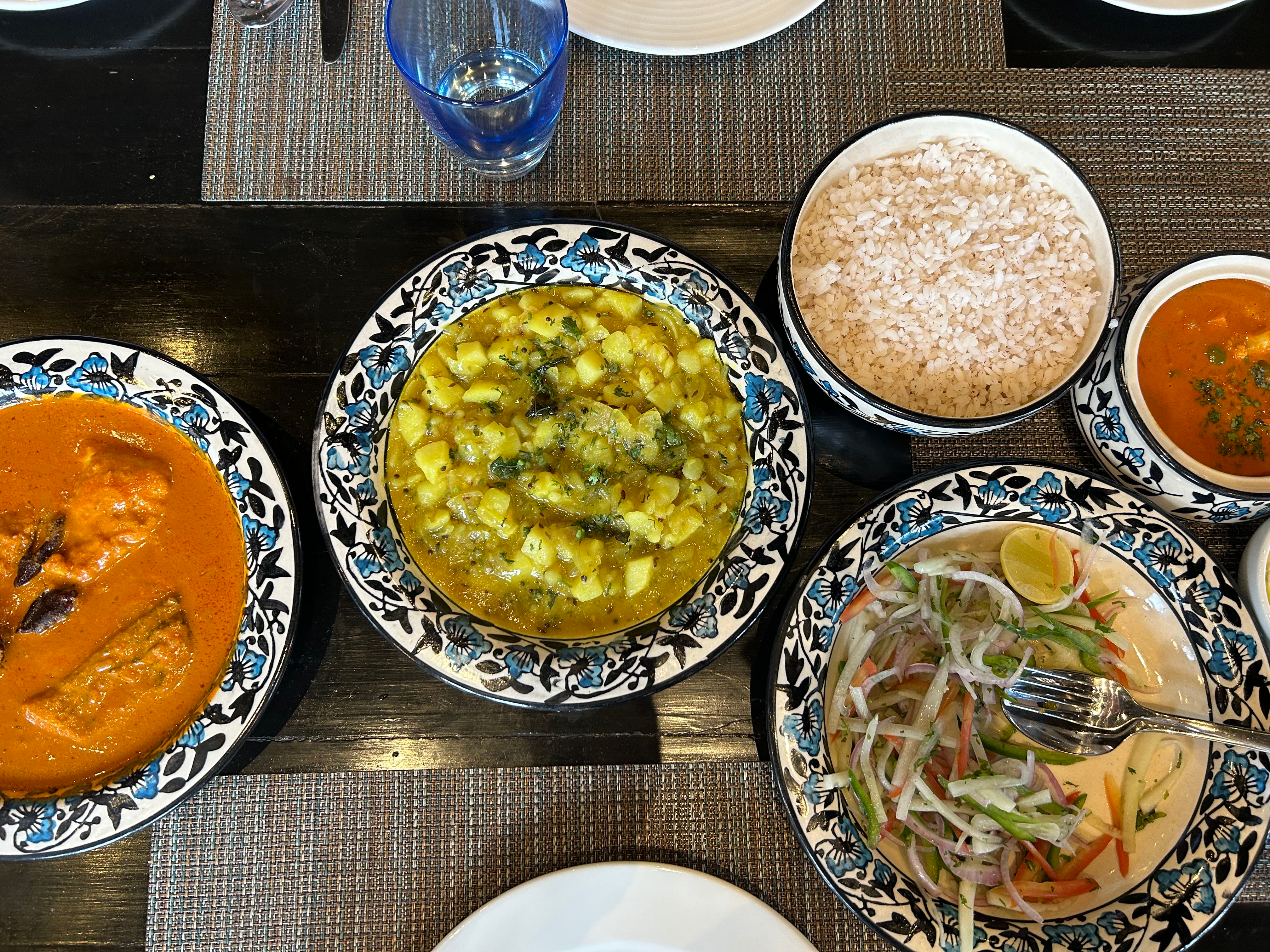
Goan cuisine is a flavourful blend of Indian, Portuguese, and local influences. The fod is delicious. The region’s coastal location makes seafood a dominant feature, with fresh fish, prawns, crab, and lobsters featured prominently in many meals. I found there’s plenty for vegetarians too though.
A standout dish is Goan fish curry, made with coconut milk, tamarind, and aromatic spices like turmeric, coriander, and cumin, giving it a tangy and spicy flavour. Xacuti, a rich and aromatic curry made with chicken or lamb, is another favourite, combining roasted spices and coconut. Vindaloo, originally a Portuguese dish, has become a Goan classic, known for its fiery heat and tangy taste, often made with pork, vinegar, and jaggery.
Vegetarians can enjoy dishes like sannas, soft, slightly sweet rice breads, often served with curries or dahl. The region’s bebinca, a layered coconut dessert, is a must-try for those with a sweet tooth, while feni, a local liquor made from cashew apples or coconut sap, is a popular alcoholic drink.
Street food in Goa is equally exciting, with snacks like prawn balchão (spicy prawn pickle) and vada pav (spiced potato fritter in a bun) offering quick and tasty bites.
We loved trying all the delicious flavours of Goa.
Explore the Latin Quarter in Panjim
Exploring the Latin Quarter in Panjim offers a glimpse into Goa’s colonial past. With its charming streets, colourful Portuguese-style houses, and vibrant cultural heritage. Known as Fontainhas, this historic neighbourhood is one of the few areas in India where you can experience such a well-preserved blend of European architecture and local influences.
Walking through Fontainhas, visitors are greeted by narrow, winding lanes lined with brightly painted houses adorned with intricate balconies, wrought-iron railings, and traditional Portuguese tiles. The neighbourhood’s old-world charm is further enhanced by the presence of lovely little cafes, art galleries, and small boutiques selling handicrafts and antiques.
A highlight of the Latin Quarter is the Our Lady of Immaculate Conception Church, a stunning example of Portuguese Baroque architecture
Fontainhas is also home to several historic Portuguese villas. These colorful buildings are lovely for a wander through. The area is rich in Goan culture, with local residents still practicing old traditions, making it a perfect place for photographers, history buffs, and anyone eager to explore the fusion of Goa’s Portuguese colonial heritage and modern life.
Find walking tours of Panjim here.
Explore the Markets of Mapusa
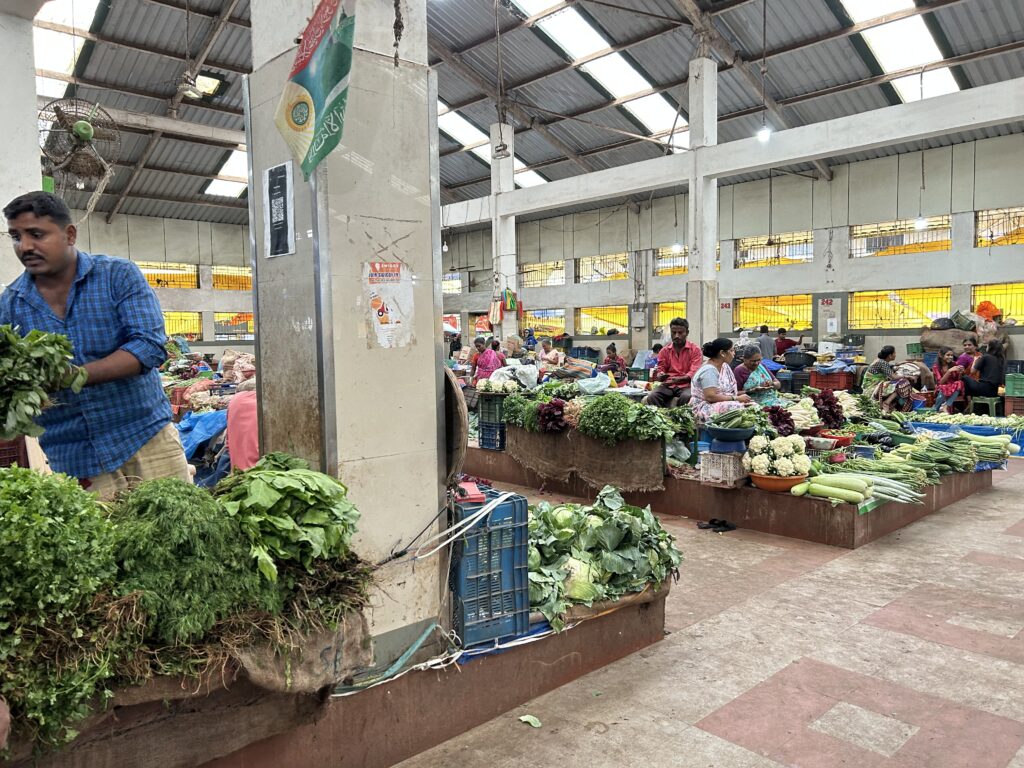
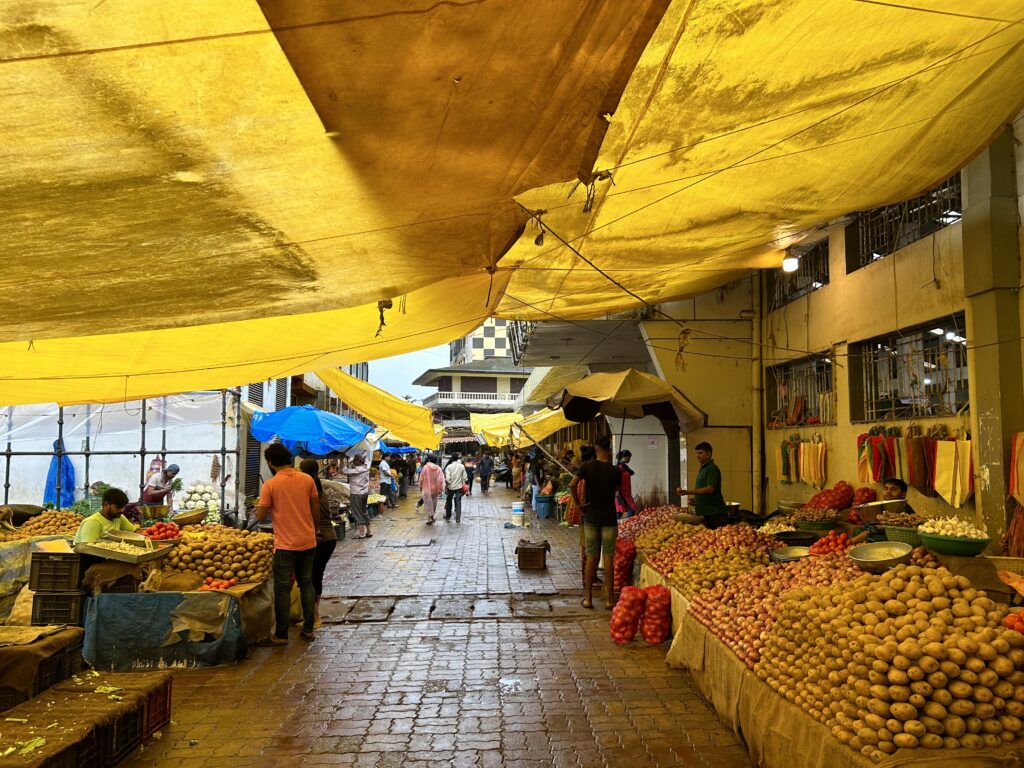
When we were staying at the Storii hotel by ITC we visited the markets of Mapusa and highly recommend them.
Mapusa is an intriguing blend of Goan culture, history, and modern-day. It serves as the commercial hub of the region, with a lively atmosphere and a strategic location just a short distance from popular beaches like Anjuna and Baga. Known for its laid-back charm, Mapusa is a perfect destination for those looking to experience Goa beyond its tourist hotspots.
One of the town’s main attractions is its vibrant markets, particularly the Mapusa Market, which is held every Friday and is a must-visit for anyone wanting to soak in the local flavour. The market is a sensory delight, with a vast array of goods spread across stalls and narrow lanes. Here, you can find fresh produce, spices, and local ingredients, as well as handicrafts, clothing, jewellery, and souvenirs. The bustling market is also a great place to sample local Goan snacks, such as sannas (sweet rice bread) and feni (local alcohol made from cashew apples).
In addition to the weekly market, Mapusa has a number of shops and street vendors selling everything from antiques to fresh seafood. The markets here offer an authentic taste of Goan life.
Explore Chapora Fort – things to do in Goa
Chapora Fort sits on a hill overlooking the Chapora River and the Arabian Sea. It is one of the most popular historic landmarks in Goa. Located in north Goa, near Vagator Beach, this fort offers a fascinating blend of history, scenic beauty, and tranquility.
The fort was originally built by the Portuguese in the 17th century to defend against Maratha invaders. Though largely in ruins today, Chapora Fort retains its imposing structure and offers panoramic views of the surrounding coastline. Its strategic location on a hilltop provides an excellent vantage point.
Visitors can explore the remnants of the fort’s walls, watchtowers, and cannons, which still stand as silent witnesses to the fort’s storied past. The fort is also famous for its appearance in the Bollywood film “Dil Chahta Hai,” where it was featured in a popular scene.
Participate in a cooking class in Goa

Taking a cookery class in Goa is an immersive way to experience the region’s rich culinary heritage. Combining fresh local ingredients, vibrant spices, and traditional techniques. Goa’s cuisine is a delicious fusion of Portuguese, Indian, and local flavours, and a cooking class offers an opportunity to learn how to prepare authentic Goan dishes from expert chefs.
In these classes, you’ll be introduced to key ingredients like fresh seafood, coconut, cashews, and a variety of spices such as tamarind, cumin, and coriander. Popular dishes taught often include Goan fish curry, prawn balchão (spicy prawn pickle), vindaloo, and bebinca (a layered coconut dessert). You’ll not only learn how to cook these traditional meals but also discover the stories and cultural significance behind each recipe.
Many cooking schools in Goa are set in idyllic locations, whether in village homes, beachfront cottages, or local restaurants. The classes often start with a visit to the local market, where you can pick out fresh ingredients, and then move on to cooking the dishes under the guidance of the instructor.
A cookery class in Goa is a fun and educational way to explore the region’s culinary traditions. And the skills you learn can be taken home, allowing you to recreate the flavours of Goa in your own kitchen.
Many of the hotels can organise cookery classes. We took a class at ou hotel – ICT Storri by ITC Goa Moira and it was wonderful.
Visit the Naval Aviation Museum
Visiting the Naval Aviation Museum ioffers a glimpse into India’s history. Located near Bogmalo Beach in south Goa, this one-of-a-kind museum in Asia showcases an impressive collection of aircraft, equipment, and memorabilia that chronicle the evolution of naval aviation in the Indian Navy.
The museum is divided into two sections: an outdoor display and an indoor gallery. The outdoor area features decommissioned aircraft, including the iconic Sea Harrier, Sea Hawk, and Alouette helicopters. Visitors can get up close to these engineering marvels and learn about their roles in India’s defence history.
Inside the museum, exhibits include detailed models of naval ships, rare photographs, vintage uniforms, and navigation equipment. The gallery also houses a simulator that gives visitors a feel of flying an aircraft.
Attend a Goan carnival
Carnivals in Goa are a vibrant celebration of life, culture, and tradition. Showcasing the state’s unique blend of Indian and Portuguese heritage. Held every year in February, the Goa Carnival is one of the most anticipated events in the state, drawing tourists and locals alike for days of music, dance, and revelry.
Dating back to the Portuguese colonial era, the carnival originally marked the beginning of Lent, the 40-day period of fasting and penance before Easter. Today, it has evolved into a grand, secular festival that reflects Goa’s lively spirit and multicultural essence.
The highlight of the carnival is the colourful parades that wind through the streets of Panjim, Margao, Vasco, and Mapusa. These parades feature elaborately decorated floats, costumed performers, live music, and traditional dances like the Dekhni and Corridinho. King Momo, the symbolic ruler of the carnival, leads the festivities, urging everyone to “eat, drink, and make merry.”
Alongside the parades, the carnival features street performances, food festivals, and evening balls that bring communities together. The festive energy, combined with Goa’s picturesque setting, creates a magical atmosphere. For anyone visiting Goa during this time, the carnival offers an unforgettable experience filled with joy, creativity, and cultural richness.
Go dolphin watching – great things to do in Goa
Dolphin watching in the wild is one of the most enchanting experiences Goa has to offer. This popular activity allows visitors to witness playful dolphins gliding through the azure waters of the Arabian Sea.
Tours for dolphin spotting typically depart from beaches like Morjim, Candolim, Sinquerim, and Palolem, where local boat operators guide you to areas frequented by dolphins. The most commonly spotted species in Goa is the Indo-Pacific humpback dolphin, known for its friendly demeanor and graceful movements. Sometimes, bottlenose dolphins are also seen.
The tours are conducted early in the morning or late in the afternoon, offering serene moments on the water as the sunlight dances on the waves. With a little luck, you may see dolphins leaping out of the water, spinning playfully, or swimming alongside the boat.
Dolphin watching in Goa is a sustainable activity that emphasises respecting marine life and preserving their natural habitat. The experience is ideal for families, nature lovers, and photography enthusiasts, offering not just a glimpse of these magnificent creatures but also a deeper appreciation for the beauty and fragility of marine ecosystems.
Visit the Saturday night market in Arpora
The Saturday night market in Arpora, Goa, is a bustling hub of culture, shopping, and entertainment, offering a vibrant experience under the stars. Held every Saturday during the peak tourist season (November to April), this market is a must-visit for anyone nearby.
Sprawling across a large area, the market is a treasure trove of goods from around the world. Stalls offer a diverse array of products, including handmade jewellery, bohemian clothing, accessories, leather goods, antiques, and home décor. You can also find unique items like tribal art, crystals, and organic skincare products. The market is an excellent place to pick up souvenirs or discover one-of-a-kind treasures.
Food is another highlight of the Saturday night market. A variety of stalls serve delicious global cuisines, from traditional Goan seafood dishes to Thai, Mediterranean, and vegan options. You can savour the flavours while enjoying live music performances, fire shows, and DJ sets that create a festive vibe.
The market attracts a mix of locals, tourists, and expats, making it a melting pot of cultures.
Enjoy the temples of Goa
Visiting the temples offers a unique opportunity to explore the region’s rich spiritual heritage and architectural beauty. Unlike the beaches and nightlife that often define Goa, its temples reveal a serene and culturally significant side of this vibrant state.
Goan temples are distinct in their design, reflecting a blend of Indian, Maratha, and Portuguese influences. Many were rebuilt after being destroyed during the Portuguese colonial period. Shri Mangueshi Temple, dedicated to Lord Shiva, is one of the most famous temples, known for its elegant white structure, towering lamp towers, and tranquil surroundings. Another prominent temple is Shri Shantadurga Temple, dedicated to the goddess of peace and mediation, with its red-and-white façade and tropical backdrop.
The Mahalasa Narayani Temple, known for its striking brass lamp tower, and Shri Mahadev Temple in Tambdi Surla, one of the oldest temples in Goa built in the Kadamba style, are must-visit sites for history and architecture enthusiasts.
These temples are not just places of worship but also hubs of cultural activities, especially during festivals like Navratri and Mahashivratri.
Scuba diving at Grande Island
Scuba diving at Grande Island is an unforgettable experience, offering adventurers a chance to explore the mesmerising underwater world of the Arabian Sea. Located a short boat ride from the shores of south Goa, Grande Island is a popular destination for divers of all levels, from beginners to seasoned enthusiasts.
The waters around Grande Island are teeming with vibrant marine life and stunning coral reefs. Schools of colourful fish, sea turtles, rays, and even small sharks can be spotted in their natural habitat. The dive sites, such as Suzy’s Wreck and Sail Rock, add an element of adventure as divers explore sunken shipwrecks and dramatic underwater formations.
Scuba diving at Grande Island is typically organized by professional dive operators who provide training, safety briefings, and high-quality gear. For beginners, instructors offer introductory dives in shallow waters, while certified divers can enjoy deeper and more challenging sites.
The experience includes a scenic boat ride to the island. With clear visibility and warm waters, Grande Island offers ideal conditions for diving.
Book scuba diving in advance here.
Visit the Goa State Museum
The Goa State Museum, located in Panaji, is a treasure trove of the state’s rich history, culture, and heritage. Established in 1977, the museum is a must-visit for history enthusiasts and those interested in understanding Goa’s unique blend of Indian and Portuguese influences.
Spread across multiple galleries, the museum houses an impressive collection of artefacts that span centuries. The exhibits include ancient sculptures, rare manuscripts, coins, paintings, and religious relics that reflect Goa’s diverse cultural and religious traditions. The Portuguese-era artifacts, such as furniture, ceramics, and weapons, provide a glimpse into the colonial period, while the Hindu and Jain sculptures showcase the region’s pre-colonial history.
One of the highlights of the museum is the Numismatics Gallery, which displays coins from various dynasties, including the Kadambas and the Portuguese. The Christian Art Gallery features exquisite works from Goa’s colonial churches, while the Contemporary Art Gallery celebrates modern Goan artists.
The museum also houses items of ethnographic significance, such as traditional costumes, farming tools, and household objects, offering insights into the daily lives of Goan communities.
Take in the serenity of Butterfly Beach
We touched on Butterfly Beach under our section on beaches, but it really does deserve its own section. Butterfly Beach, located near Palolem in south Goa, is a hidden gem known for its pristine beauty and tranquil ambiance. Tucked away in a secluded cove and surrounded by dense forests, this picturesque beach offers a perfect escape for nature lovers and those seeking solitude.
The beach gets its name from the numerous butterflies that are often seen fluttering around the area. Its golden sands, turquoise waters, and tropical green surroundings make it one of the most scenic and serene spots in Goa. Unlike the more crowded beaches, Butterfly Beach is relatively untouched, offering visitors a sense of exclusivity.
Accessible primarily by boat from Palolem or Agonda Beach, the journey itself is an adventure, with stunning coastal views along the way. For the more adventurous, trekking through the forest trails to reach the beach is another option.
Butterfly Beach is also an excellent spot for dolphin watching, with pods often seen playing in the waters nearby. During low tide, natural pools and rock formations emerge, perfect for exploration.
Visit the Reis Magos Fort
The Reis Magos Fort, located on the northern bank of the Mandovi River in Goa, is a magnificent historical structure. Built in 1551 by the Portuguese, this fort initially served as a strategic defence point to protect the territory from enemy invasions and later functioned as a residence for Portuguese dignitaries and a prison.
Perched on a hill, the fort provides stunning panoramic views of the Mandovi River, the Arabian Sea, and the capital city, Panaji. Its strategic location and well-preserved architecture make it a prominent landmark. The fort is named after the nearby Reis Magos Church, dedicated to the Three Wise Men (Magi).
After falling into neglect, the fort underwent a meticulous restoration in 2008 and reopened as a cultural and historical centre. Visitors can explore its well-maintained interiors, including ancient cannons, prison cells, and exhibits that detail Goa’s colonial history, architecture, and art.
Attend a music festival – one of the best things to do in Goa India
Attending a music festival in Goa is a fun experience that captures the state’s vibrant energy and free-spirited vibe. Known as India’s party capital, Goa hosts some of the most renowned music festivals, attracting global and Indian artists who perform a variety of genres, from electronic dance music (EDM) to indie rock and reggae.
One of the most famous festivals is Sunburn, a multi-day EDM extravaganza held annually in December. Featuring world-class DJs, immersive stage setups, and pulsating beats, Sunburn transforms Goa’s beaches into a paradise for music enthusiasts. Another iconic festival is VH1 Supersonic, which offers a diverse lineup of genres and an unmatched party atmosphere.
Smaller, niche festivals like Goa Tribal Festival and Monte Music Festival showcase traditional Goan music and unique cultural performances, providing a different flavour for those seeking authenticity. Many festivals are set amidst stunning backdrops like sandy beaches or beautiful fields, adding to the magical ambiance.
Besides the music, these festivals feature art installations, food stalls offering global cuisines, and spaces for yoga and workshops, making them holistic events for relaxation and entertainment. Attending a music festival in Goa isn’t just about the music—it’s a celebration of life, creativity, and community in a truly iconic setting.
Bird watching at Carambolim Lake
Bird watching at Carambolim Lake in Goa is a lovely experience for nature lovers and birding enthusiasts. Located about 12 kilometres from Panaji, this picturesque freshwater lake is a haven for a diverse array of bird species, making it one of Goa’s top birding destinations.
The lake, surrounded by lush greenery and paddy fields, serves as an important ecosystem that attracts both resident and migratory birds. During the winter months, migratory species such as Northern Pintails, Lesser Whistling Ducks, Garganeys, and Open-billed Storks flock to the lake, creating a spectacular sight. Resident birds like Purple Herons, Egrets, Cormorants, and Kingfishers are a common presence, adding to the variety.
Equipped with binoculars and a guidebook, visitors can enjoy spotting these beautiful creatures in their natural habitat. Early mornings and late afternoons are the best times for bird watching, as the birds are most active during these hours.
Explore the mangroves by kayak

Exploring the mangroves by kayak is a serene and immersive way to connect with the region’s stunning natural beauty. These unique ecosystems, found along the backwaters and rivers of Goa, are teeming with life and offer a tranquil escape from the bustling beaches and tourist hubs.
Kayaking through the mangroves allows you to glide along calm waterways, shaded by dense canopies of mangrove trees. These trees play a vital role in supporting biodiversity and protecting the coastline. As you navigate the narrow channels, you’ll encounter a variety of bird species, such as kingfishers, herons, and egrets, along with occasional sightings of crabs, fish, and even otters.
Popular spots for mangrove kayaking include the Sal River, the Zuari River, and the backwaters near Chorao Island, home to the Salim Ali Bird Sanctuary. Guided tours often include insights into the ecological significance of mangroves and their role in maintaining the region’s balance.
Visit the Big Foot Museum
The Big Foot Museum, also known as Ancestral Goa, is a unique cultural attraction that provides visitors with a fascinating glimpse into Goa’s traditional lifestyle and heritage. Located in Loutolim, south Goa, this open-air museum is a lovingly curated effort to preserve and showcase the customs, traditions, and folklore of Goa.
The museum is set within a picturesque village environment, offering a step back in time to experience life as it was in Goa centuries ago. It features life-sized sculptures and dioramas that depict various aspects of rural Goan life, such as farming, pottery, fishing, and other traditional occupations. The craftsmanship in these exhibits vividly brings to life the simplicity and charm of bygone days.
One of the museum’s main highlights is the Big Foot, a large footprint-shaped rock that is believed to bring good luck to those who touch it. The site also includes an impressive sculpture of Sant Mirabai, recognised as one of the longest laterite sculptures in India.
Take a heritage walk in Chandor
Taking a heritage walk in Chandor, a quaint village in south Goa, is a lovely activity. Once the capital of the Kadamba dynasty, Chandor is steeped in history, offering visitors a unique opportunity to explore its ancient roots and colonial influences.
The heritage walk typically begins with a visit to the Shri Shantadurga Temple, a serene place of worship with a history dating back centuries. From there, the walk takes you through narrow lanes lined with traditional Goan houses, many of which display exquisite Portuguese architectural styles. The Braganza House, a sprawling 17th-century mansion, is a highlight of the walk. Divided into two sections, it houses period furniture, antique artefacts, and a grand ballroom that reflect the opulent lifestyle of the era.
Chandor is also home to remnants of its Kadamba past, including ancient inscriptions and ruins that provide a glimpse into its pre-colonial heritage. Local guides often enrich the experience with stories about Chandor’s transformation over the centuries, from a royal capital to a quiet village.
Visit the Archaeological Museum in Old Goa
The Archaeological Museum in Old Goa is a treasure trove of artefacts and exhibits that narrate the fascinating history of Goa, from its ancient roots to the Portuguese colonial era. Located near the famous Basilica of Bom Jesus, the museum is housed in a section of the old Franciscan monastery, adding to its historical significance.
Established by the Archaeological Survey of India, the museum features eight well-curated galleries displaying a diverse collection of artefacts. Among the highlights are statues, coins, ceramics, and weapons from Goa’s pre-colonial and colonial periods. The museum also houses relics from the Kadamba dynasty, showcasing their contribution to Goa’s rich cultural heritage.
A significant attraction is the large statue of Viceroy Francisco de Almeida, a prominent figure in Portuguese history, and the portrait gallery of the Portuguese governors who ruled Goa. The museum also features stone inscriptions in Brahmi, Sanskrit, and Arabic, offering a glimpse into the region’s linguistic diversity over the centuries.
Explore the Cabo de Rama Fort
The Cabo de Rama Fort, located in South Goa, is a historic site that offers stunning views and a deep dive into Goa’s storied past. Perched on a cliff overlooking the Arabian Sea, the fort is named after Lord Rama from the Hindu epic Ramayana. Legend has it that Rama and Sita stayed here during their exile, adding a layer of mythological significance to its history.
The fort has changed hands over centuries, being occupied by Hindu rulers, the Portuguese, and even the British. Built with a blend of indigenous and colonial architectural styles, its robust walls and strategic location made it an important defensive structure during its time. While much of the fort is now in ruins, its charm lies in the sense of history and the panoramic views it offers of the sea and surrounding landscapes.
Inside the fort, visitors can explore a small chapel dedicated to St. Anthony and the remnants of barracks, cannons, and watchtowers. The site is surrounded by tropical greenery, enhancing its serene and picturesque ambiance.
Cabo de Rama is also a great spot to witness spectacular sunsets.
Attend a local festival
Goa is renowned for its vibrant festivals, deeply rooted in its cultural and religious traditions. Local celebrations like Shigmo and Sao Joao showcase the state’s rich heritage, communal spirit, and love for festivity.
Shigmo, celebrated in spring, is Goa’s version of Holi, infused with local flavours. This festival marks the harvest season and features grand parades with traditional Goan folk dances like Ghode Modni and Fugdi, accompanied by vibrant floats depicting mythological scenes. Villages come alive with music, drums, and colourful decorations, creating a carnival-like atmosphere. It is a time for locals to express gratitude for the harvest and revel in the community’s shared joy.
Sao Joao, held in June, is a unique monsoon festival honouring St. John the Baptist. Villagers jump into wells, ponds, and streams, symbolising St. John’s leap of joy in his mother’s womb. Wreaths made of flowers, called “copels,” adorn participants’ heads, adding to the festive spirit. The festival also features music, dance, and traditional feasts with feni, Goa’s iconic cashew liquor, playing a central role.
Visit the Tambdi Surla Mahadev Temple
The Tambdi Surla Mahadev Temple, set in the lush forests of the Bhagwan Mahavir Wildlife Sanctuary in Goa, is a remarkable testament to the region’s ancient heritage. Built in the 12th century during the reign of the Kadamba dynasty, it is one of the oldest surviving temples in Goa and is dedicated to Lord Shiva.
Constructed entirely out of basalt stone, the temple is a fine example of Kadamba-Yadava architecture, showcasing intricate carvings and exquisite craft skills. The temple’s structure is small but ornate, with detailed depictions of deities, floral motifs, and mythological scenes adorning its walls. Inside the temple, a Shiva lingam is enshrined, where devotees offer prayers and seek blessings.
Surrounded by dense greenery, the Tambdi Surla Temple offers a tranquil and mystical atmosphere. A crystal-clear stream flows nearby, adding to the serenity of the setting. The temple remains active for worship, especially during Mahashivratri, when it draws devotees from far and wide.
Go Trekking in the Western Ghats
Trekking in the Western Ghats of Goa is an exhilarating experience. The Western Ghats, a UNESCO World Heritage site, are renowned for their biodiversity and lush landscapes, making them an ideal destination for trekking enthusiasts.
Trails in the region vary in difficulty, catering to both beginners and seasoned trekkers. Popular routes include the trek to Dudhsagar Falls, where the sight of the cascading waterfall amidst dense greenery is breathtaking. Another notable trek is the journey to Tambdi Surla, which passes through verdant forests and leads to the ancient Tambdi Surla Mahadev Temple.
The trails often wind through thick jungles, offering glimpses of exotic wildlife and vibrant bird species. The tropical canopy, flowing streams, and occasional clearings with panoramic views make the trek a sensory delight. Monsoon season adds a magical touch to the landscape, with gushing waterfalls and mist-covered peaks.
Trekking in the Western Ghats is not just about physical endurance but also about immersing oneself in the tranquility of nature. Guided treks often include insights into the region’s flora, fauna, and local culture, enriching the experience. It’s a perfect way to explore Goa’s untamed beauty beyond its beaches and bustling nightlife.
Visit the Church of St. Cajetan
The Church of St. Cajetan, located in Old Goa, is a stunning example of baroque architecture and a significant part of Goa’s rich cultural and religious heritage. Built in 1661 by Italian friars of the Theatine order, the church was inspired by the design of St. Peter’s Basilica in Rome and stands as a symbol of European influence in India.
Constructed from laterite and lime plaster, the church features a grand façade with Corinthian columns and intricately carved details. Its central dome, flanked by two towers, is a prominent feature that adds to its magnificence. The interiors are equally impressive, with gilded altars, wooden carvings, and beautiful paintings depicting scenes from the life of St. Cajetan, the patron saint of the church.
The main altar is dedicated to the Holy Trinity, and the side altars honor various saints, reflecting the church’s spiritual significance.
Experience Ayurveda spa treatments

Experiencing Ayurveda spa treatments in India offers a rejuvenating and holistic approach to wellness, rooted in one of the world’s oldest healing systems. Ayurveda, which means “the science of life,” focusses on balancing the mind, body, and spirit to promote overall health and well-being. India, particularly Kerala, but also Goa, is renowned for its Ayurvedic treatments, which have been passed down through generations.
At an Ayurveda spa, treatments typically begin with a personalised consultation, where an expert practitioner evaluates your body type (dosha) and health concerns. Based on this assessment, a tailored treatment plan is crafted, which may include therapeutic massages, herbal baths, steam therapies, and the application of medicinal oils.
One of the signature treatments is Abhyanga, a full-body oil massage that uses warm herbal oils to relax muscles, improve circulation, and detoxify the body. Shirodhara, another popular therapy, involves a steady stream of warm oil poured onto the forehead, helping alleviate stress and mental fatigue. Panchakarma, a detoxifying procedure involving a series of therapies, is also highly sought after for cleansing the body of toxins.
Ayurvedic treatments are not just physical but also mental and spiritual experiences. Set in tranquil surroundings, these treatments offer a peaceful escape, promoting deep relaxation, healing, and a sense of well-being that lasts long after the session.
Take a cycling tour
Taking a cycling tour is a unique and eco-friendly way to explore the scenic beauty and hidden gems of the state. With its charming coastal villages, vibrant green landscapes, and colonial-era architecture, Goa offers diverse terrain for cyclists of all levels. Whether you’re pedaling through serene beaches, winding through spice plantations, or exploring the lush Western Ghats, cycling allows you to immerse yourself in the local culture and natural surroundings at a leisurely pace.
Cycling tours typically include guided routes that take you through picturesque landscapes, offering opportunities to visit off-the-beaten-path locations like secluded beaches, ancient temples, and historic forts. The south Goa countryside, with its winding roads and tranquil villages, is especially popular for cycling tours, where riders can enjoy the beauty of paddy fields, coconut groves, and traditional Goan life.
Cycling also provides a chance to engage with locals, taste authentic Goan cuisine at roadside eateries, and witness Goa’s rich biodiversity. It’s a great way to escape the crowded tourist spots and experience the quieter, more rural side of the state.
Enjoy an evening dinner cruise
Enjoying an evening dinner cruise is a magical experience that combines the beauty of the coastline with the thrill of a delightful meal. As the sun sets over the Arabian Sea, the golden hues of the sky create a serene backdrop, making it the perfect time for a relaxing dinner cruise.
Most evening cruises in Goa are held along the Mandovi River, offering picturesque views of the surrounding landscapes, including the illuminated skyline of Panaji and the gently flowing waters. The cruise often features a lavish spread of Goan and international cuisines, allowing guests to indulge in local delicacies such as fresh seafood, traditional curries, and desserts like bebinca.
On board, the ambiance is enhanced with live music or dance performances, including traditional Goan folk dances and even live bands playing popular tunes. The gentle sway of the boat and the cool evening breeze add to the soothing atmosphere, making the experience truly unforgettable.
Book your dinner cruise in advance here.
Soak up the beauty of Divar Island
Divar Island, located just off the Mandovi River in Goa, is a picturesque destination. Accessible by a short ferry ride from Old Goa or the island of Chorao, Divar is known for its tranquil atmosphere and rich cultural heritage.
The island is steeped in history, with remnants of Portuguese colonial influence visible in its quaint churches, traditional Goan houses, and cobblestone streets. One of the highlights is the Church of Piety, which stands as a testament to the island’s religious and historical significance. The island also has several other churches, each with its own unique architecture and charm.
Divar is a haven for nature lovers, with winding trails and scenic views of the river. The island is also known for its picturesque landscapes, including paddy fields, coconut groves, and hills that offer lovely views of the surrounding areas.
Find tours to explore Divar Island here.
Take a tour of northern Goa

Exploring a region with an expert can be really rewarding. We stayed in northern Goa at Storri by ITC Hotels Moira and really fell in love with this area. Taking a tour would give you an opportunity to really get to understand this picuresque region.
Taking a tour of northern Goa offers a diverse and vibrant experience, showcasing a blend of beautiful beaches, historic sites, and lively markets. Known for its energetic atmosphere and cosmopolitan vibe, north Goa is perfect for travellers seeking adventure, relaxation, and cultural exploration.
The journey often begins with a visit to the famous beaches, such as Baga, Calangute, and Anjuna, where you can enjoy water sports, sunbathe, or explore the numerous beach shacks offering fresh seafood and refreshing drinks. Anjuna is also known for its flea market, where you can shop for souvenirs, clothing, jewellery, and handicrafts.
For history buffs, a visit to Fort Aguada, a 17th-century Portuguese fort offering panoramic views of the Arabian Sea, is a must. Chapora Fort, with its scenic views and film fame from the movie Dil Chahta Hai, is another iconic landmark.
The bustling Mapusa Market is a perfect stop for those looking to experience Goan life first-hand, with a variety of local produce, spices, and handcrafted items. The region also has a rich cultural heritage, evident in its churches, temples, and Portuguese-style architecture.
A tour of northern Goa gives you a well-rounded experience of the state’s diverse attractions, from lively beach activities to quiet cultural experiences.
Book a tour of northern Goa here.
Enjoy a tour of southern Goa
We also stayed in southern Goa at the ITC Grand and loved exploring the south.
Enjoying a tour of southern Goa offers a more serene and laid-back experience compared to the bustling northern beaches. Known for its unspoiled beauty, tranquil atmosphere, and pristine beaches, southern Goa is perfect for travellers seeking relaxation and natural beauty.
The journey often begins with a visit to the stunning Palolem Beach, one of the most picturesque in the region, known for its crescent-shaped shoreline and calm waters, ideal for swimming and kayaking. Nearby, Agonda Beach offers a peaceful retreat, with golden sands and clear waters perfect for those seeking solitude.
Southern Goa is also home to several historical and cultural landmarks. The Shri Shantadurga Temple in Kavlem and the Basilica of Bom Jesus in Old Goa are among the must-visit sites, offering a glimpse into the region’s religious history. For nature enthusiasts, a trip to the Cotigao Wildlife Sanctuary or the Netravali Wildlife Sanctuary offers an opportunity to explore Goa’s rich biodiversity.
The region’s charming villages and quieter roads make it perfect for scenic drives and cycling tours. Southern Goa’s markets, like the Margao Market, provide a taste of local life with a variety of fresh produce, spices, and handicrafts.
A tour of southern Goa is ideal for those looking to explore Goa’s natural beauty, historical sites, and peaceful beaches.
Book a tour of southern Goa here.
Tour south and north Goa in one day
If you’re short on time then why not combine the north and south to see the best of both.
Taking a tour of both south and north Goa in one day offers an exciting opportunity to experience the contrasting landscapes, cultures, and attractions of this diverse state. Although one day is brief, a well-planned itinerary can give you a taste of Goa’s varied charm, from lively beaches to serene retreats.
The day usually begins with a visit to north Goa, known for its bustling beaches like Calangute, Baga, and Anjuna. These areas are perfect for beach activities, shopping at flea markets, and enjoying vibrant seaside cafes. You can also explore historical sites like Fort Aguada and Chapora Fort, which offer views of the Arabian Sea.
After enjoying the vibrant north, head south for a more peaceful, scenic experience. South Goa is known for its tranquil beaches, such as Palolem and Agonda, which are less crowded and offer a more laid-back vibe. Visit a few stunning churches like the Basilica of Bom Jesus in Old Goa or the Shri Shantadurga Temple in Kavlem for a dose of history and culture.
The day can end with a leisurely dinner at one of the many beachside restaurants in south Goa, offering fresh seafood and views of the sunset, providing a perfect end to a whirlwind tour.
Visiting Goa is an unforgettable experience, offering a delightful mix of natural beauty, cultural richness, and exciting adventures. From its sun-kissed beaches to the vibrant markets and tranquil villages, Goa is a destination that caters to every kind of traveller. Whether you’re looking to unwind on serene beaches like Palolem and Agonda, explore historic landmarks like Fort Aguada and the Basilica of Bom Jesus, or indulge in thrilling water sports, there is never a shortage of things to do in Goa.
The region’s blend of Portuguese and Indian influences creates a unique cultural tapestry, reflected in its churches, temples, and local festivals like Shigmo and Sao Joao. Nature lovers can immerse themselves in lush landscapes, whether trekking through the Western Ghats or exploring the Dudhsagar Falls. Meanwhile, food enthusiasts can savour delicious Goan cuisine, from spicy seafood to traditional sweets like bebinca.
Goa’s warm, welcoming atmosphere makes it an ideal destination for both relaxation and adventure. Whether you’re exploring its rich history, lounging by the beach, or discovering hidden gems like Divar Island, a trip to Goa promises to leave you with cherished memories and a deep appreciation for its diverse beauty.