
Langkawi is often described as one of Malaysia’s most beautiful island escapes, known for soft sandy beaches, luxury resorts and spectacular sunsets over the Andaman Sea. But beyond the pools and palm trees lies something far more magical – an ancient rainforest filled with creatures that only emerge after dark. And it was here, beneath towering jungle trees and the hum of cicadas, that we went searching for one of Southeast Asia’s strangest and most elusive animals: the colugo. A creature many travellers have never even heard of. A creature that looks part squirrel, part bat, part lemur. And one that can glide silently through the night sky. This night-time wildlife walk turned out to be one of the most memorable experiences of our time in Malaysia, and something our children still talk about long after the trip ended. If you’re visiting Langkawi, especially with children or teenagers, this is one experience you should absolutely add to your itinerary.
Here’s what it was like, what a colugo actually is, and why a night walk in Langkawi might just be the highlight of your trip.
👩💻 About the author – Nichola is a family travel expert and has written for The Guardian, The Telegraph, Lonely Planet Magazine and Wanderlust, amongst many others. She’s spent over a decade travelling the world with her children, finding the best places for you to explore too.
*AD / This post contains affiliate links & as an Amazon Associate we earn from qualifying purchases. We may also have been compensated in this post either financially or with products / stays. To read more see our Disclosure Policy.
Table of Contents
Discovering Langkawi beyond the beaches
Langkawi sits just off Malaysia’s northwest coast, close to the Thailand border. It’s made up of 99 islands (more at low tide) and is a favourite for families thanks to its relaxed atmosphere, affordable resorts and easy access from Kuala Lumpur.
But what many visitors don’t realise is that Langkawi is also home to one of the world’s oldest rainforests, estimated to be over 500 million years old – even older than the Amazon.
Dense jungle covers much of the island, especially around Gunung Mat Cincang and the northwest coastline. Wildlife thrives here, including dusky leaf monkeys, hornbills, flying foxes, civets and, hidden among the trees, the mysterious colugo.
Because many rainforest animals are nocturnal, the best time to spot them is after sunset.
Taking a colugo night walk in Langkawi
Our adventure began at the Berjaya Langkawi Resort, which sits tucked into the rainforest on the western side of the island. Even during the day monkeys roam the pathways and hornbills swoop between trees, so we already suspected the area came alive at night.
Armed with torches and guided by Jerome, an expert local naturalist, we headed into the jungle trails just as dusk settled. The air was thick and warm, the forest humming with insects and night calls.
Jerome explained that colugos are incredibly well camouflaged, clinging flat against tree trunks during the day. Without a trained eye, you’d walk straight past them.
Then suddenly his torch beam stopped. “There,” he whispered. And there it was.
Spotting our first colugo
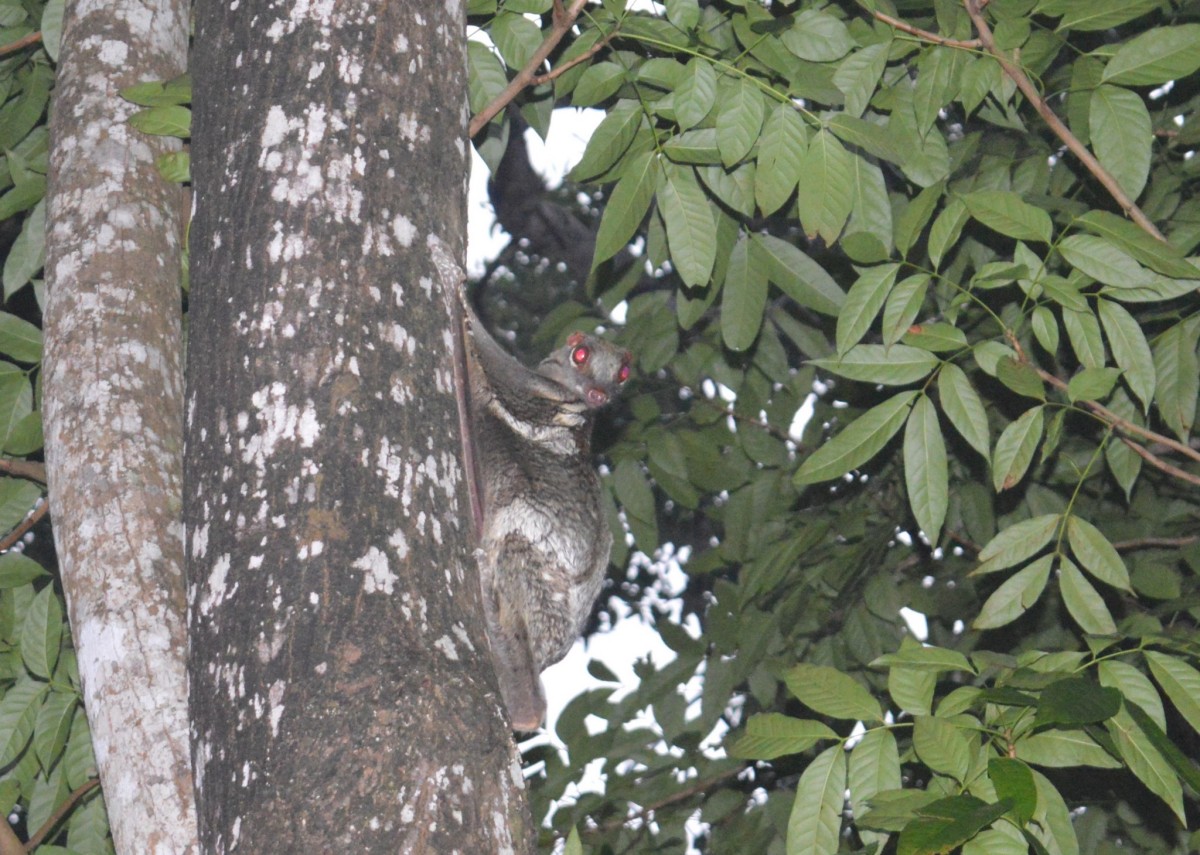
Clinging to the trunk about six metres above us was a small grey creature, hugging the tree so tightly it almost looked like bark. At first glance, it resembled a squirrel with huge eyes.
“She’s asleep,” Jerome explained. But her eyes were wide open. Colugos don’t have eyelids, so they sleep with their eyes uncovered, something that fascinated the children.
Moments later, the animal stirred and slowly turned her head downwards, watching us. “She can rotate her head almost 180 degrees,” Jerome added. Our children were completely captivated. The more we learned, the more interesting this animal seemed.
What exactly is a colugo?
Despite sometimes being called a “flying lemur”, colugos are neither lemurs nor true fliers. Instead, they belong to their own unique mammal order and are among the best gliders in the animal kingdom.
A membrane of skin stretches between their neck, limbs and tail, creating what is essentially a living parachute. When they leap from tree to tree, they spread their limbs and glide gracefully through the air. They can travel more than 100 metres in a single glide, losing very little height.
Watching one glide feels almost unreal. Silent, smooth and ghost-like as it moves across the canopy.
Colugos are also gentle herbivores, feeding on leaves, shoots and fruit. They rarely descend to the ground, spending almost their entire lives in trees. And because they are nocturnal, many visitors never see them at all.
The unforgettable moment
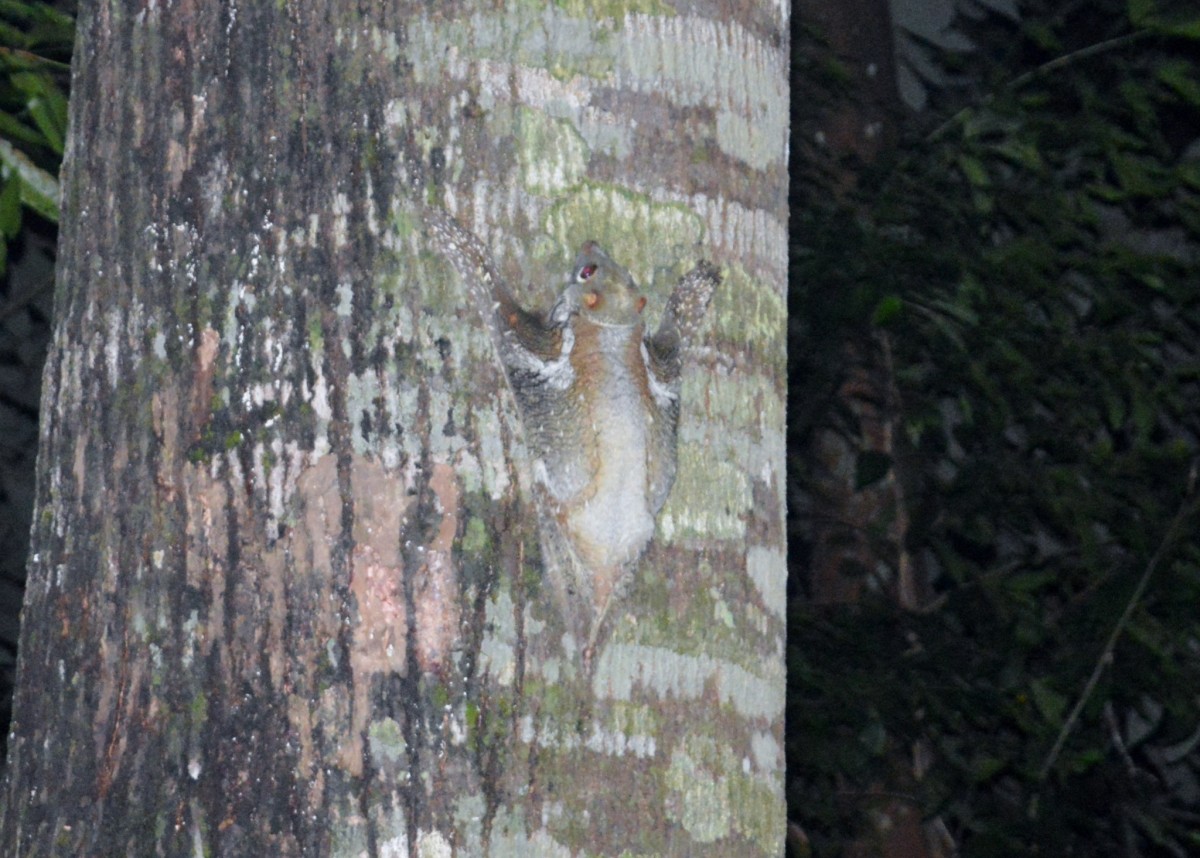
As we continued walking, our daughter suddenly whispered that she’d heard movement. Sure enough, another colugo was climbing slowly up a nearby trunk, its claws gripping bark in near silence. Then a second appeared. For a moment, the two animals paused. And then one leapt.
There was no warning sound, no scramble, just a smooth glide as it launched itself into darkness, limbs outstretched like a hang glider, before disappearing among distant trees. The children gasped. It was one of those rare travel moments where everyone falls silent because what you’ve seen feels almost unreal. We stood there feeling so happy, knowing we’d witnessed something truly special.
Why a night walk in Langkawi is great for families
Travelling with children often means balancing education with fun, and this experience offered both.
A night walk turns wildlife spotting into an adventure. Every rustle feels exciting. Every movement becomes a mystery waiting to be discovered. Our children loved using torches, listening for sounds and trying to spot animals themselves. It felt like a treasure hunt in the jungle. It also opens conversations about conservation, habitats and how different ecosystems function. And because tours are typically small and relaxed, it never felt overwhelming.
Practical tips for a colugo night walk in Langkawi
If you’re thinking of adding this experience to your Langkawi trip, a few tips help make it even better.
- Wear closed shoes. Jungle paths can be uneven, and you’ll feel more comfortable walking in trainers or hiking shoes.
- Bring insect repellent. Mosquitoes are part of rainforest life, especially after dark.
- Don’t expect instant sightings. Wildlife spotting requires patience, but guides are very skilled.
- Keep voices low and lights controlled so animals aren’t disturbed.
- Let children lead when possible. Spotting something themselves makes it more exciting.
When is the best time to see colugos?
Langkawi is a year-round destination, but wildlife walks are especially pleasant during the drier months from November to April. However, even during wetter months, night walks still operate and the forest can feel even more alive after rainfall. We were visiting in August and still had a great experience.
Because colugos live in this rainforest permanently, sightings are possible at any time of year.
Who should try this experience?
A night jungle walk works brilliantly for:
• Families with curious children
• Teenagers who enjoy wildlife and adventure
• Couples wanting a different evening activity
• Nature lovers seeking something beyond the beach
It’s also a refreshing change after days spent relaxing at resorts.
Booking a colugo tour in Langkawi
We joined a small-group experience organised by Dev’s Adventure Tours, whose guides know the forest incredibly well and ensure wildlife is respected. Many Langkawi hotels can also help arrange guided night walks. Choosing a knowledgeable guide makes all the difference, without Jerome, we wouldn’t have spotted anything.
Book an evening tour in Langkawi here.
If you’re visiting Malaysia then definitely look out for a chance to go Colugo spotting. We went with Dev’s Adventure Tours who organise small groups with knowledgeable experts.
If you’re planning a trip to Langkawi then check out our guide to the best Langkawi family resorts. You can also read our diary of two weeks travelling through Malaysia with kids, along with our review of a stay at the Westin Langkawi and a review of staying at Temple Tree Resort Langkawi.



What a fabulous little creature. Admittedly it was way back in 2000 when I visited Langkawi but I don’t recall ever seeing these animals. I feel as though I’ve missed out a little bit now.
How odd it must be sleeping without eyelids. I dare say you can only sleep at night.